Everything You Need To Know About Hiking Aletsch, the Alps' Largest Glacier
-
 Loading...
 - Sophia Johnson
- 11 Apr 2022
- 313 Views
- 0 Like
- 0 Comment
“HAVE YOU EVER had an accident with any of the people you guide on this glacier?” I asked mountain guide Yvan Volken, after we’d spent three hours exploring Aletsch Glacier – the largest glacier in the Alps. Volken has been guiding people over the massive ice sheet for two decades, and I was expecting to hear a few juicy stories.
“No, never,” he said to my relief – but also disbelief.
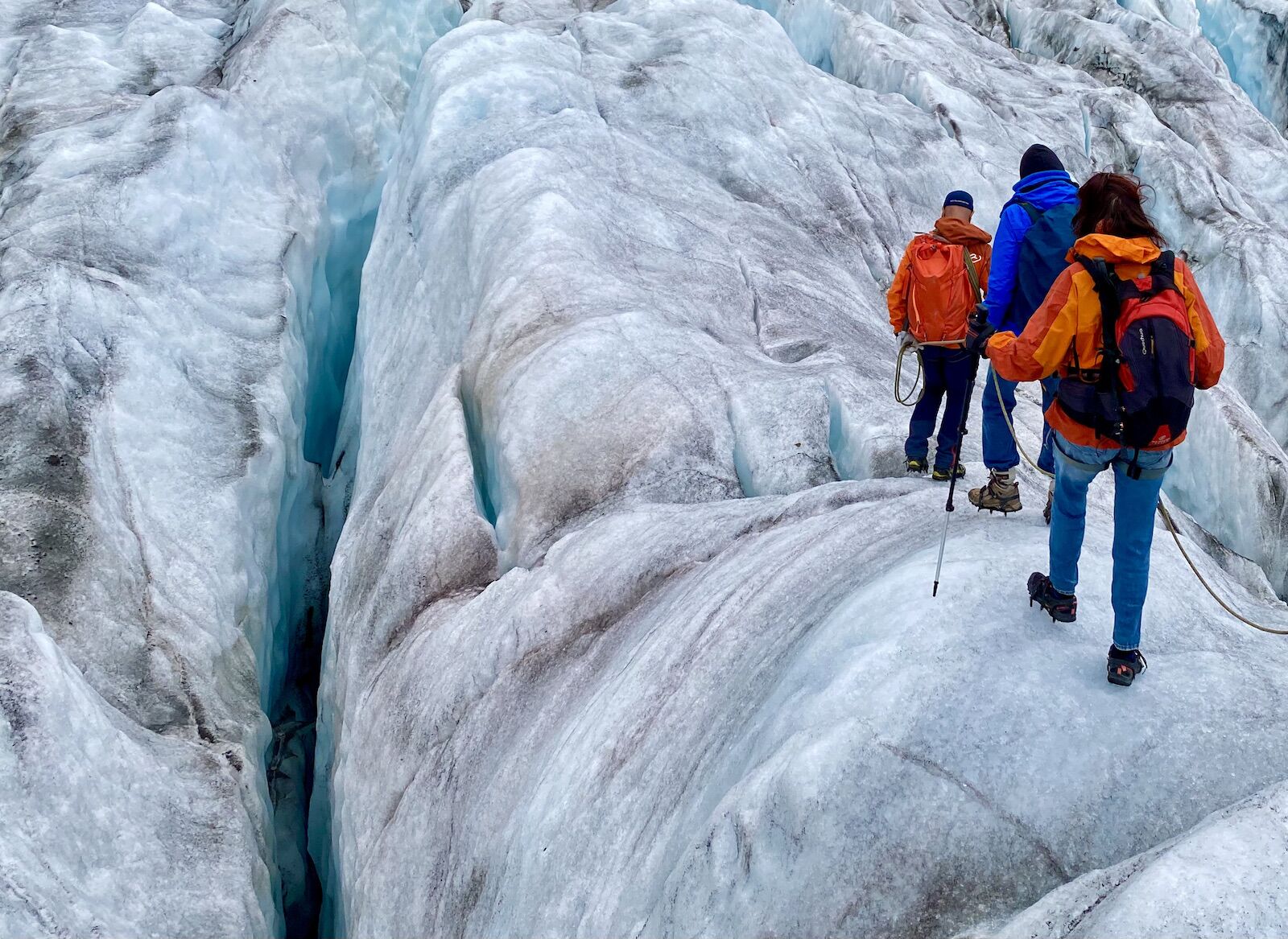
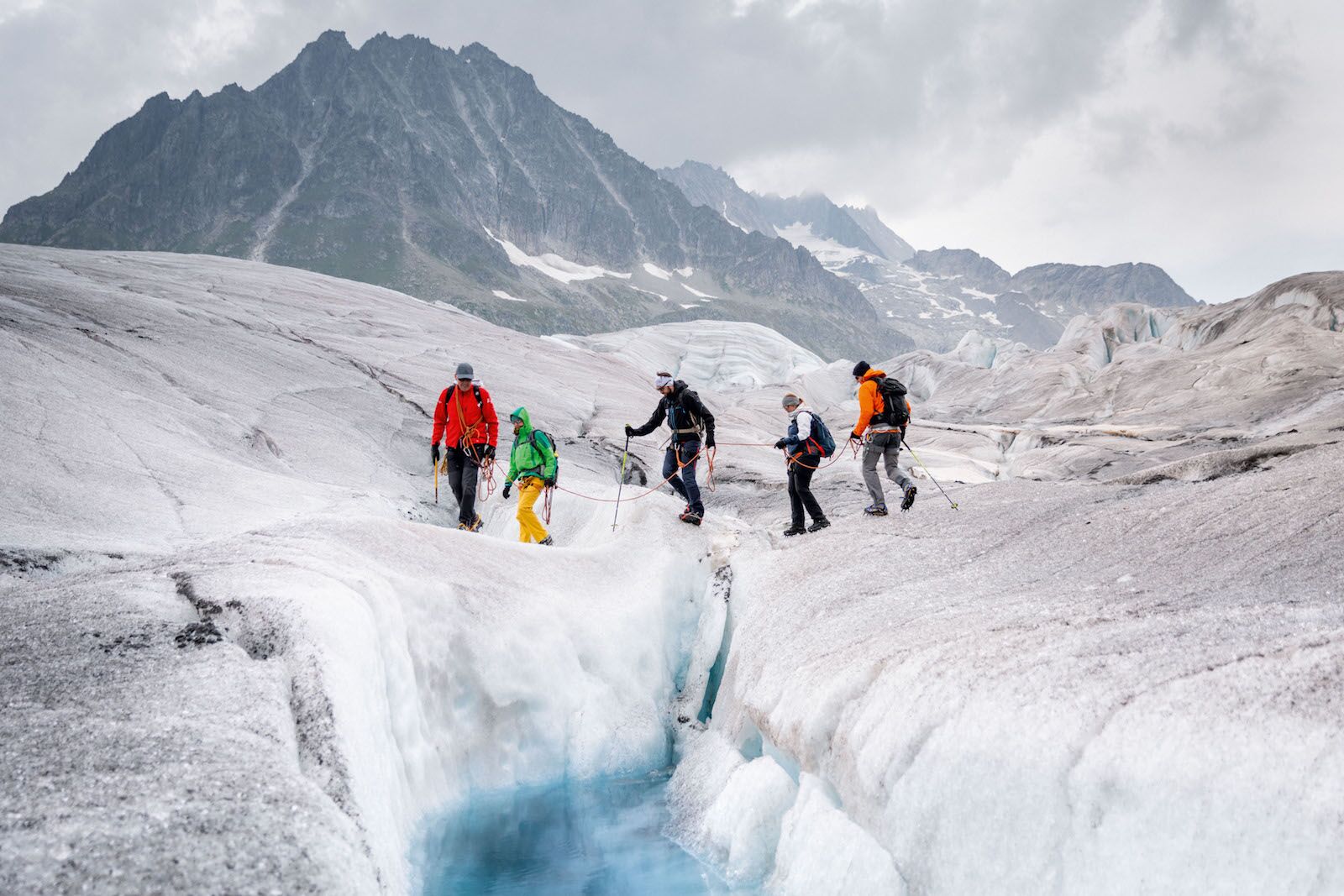
We’d just raced over the crevasse-filled wonder, tethered together by a rope attached to harnesses on our waists. At the head of our group, Volken had forged ahead, stepping over chasms so deep you couldn’t see the bottom and taking us over ice bridges no wider than the crampons on our boots. Occasionally, he paused to hack at a steep ice wall with his pickaxe to make it more navigable. But Volken never looked back – except, that is, when someone panicked and called out for him to stop.
That he’d never had an accident guiding this way, struck me as impossible. But it turned out that his hair-raising methods were intentional.
“When you go slow, people don’t pay attention. They look around and take pictures with their phones,” said Volken. When you move at a faster pace over treacherous terrain, people are attuned to the trek, he said. And that makes it safer.
I could see his point. Extending 14 miles down from Switzerland’s Jungfrau Mountain region, the mile-wide behemoth, recognized as part of a UNESCO World Heritage site, was mesmerizing. It offers up bizarre, undulating ice shapes, pools of aquamarine water brighter than precious jewels, and milky vistas that stretch out of sight and reach. The temptation to keep snapping photos was hard to resist.
Yet we were roped together, and staying focused was a must. For one, we needed to keep the correct distance from our fellow hikers. Walk too close and they could trip on the rope; stay too far back, and the taut rope could yank them off balance. The call-outs to stop were when someone felt unsure about stepping over the next black void and had themselves halted, something that could cause the rest of us to fall should Volken keep pushing ahead.
Fortunately, Volken gave us plenty of time over lunch to enjoy the spectacle of the Alps’ largest glacier and take as many photos as we wanted – once we were securely in the center of the glacier in an area mostly devoid of life-threatening crevasses.
The growing and slowing of the Aletsch Glacier
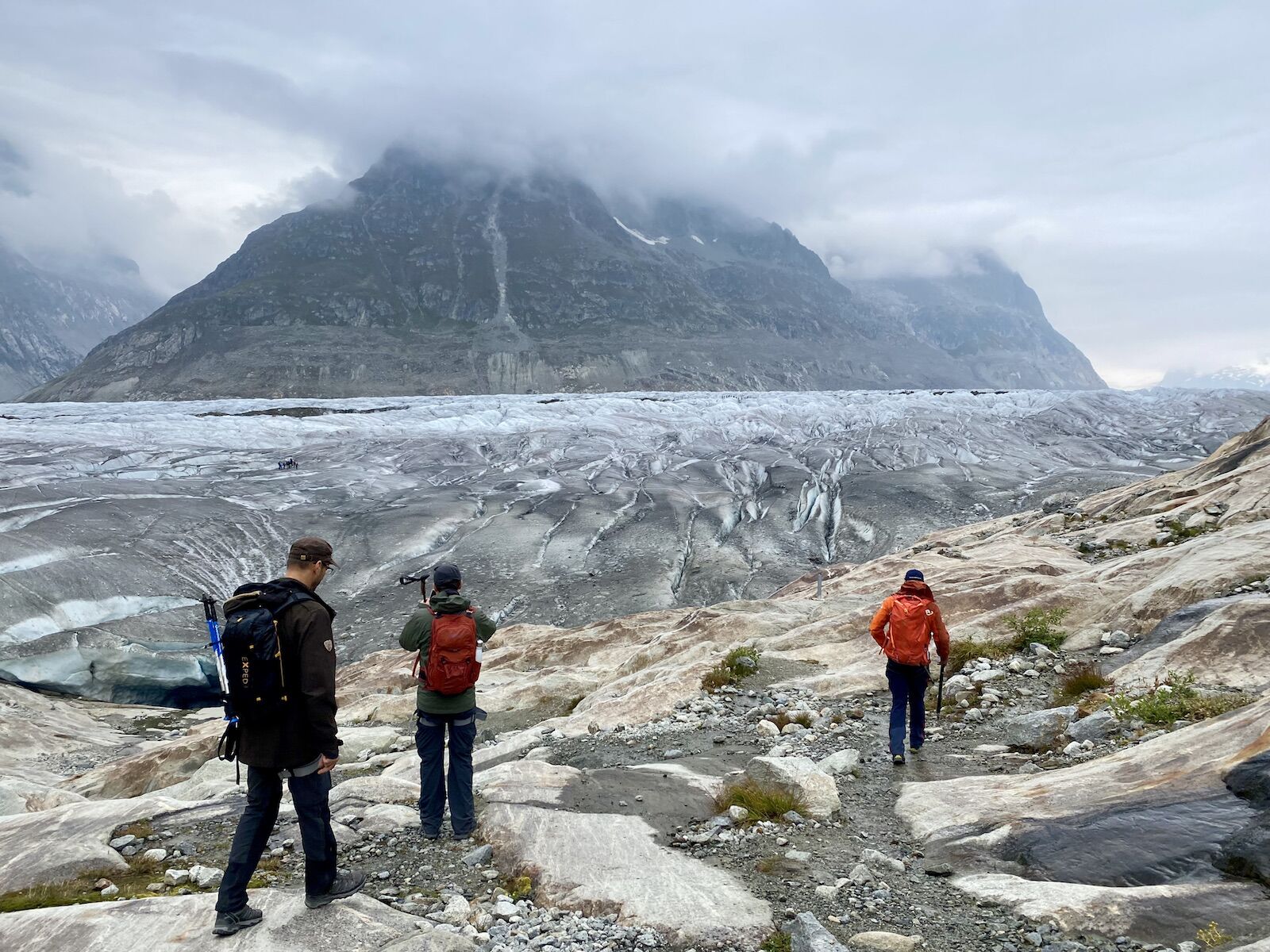
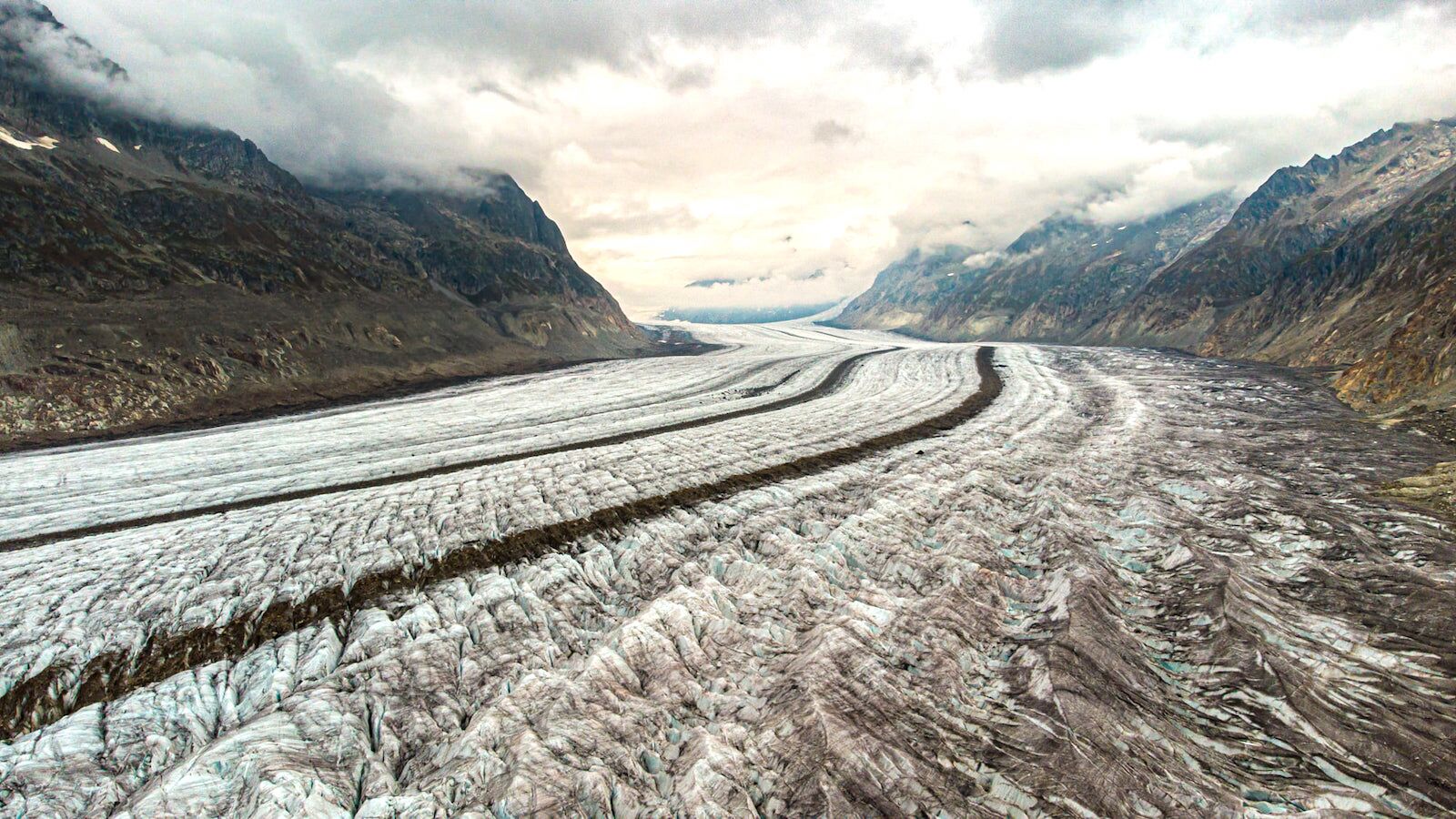
The Aletsch brings together three different firns – the snowy parts on the top of glaciers that aren’t pure ice. They’re the Great Aletsch Firn, the Jungfrau Firn, and the Ewig Snowfield. As these glaciers work their way downwards, they scrape along the mountainsides, creating moraines – lines and piles of rocks that land along the edges of the glacier as it moves and recedes. When two glaciers get near one another, the moraines can merge, creating a wide, rocky section between the newly joined glaciers.
Since the Aletsch Glacier combines three glaciers, it has two moraines running through its vertical length, kind of like steel-gray racing stripes. We ate our lunch at one of these moraines, and the views were magnificent – albeit the temperature no less frosty – as the clouds dispersed to reveal a blue sky that contrasted against the ice’s pearly hues.
Unfortunately, as is the case with other famous glaciers around the world, part of witnessing them includes observing how much they’ve receded. As we looked at the bare mountainside flanking the Aletsch Glacier, Volken showed us the widening markers of how tall the glacier had been 30, five, and even one year before.
Aletsch Glacier and its receding areas
The Aletsch Glacier grew at quite a clip until about 1860, when it reached its biggest modern-day size. It was about two miles longer than it is now and had residents worried it would overtake their homes and fields. But they needn’t have fretted: the mighty glacier has been slowly subsiding for the last century and a half.
Volken, who grew up in a home that was once next to the glacier but now faces just an empty gorge, said it’s always a shock when he returns every June to start the Aletsch Glacier guiding season. I asked him how the glacier’s shrinking made him feel. He replied that it’s better not to think about it too much, or you’d want to cry.
Heading his advice, I opted to marvel at it instead. The Aletsch Glacier is more than a half-mile thick and encompasses 12 billion tons of ice. Standing in its middle, you can gaze back and see it bending upwards into the mountain peaks. The ice is thickest at the “racing stripes” since it melts slower over the rocky moraines – so much so, in fact, that researchers have contemplated covering the entire glacier with rocks to slow its eventual demise.
How to hike on the Aletsch Glacier
Fortunately, the glacier is still a breathtaking sight and spending time exploring it is an experience that you won’t soon forget. You can join a day-long hike like the one I did for 90 CHF (US $96) per person, which includes the gondola fare, gear, and guiding services provided by the Bergsteigerzentrum Aletsch (Aletsch mountaineering center). You’ll meet at the base of the Eggishorn Mountain, in the town of Fiesch, Switzerland, at 8:15 AM. Together, the group will take the gondola up to the mid-station to begin the hike. Read More...