Exhibition "Thin Citizens" in Moscow closed due to "political overtones"
-
 Loading...
 - reggie ella
- 15 Jul 2022
- 129 Views
- 0 Like
- 0 Comment
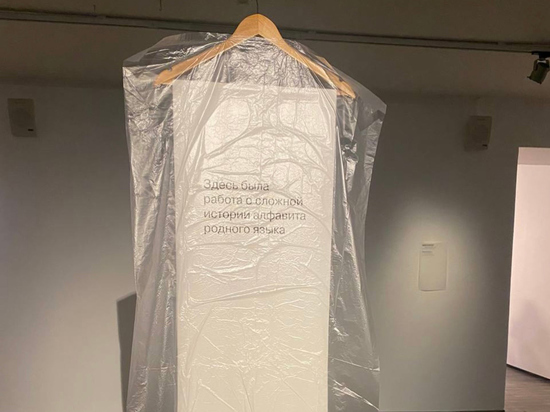
On July 13, the exhibition “Thin Citizens” was supposed to open at the Moscow Museum of Modern Art, a group project of graduate students of the Garage and Higher School of Economics master’s program, which students had been preparing for two years. However, on the day of the premiere, an announcement appeared on the museum’s website that the exhibition was closed due to the fact that “meanings and statements with political overtones were introduced into the project.”
In response, instead of the prepared works, the students placed in the halls texts with a refusal to participate. “My works cannot be presented here for a reason that I cannot even name,” reads, for example, the statement of Agil Abdullayeva.
Meanwhile, on July 20, the Ministry of Culture introduces a new regulation for planning exhibitions. Now you need to coordinate literally every step.
Only the lazy did not make noise about the “cancellation of Russian culture” in the West, but much more exciting processes are taking place in the internal artistic field. A number of art institutions have decided to close, for example, the Museum of Street Art in St. Petersburg. The Moscow Garage also announced the suspension of exhibition activities, but the museum itself is still open - you can sit in the library or watch a movie there.
An alarming signal was the closure of the project "Theater of the World" ("Theatrum mundi") by Grisha Bruskin in the Tretyakov Gallery, which managed to work for about a month. And also the criminal case against Oleg Kulik because of the sculpture "Big Mother", which was created back in 2018 and then became for the author "a painful recovery from the trauma associated with parting with his beloved wife." After showing the art object at Art Moscow, back in April, the artist was charged with “rehabilitating Nazism” (part 3 of article 354.1 of the Criminal Code of the Russian Federation). Now he faces up to 3 years in prison.
In a word, the nuts are tightened rapidly. Hence, more and more works in the spirit of "aesthetics of emptiness". The art practice is not new - it goes back to the "Black Square" and later experiments, for example, by Martin Creed, who in 1995 imagined an absolutely empty space, where the only material object was neon tubes flashing once a minute on the ceiling. For this work, the British artist received the Turner Prize - one of the most prestigious in the field of contemporary art.
Often, in the current realities, artists began to turn to conceptualism. So, in April, the Pomidor group, instead of the planned complex installation, showed one word on the wall at the Factory: “Ultimate”. Sometimes emptiness, silence and conciseness are much more eloquent than visual images and a lot of words - any student of an art university is aware of this.
HSE students also followed this path at the final stage of preparing the Thin Citizens exhibition. Read More…