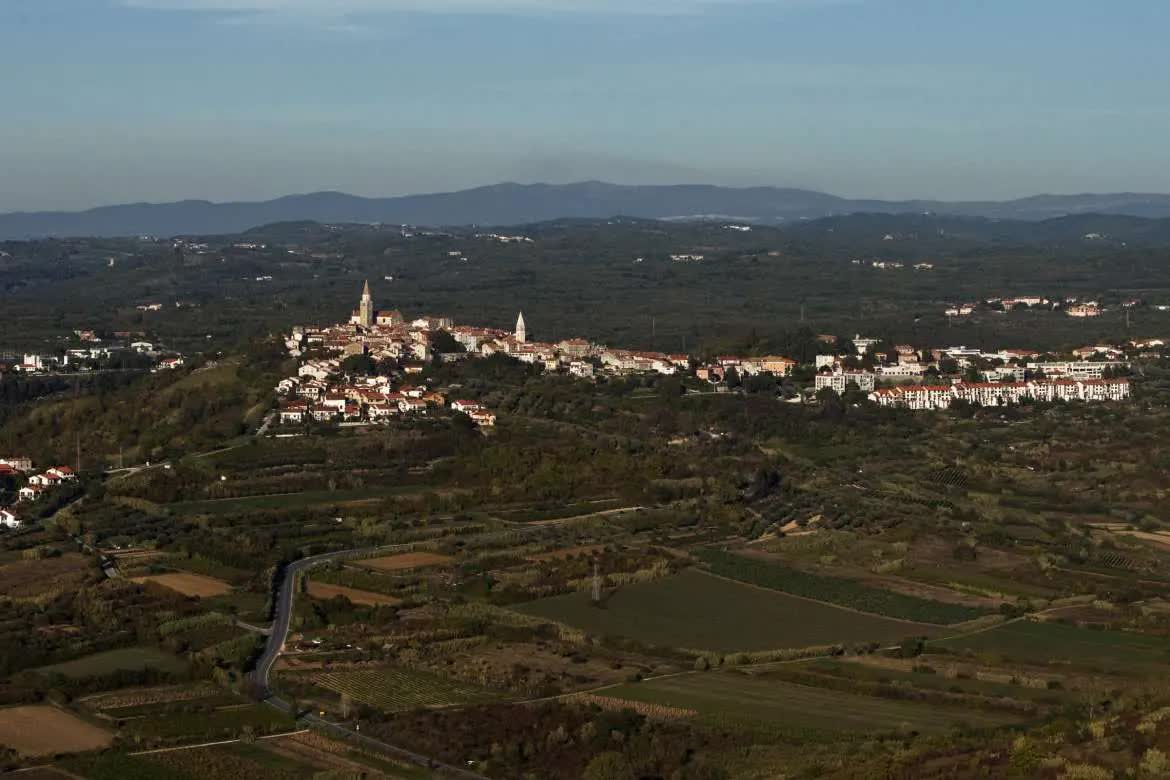
Exploring The Croatian Language - The Southwestern Istrian Dialect
-
 Loading...
 - Clara Andersen
- 30 Mar 2023
- 76 Views
- 0 Like
- 0 Comment
While you will likely have heard of Istrian, or the Istrian dialect, unless you're into linguistics, you may know less about the dialects and subdialects within that scope. Have you ever heard of the southwestern Istrian dialect?
We've explored many of the dialects, subdialects and indeed languages in their own right as some linguists consider them to be which are spoken across modern Croatia. From the Dubrovnik subdialect (Ragusan) in the extreme south of Dalmatia to Northwestern Kajkavian in areas like Zagorje, the ways in which people speak in this country deviate from what we know as standard Croatian language enormously. That goes without even mentioning much about old Dalmatian, Zaratin, once widely spoken in and around Zadar, Istriot, or Istro-Venetian.
Istria is known even today for being part of Croatia that has seen enormous change, and many different groups and ethnicities pass through and live on the peninsula. It's far from just the influence of Italian and the former Venetian Empire which reigns strong in this region of Croatia. For a quick linguistic example, in Istria alone, we have Istriot, Istro-Venetian, Istro-Romanian, and the extinct Istrian-Albanian. That's far from all. In this article, we'll delve a little deeper into the southwestern Istrian dialect, which is part of the much wider category of Chakavian.
A brief history of the southwestern Istrian dialect
As stated above, the southwestern Istrian dialect belongs to the group of dialects called Chakavian and contains both Chakavian and Shtokavian features. Despite this, it is generally considered to be the most widespread Chakavian dialect in all of Istria, originating not from any Italian influence, but from the dialects spoken much further south, down in the Dalmatian-Herzegovian region. If you want to get a little more complicated, this dialect is part of the Chakavian-Shtokavian/Shtokavian-Chakavian/Stakavian-Chakavian Ikavian dialect(s). A mouthful, I know, but much like with most other dialects and subdialects, linguists have butted heads in the past when it comes to proper classification. Read More…


