Farmland birds best protected by leaving fallow areas for two or more years, letting native plants grow
-
 Loading...
 - Brice Fontaine
- 13 Oct 2022
- 62 Views
- 0 Like
- 0 Comment
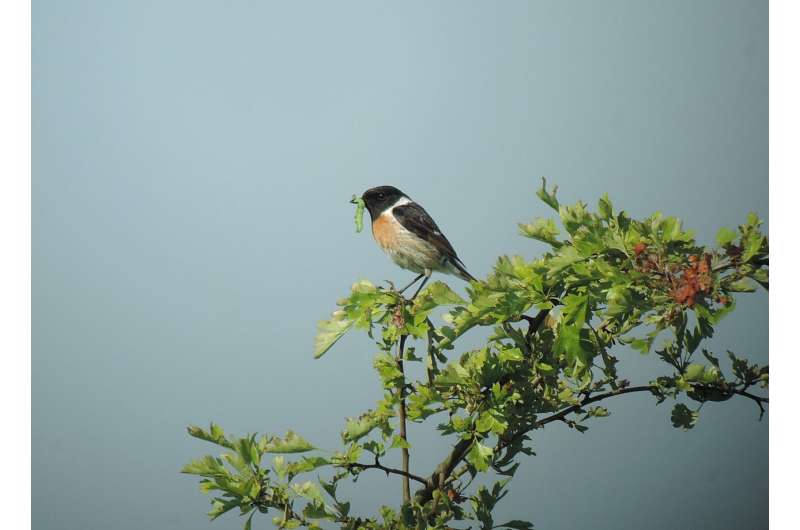
Fallow land is effective in protecting wild birds—but only if it remains undisturbed for at least two years, according to a study by Julia Staggenborg and Nils Anthes from the Institute for Evolution and Ecology at the University of Tübingen. Published in Conservation Letters, the study evaluates 143 previous research papers, making it one of the most comprehensive studies to date in Europe on the protection of farmland bird species.
Over the past 40 years, populations of farmland birds in Europe have plummeted by an average of 56 percent, and by as much as 90 percent for some species such as the partridge. Grain-eaters such as the tree sparrow and the yellowhammer can no longer find enough food because hardly any grain remains in the fields after harvesting with modern machines. Pesticides and land consolidation have suppressed wild herbs and cut back unused habitats such as verges, embankments and grassy paths, which are not useful for agricultural production but which are essential for the survival of insects and the rearing of chicks.
The EU has introduced new conditions under its next five-year agricultural funding period, beginning January 1, 2023. Under the new EU law, farmers will have to set aside four percent of their fields and meadows for biodiversity conservation and will only receive financial support if this condition is met. "This regulation is a great opportunity for species conservation," says Staggenborg, "but these areas should be reserved for measures that are truly effective for biodiversity conservation according to scientific evidence." Read More...