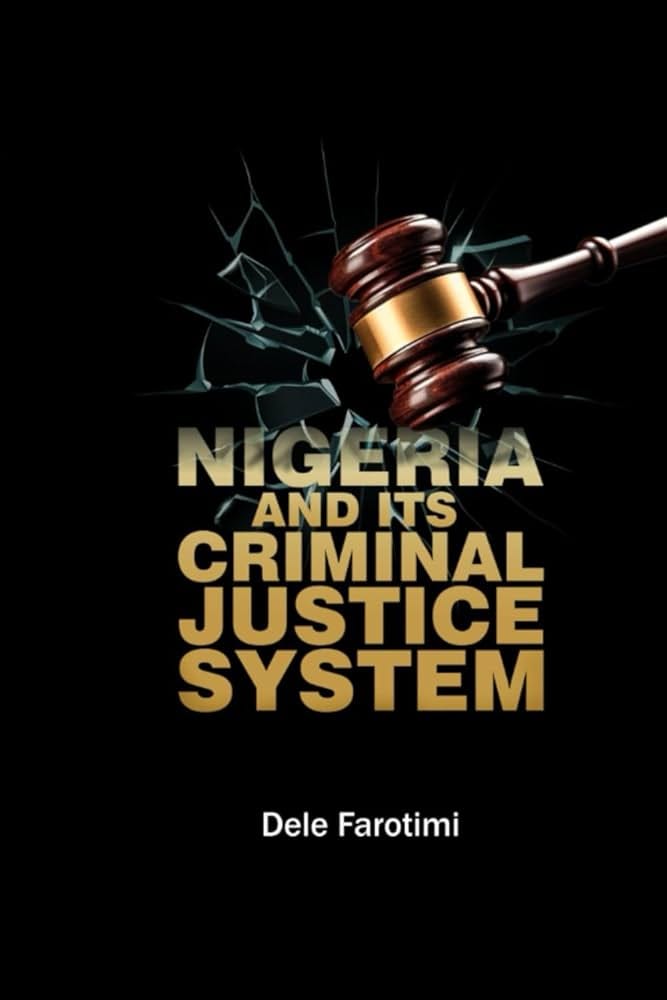
Farotimi and Nigeria’s Criminal Justice System
-
 Loading...
 - Chinny Ibile
- 09 Jan 2025
- 31 Views
- 0 Like
- 0 Comment
In his provocative and slim volume, Dele Farotimi has displayed a level of courage that many senior lawyers in Nigeria have often shied away from demonstrating publicly. While they may express vociferous criticism of the system in private conversations, they tend to remain subdued when in the public eye. Farotimi’s book, written in a state of palpable anger, serves as a bold indictment of Nigeria’s criminal justice system, and its self-published nature suggests he is either his own editor or has chosen to forgo editorial guidance in favor of presenting what he believes to be an unvarnished truth.
Courage is a virtue that many claim to possess, yet when the moment arises to demonstrate it, many falter due to the potential consequences. Farotimi’s book, which can be described more as a pamphlet, has already ruffled feathers and is likely to provoke even more controversy as those named within its pages read it. The book, spanning just 104 pages, has gained international attention, leading to a court ruling aimed at halting its circulation. Historically, banned books often attract more readers, as seen with Salman Rushdie’s The Satanic Verses and Wole Soyinka’s The Man Died, both of which gained notoriety following attempts to suppress them.
What makes Farotimi’s book so incendiary? The content reflects the frustrations and realities of Nigeria’s judicial system, echoing sentiments shared in private discussions among lawyers, police officials, journalists, and those who have interacted with the system. Farotimi’s thesis is clear: the Nigerian judiciary, often touted as the last hope for the common man, is in fact “completely hopeless and unfit for purpose.” He argues that the system has been captured by powerful interests, leaving the average citizen without recourse to justice.
Farotimi writes, “When the rich are taken before the courts, it is almost always because of internecine warfare within the ranks of the privileged, and they have an uncanny ability to exploit multiple ways of escaping the consequences of their actions.” He contrasts this with the plight of the poor, who often find themselves ensnared in a system that offers them no breaks. “Justice is for the rich whilst judgments are often for the poor,” he asserts, highlighting the systemic inequalities that plague the judicial process.
As a book reviewer, I find myself limited in my ability to conduct a comprehensive analysis of the details within this powerful work. My background as a journalist, with only a basic understanding of media law, does not equip me to fully dissect the legal implications of Farotimi’s claims. However, it is evident that he is aware of the risks associated with his “name and shame” approach. The question remains: how will he substantiate the allegations he has made against various figures in the legal system?
Farotimi’s courage stands in stark contrast to the reticence of many senior lawyers who, despite their vocal criticisms in private, often choose to remain silent in public. His boldness evokes the sentiments expressed by Fela Kuti, who lamented the fear that paralyzes people from fighting for justice and liberty. Farotimi’s work is a clarion call for accountability and reform within Nigeria’s criminal justice system.
In conclusion, Dele Farotimi’s book is a passionate and urgent plea for change in a system that he believes has failed the very people it is meant to serve. His willingness to confront powerful interests and expose the shortcomings of the judiciary is both commendable and risky. As he navigates the potential fallout from his revelations, one can only wonder whether he will emerge unscathed from what he describes as the “lion’s den.” The answer, as he suggests, may be blowing in the wind, but his message is clear: the time for change is now, and the voices of those who have suffered under the weight of injustice must be heard.