Fiction: ‘Bound to Violence’ and ‘The Most Secret Memory of Men’
-
 Loading...
 - Kisi Adomako
- 20 Dec 2024
- 35 Views
- 0 Like
- 0 Comment
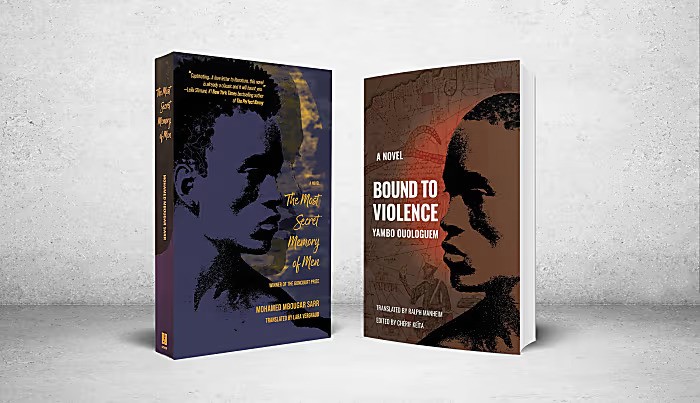
Malian author Yambo Ouologuem’s 1968 novel, “Bound to Violence,” has recently been reissued, bringing renewed attention to its groundbreaking exploration of West African history. The novel opens with a striking chapter that chronicles the rise and fall of the fictional African empire of Nakem from the 13th to the 19th centuries. The secrets behind this empire's endurance are grim: slave trading, mass murder, pillage, and corruption. In a style that blends mock-heroic prose with biting satire, Ouologuem details the sordid legacy of the Saif dynasty, whose atrocities rival those of historical empires like Byzantium.
Readers are introduced to characters such as Saif Moshe Gabbai, who, in a paranoid bid to prevent usurpation, ordered the execution of all newborns, displaying their shrunken heads as trophies. Saif al-Haram waged border wars while his people resorted to cannibalism amid famine. Saif Tsevi’s incestuous marriage to his sister and the depraved Saif Ali, described as “a pederast with pious airs,” further illustrate the moral decay of the dynasty.
Born in Mali in 1940, Ouologuem moved to Paris in his youth to study at the prestigious École Normale Supérieure. His controversial debut, published when he was just 28, won the Prix Renaudot and made a significant impact on the intellectual landscape, challenging prevailing movements like Négritude and Afrocentrism that romanticized a precolonial Africa. “Bound to Violence” serves as a provocative counterpoint to what Ouologuem perceived as a false nostalgia. In a 1971 interview with the New York Times, he argued that colonialism merely perpetuated existing evils, asserting that the institution of slavery was rooted in the oppression of Africans by their own leaders long before European colonization.
Following the English translation of his novel by Ralph Manheim, Ouologuem embarked on a tumultuous tour in the United States, embracing his role as an intellectual provocateur. He controversially critiqued the attempts of Black Americans to reconnect with their African heritage through Islamic civilization, likening it to Jews seeking identity through Hitler’s Germany. This polarizing stance positioned him as both a beacon of hope for African literature and a perceived traitor to his race.
However, in 1972, an unsigned editorial in the Times Literary Supplement accused Ouologuem of plagiarism, claiming that “Bound to Violence” contained passages lifted from Graham Greene’s 1934 novel, “It’s a Battlefield.” As further instances of borrowing emerged—from sources as varied as the Quran, Guy de Maupassant, and even pulp crime fiction—Ouologuem defended his work by arguing that these citations were intentional, part of a montage technique that recontextualized diverse influences. While this explanation aligned with the emerging theory of “intertextuality” in France, it did little to salvage his reputation. His publishers withdrew the book and terminated their contracts, leading Ouologuem to retreat to Mali, where he embraced Sufism and largely shunned Western engagement until his death in 2017.
In 2021, Mohamed Mbougar Sarr’s novel, “The Most Secret Memory of Men,” draws inspiration from Ouologuem’s life and legacy, further cementing the significance of “Bound to Violence” in contemporary literature. Sarr’s work reflects on the complexities of identity, memory, and the literary heritage of Africa, continuing the dialogue that Ouologuem initiated over five decades ago.