French Government to Submit New Immigration Law to Parliament
-
 Loading...
 - Annabelle Frankie
- 16 Oct 2024
- 50 Views
- 0 Like
- 0 Comment
The French government has announced plans to introduce a new immigration bill to parliament at the beginning of 2025, amid rising concerns over immigration that have become a focal point in French politics. The proposed legislation is expected to include measures aimed at extending detention periods for undocumented immigrants, a move that has sparked significant backlash from leftist parties who perceive it as an attempt to appease far-right lawmakers.
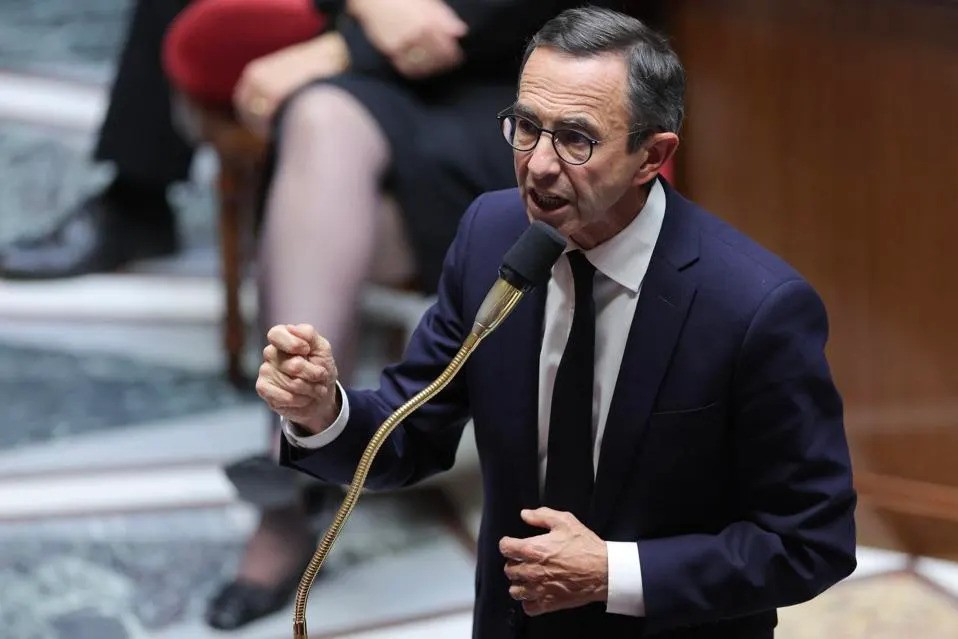
Prime Minister Michel Barnier, a seasoned conservative politician, was appointed by President Emmanuel Macron in early September 2024, following a narrow electoral victory over the far-right National Rally (RN). This victory was largely attributed to a coalition of left-wing parties that united to counter the RN's influence. In response to fears of a further shift to the right, Macron appointed Barnier, known for his hardline stance on immigration, and selected Bruno Retailleau as the interior minister. Retailleau has made irregular migration a central focus of his agenda, pledging to increase deportations of rejected asylum seekers and to restrict pathways for individuals to regularize their immigration status.
Retailleau, a prominent member of Nicolas Sarkozy's Republicans party, was instrumental in the passage of a restrictive immigration bill in 2023. Although many of its controversial provisions—such as limits on access to state benefits and family reunification—were struck down by France's highest constitutional council, the government is reportedly using these rejected clauses as a foundation for the new bill.
The upcoming immigration bill is expected to propose several contentious measures, including:
- Extended Detention Periods: The government is considering increasing the duration for which irregular migrants can be detained if deemed dangerous, facilitating their deportation from France.
- New Offense of 'Illegal Residence': Retailleau is contemplating the introduction of a new legal offense targeting individuals residing in France without authorization.
- Limitations on the 'Valls Circular': The bill may restrict the ability of regional governors to regularize the status of irregular migrants on a case-by-case basis.
These proposals have drawn sharp criticism from the left, with Olivier Faure, the First Secretary of the Socialist Party, condemning the bill as a tactic to placate the anti-immigration sentiments of the RN.
The French government currently operates within a fragile coalition in the National Assembly, formed after the 2024 elections. The RN came close to gaining power, but a coalition of leftist parties, known as the Nouveau Front Populaire, successfully collaborated with Macron's centrist allies to prevent this outcome. However, tensions within this coalition are palpable, particularly as leftist factions feel sidelined by Macron's government.
Before addressing the immigration bill, the government must first navigate a controversial budget aimed at reducing a growing deficit. This budget is expected to face significant opposition, with leftist members criticizing proposed cuts to public spending and the RN objecting to perceived unfair tax changes.
The immigration bill represents just one of many challenges facing Barnier's government. He is under constant threat of a no-confidence motion from the National Assembly, having already survived one attempt by the Nouveau Front Populaire, which was supported by the RN. As the government grapples with these pressures, it appears likely to pursue an immigration legislative agenda that aligns with the RN's views, potentially exacerbating divisions within the National Assembly and among the French populace.
In summary, the proposed immigration bill is set against a backdrop of political fragility and rising tensions, reflecting the complexities of navigating immigration policy in a polarized political landscape. The government's approach will be closely scrutinized as it seeks to balance public safety concerns with the protection of civil liberties and the rights of migrants.