German Artists Are Selling Their Work to Fund Housing for the Homeless
-
 Loading...
 - Fiona Walsh
- 27 Jun 2022
- 165 Views
- 0 Like
- 0 Comment
Everybody in Düsseldorf knows Michael Hermann by his nickname “Hörman.” His bright red beard and impish smile distinguish him from his peers who sell the magazine fiftyfifty on street corners. “Love on the streets” is the headline of the most recent issue, approaching “the taboo topic” with sensitivity and care.
Fiftyfifty derives its name from its founding idea 25 years ago: The mostly unhoused street vendors who sell it keep 50% of the sales price, currently 2 euros and 80 cents (about $3). The other half finances the magazine’s monthly production. But for Hermann, selling fiftyfifty means much more than a few euros. After over two decades on the streets, fiftyfifty bought him a place to live in 2017 — not just a bed in a shelter, but a brand new studio apartment all to himself — thanks to a glamorous blonde photographed in stunning black and white by the late Peter Lindbergh.

Hermann’s social worker, Oliver Ongaro, does the math: Celebrity photographer Lindbergh donated 14 pictures to the Düsseldorf gallery operated by fiftyfifty. Each print was auctioned for 4,200 euros. From these proceeds, plus a few smaller donations, fiftyfifty purchased Hermann’s apartment for 64,700 euros (about $70,000) including the cost for renovations.
“This is basically the amount two years of care for him would have cost anyway,” says Ongaro, referring to the German social system that covers assisted living, temporary shelters and emergency healthcare for people experiencing homelessness. “So we might as well get him a permanent home for that.”
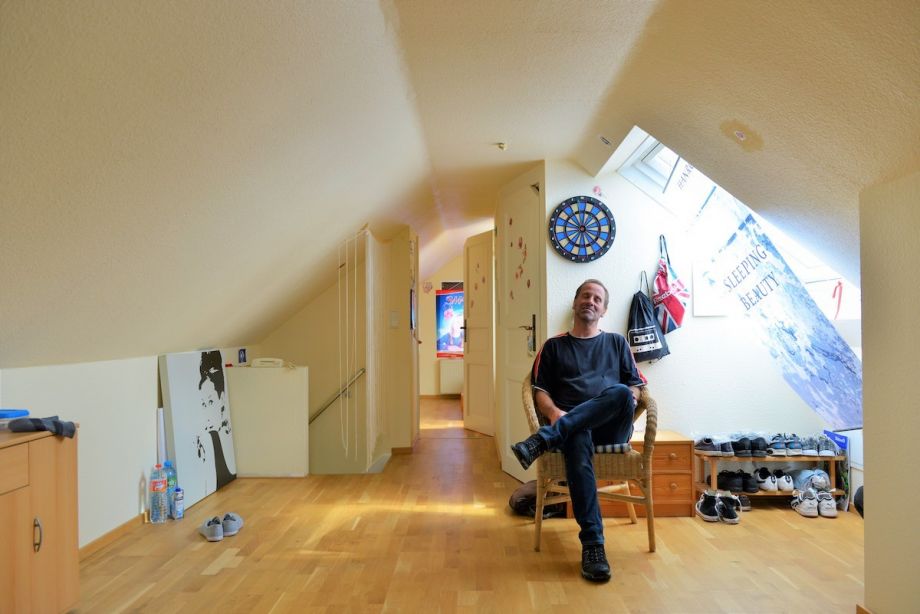
Hermann decorated his 300 freshly renovated square feet with a comfy couch and well-organized wall unit. Every corner shines as if newly scrubbed. The best part: Hermann left his heroin addiction at the doorstep of his new home, along with his penchant for alcohol binges. “When I know where I can stay for sure, I can establish myself permanently, build lasting connections with my neighbors and tackle my issues,” he says.
The Fiftyfifty Factor
The nonprofit fiftyfifty, which receives no support from the state, derives funding not only from its newspaper — which regularly publishes renowned authors — but also from its aforementioned gallery, which features some of the biggest names in contemporary art: Gerhard Richter, Thomas Ruff, Jörg Immendorff, Imi Knoebel, Wim Wenders, Günther Uecker, Andreas Gursky, Katharina Sieverding, Candida Höfer, Markus Lüpertz, Katharina Fritsch, Beat Streuli and many more. Each one has a connection to Düsseldorf, having studied or taught at the prominent local arts academy, the Kunstakademie. This bond with the city underpins their support of fiftyfifty’s pioneering housing project. The artists donate their art for auction, and fiftyfifty uses the revenue to purchase permanent housing for the city’s unhoused residents, who pay only a small fee to contribute to the expenses.
Today, Fiftyfifty owns 50 apartments that house 60 people permanently, plus about a dozen more apartments that wealthy locals have loaned at no cost to unhoused people. The success rate is impressive: Nearly 100% of the housing recipients are still in their homes. “One family moved back to Croatia for personal reasons, some need help with keeping their homes clean, and we had one woman who we just got into supervised housing because she could not kick her drug addiction,” Ongaro says.
What also makes fiftyfifty unique is that they focus on the toughest cases: the people who have been homeless the longest, with the most challenging addiction problems or mental health issues.
“A lot of nonprofits want to take the cream of the crop so their results look impressive,” Ongaro says without a hint of judgment. “We’re the opposite. We want to show that this approach works for the people who have been on the street for over a decade and who might be battling more than one addiction or mental health issue at once.”
With its artsy touch, fiftyfifty brings a unique twist to the Housing First approach, which posits that people should be housed before they’re expected to tackle their other challenges. The model is still comparatively new in Germany, but has been successful in reducing chronic homelessness in countries such as Finland and Canada.
Ongaro, a jovial social worker with salt-and-pepper hair and a winning smile, has been with fiftyfifty for nearly 20 years. He is all too familiar with how social services normally work in Germany. Getting permanent housing is all but impossible for someone struggling with severe addiction and no stable job because affordable housing is usually tied to conditions such as sobriety and a regular income.
“There is no way someone like Hermann gets an apartment on the housing market,” Ongaro says. Five times, Hermann got a bed in one of Düsseldorf’s residential care homes, where contracts are always limited to 18 or 24 months.
“It’s really inhumane,” Ongaro says. “Towards the end, there is always stress because it’s always the same: He has to leave and no other place is available and he’s back on the street. More often than not, this leads to a relapse in addiction, and that is massively hazardous to people’s health.” The person needing a home then starts again at the beginning of the process. Ongaro calls it “the revolving door effect.”
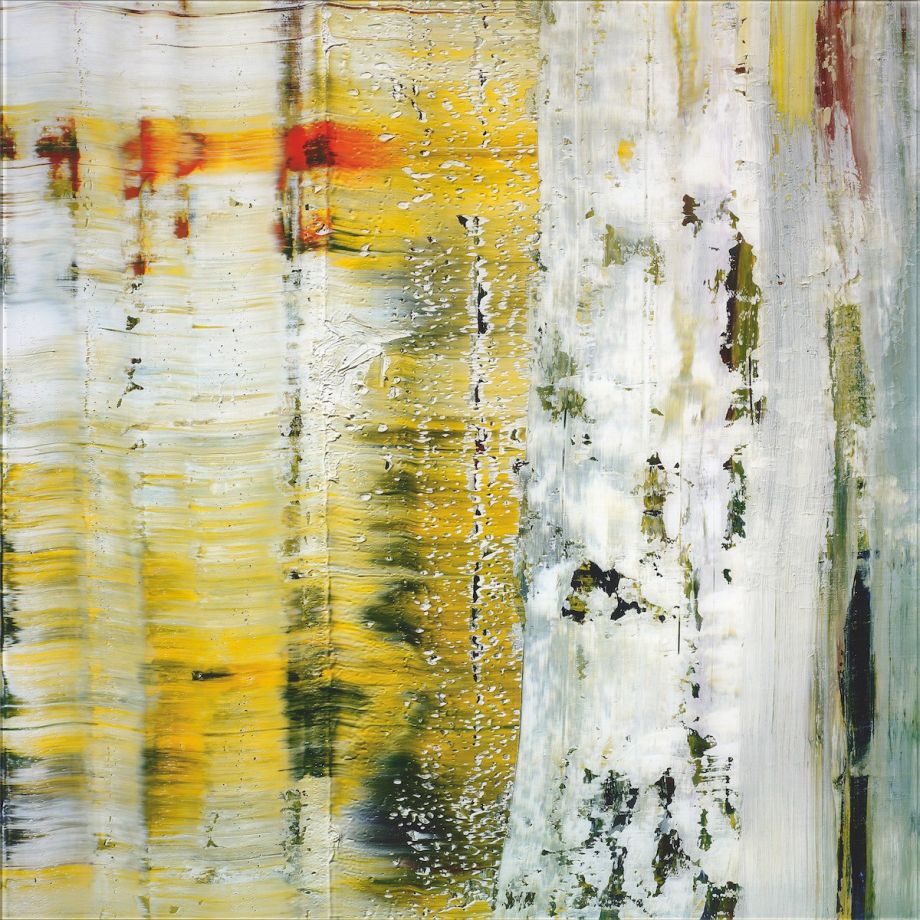
Without art, fiftyfifty’s housing fund would not exist. Gerhard Richter, at the time the highest valued contemporary artist, kickstarted the effort by donating his entire Cage f.ff. I-VI series, 30 colorful abstract paintings, in 2015. Each offset sold for 80,000 to 130,000 euros. This became the seed money for fiftyfifty’s housing fund. Together with the Paritätischer Wohlfahrtsverband NRW, a powerful regional lobbying platform for 3,200 social organizations in North Rhine-Westphalia, fiftyfifty established the fund in 2017.
Today, it holds more than 1.2 million euros with which it aims to buy 100 apartments. The limit of 100 apartments was set by fiftyfifty itself. “We don’t want to become a professional real estate investor, and we can’t be the stopgap for misguided state politics,” says fiftyfifty’s founding director and editor-at-large, Hubert Ostendorf. But he hopes other organizations and cities will copy this model and continue this work.
Since then, Richter, now 90-years-old, has continued donating. He once called Ostendorf out of the blue and said, “I have two versions of a new painting, but I only need one. Do you want the other?” It was one of his famous “Mother and Child” photo paintings. The answer was an easy “yes.” The next day, Ostendorf got in his car and fetched the treasure. The deal is that Ostendorf spends the money as soon as possible. The same week, Ostendorf spotted an affordable apartment for sale and bought it outright. Read More...