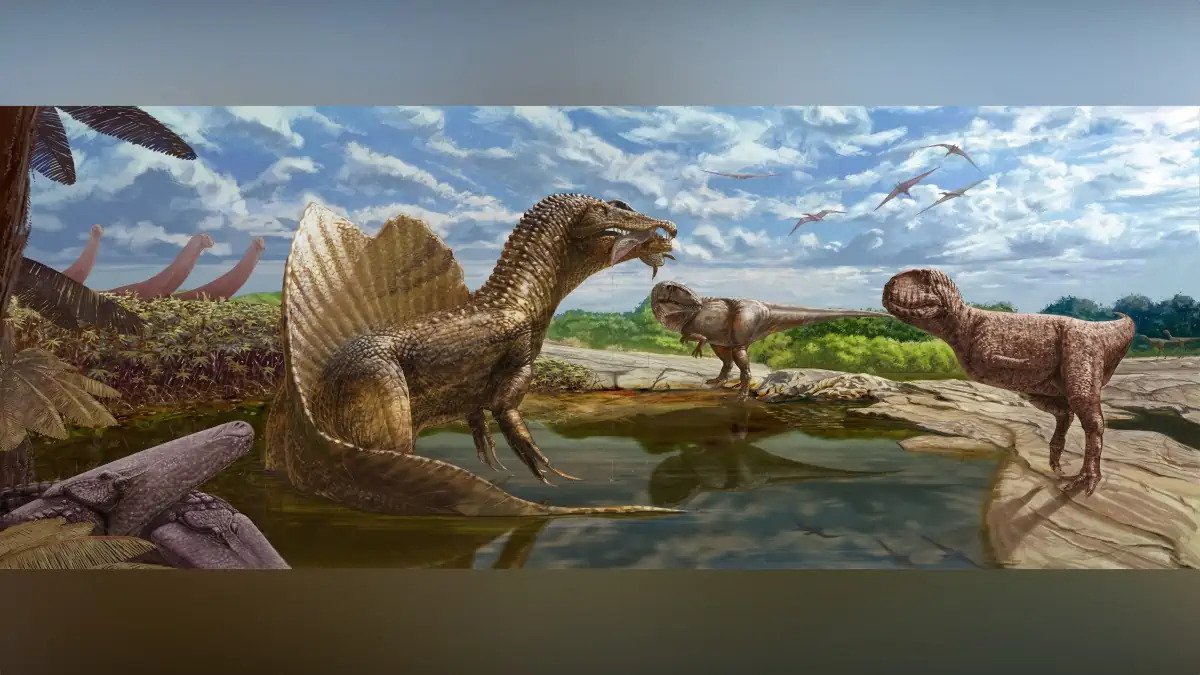
Giant predatory dinosaur fossils discovered in Egypt and Britain
-
 Loading...
 - Masika Khaled
- 19 Sep 2022
- 57 Views
- 0 Like
- 0 Comment
It’s been a big week for large meat-eating dinosaur discovery announcements. Two massive predatory dinosaurs have been unearthed, in Egypt and the Isle of Wight, expanding the list of known two-legged carnivorous dinosaurs, or theropods.
Palaeontologists from the University of Southampton, UK, have identified the remains of what they believe to be one of Europe’s largest ever land predators. Their findings are published in the PeerJ Life & Environment journal.
Dug up on the Isle of Wight, off England’s south coast, the animal belonged to spinosaurids – two-legged crocodile-faced dinosaurs. Famous spinosaurids include England’s own Baryonyx and the massive 15 metre-long Egyptian dinosaur Spinosaurus with its distinctive back sail.

“This was a huge animal, exceeding 10 metres in length, and judging from some of the dimensions, probably represents the largest predatory dinosaur ever found in Europe,” says PhD student Chris Barker, who led the study. “It’s just a shame it’s only known from such scant material.”
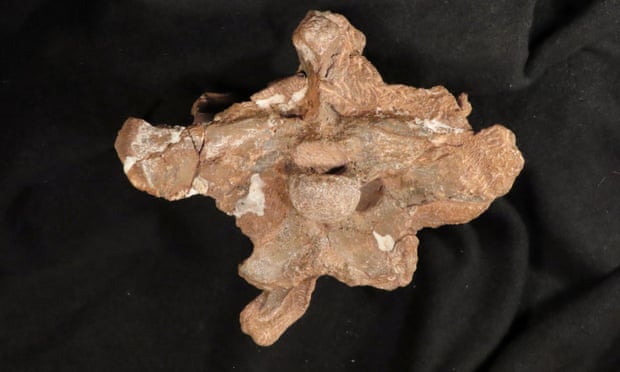
Dubbed “White Rock spinosaurid” after the geological layer in which it was found, the fossils include large pelvic and tail vertebrae. “Unusually, this specimen eroded out of the Vectis Formation, which is notoriously poor in dinosaur fossils,” says corresponding author Neil Gostling. “It’s likely to be the youngest spinosaur material yet known from the UK.”

The Vectis Formation preserves a 125 million-year-old ecosystem. “White Rock spinosaurid” would have stalked early Cretaceous lagoonal waters and sandflats in a time when Earth’s sea levels began rising.
“Because it’s only known from fragments at the moment, we haven’t given it a formal scientific name,” says co-author Darren Naish. “We hope that additional remains will turn up in time. This new animal bolsters our previous argument – published last year – that spinosaurid dinosaurs originated and diversified in western Europe before becoming more widespread.”
Marks on the bone also showed how the dead body of the giant likely supported a range of scavengers and decomposers. Read More...