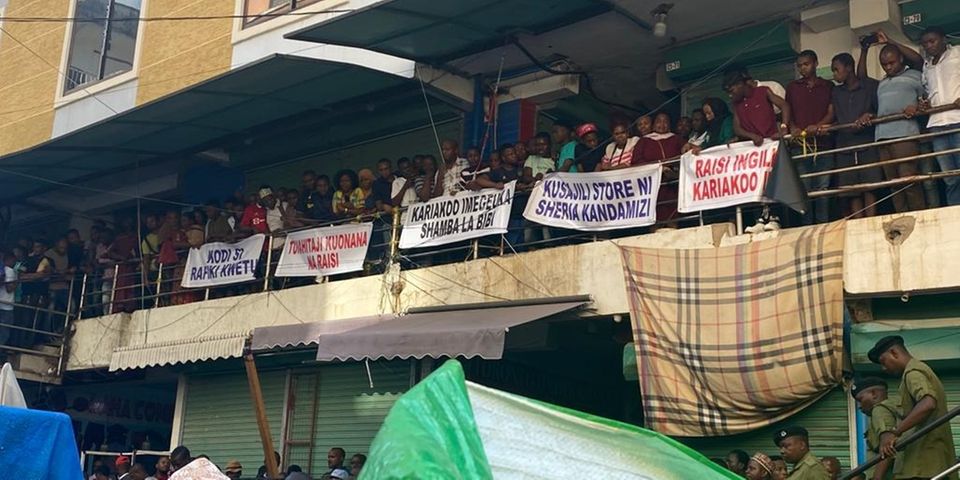
Government and representatives of traders are currently engaged in discussions to resolve the ongoing strike at Kariakoo Market in Dar es Salaam
-
 Loading...
 - Grace Lema
- 15 May 2023
- 59 Views
- 0 Like
- 0 Comment
The strike, which began on Monday, May 15, 2023, is primarily centered around three key issues: arrests, fiscal electronic devices, and warehouse registration. Traders are demanding that these concerns be addressed in order for them to resume business at this renowned market in the East African region.
Upon Speaker Tulia Ackson's request for an explanation regarding the matter, Minister for Investment, Industry, and Trade, Dr. Asha Kijaji, stated that the Dar es Salaam Regional Commissioner, along with experts from her ministry and the Ministry of Finance and Planning, were meeting with the representatives of the traders on Monday morning to find an amicable solution. The Minister noted that while some traders have continued their activities, others have chosen to close their shops.
Dr. Tulia Tulia, however, expressed the need for time to thoroughly understand the situation, acknowledging the challenges that arise when two parties are engaged in negotiations. She assured that the Parliament session would allow sufficient time for further examination of the matter.
Earlier, Makete MP Festo Sanga invoked Section 54 of the House Standing Orders to seek guidance from the Speaker regarding the issue. Sanga emphasized the significance of Kariakoo Market, referring to it as the "Dubai of Tanzania" and highlighting the detrimental impact on revenue collection if businesses ceased to operate in this bustling shopping center.
THE KARIAKOO MARKET CORPORATION
The Kariakoo Market Corporation was established by the Government through the enactment of the Kariakoo Market Corporation Act (No. 36 of 1974) in October 1974. This legislation conferred upon the Corporation two primary objectives. Firstly, it was tasked with controlling and managing the Kariakoo Market, as well as any other markets under its jurisdiction. Secondly, it was entrusted with establishing and overseeing additional markets within the city of Dar es Salaam.
Regrettably, the Corporation has thus far only succeeded in controlling and managing the Kariakoo Market, as it remains the sole market under its purview. Other plans for constructing new wholesale markets, which could have aided Kariakoo, were abandoned by the Corporation.
The Corporation collects stallage fees and charges related to the use of its market facilities by Tanzanian traders. It operates with the objective of fulfilling the political, economic, and social aspirations of Tanzanians. Being a commercial and service-oriented entity, the Kariakoo Market Corporation charges fees for its facilities to generate the necessary revenue and provide essential services to its employees through various departments.