Hair Rebonding: Is the Smoothing Treatment Safe?
-
 Loading...
 - Astor De Leon
- 28 Jun 2022
- 138 Views
- 0 Like
- 0 Comment
For those of us with curly or wavy hair, creating a sleek, straight appearance requires a fair amount of blow-drying, heat styling, and protection against the elements. Somewhere between a keratin treatment and straightening lies the hair rebonding method, a chemical process that creates a straight texture, maximizes shine, and imparts an overall lower-maintenance end result if a long-lasting smooth finish is your thing.
Here, we spoke to pro hairstylist Jamie Wiley and celebrity hairstylist and colorist Jonathan Colombini about the hair-smoothing treatment, how it works, and safety precautions. Keep reading to learn more.
What Is Hair Rebonding?
Hair rebonding is an in-salon chemical treatment designed to give hair a straight texture. “The treatment involves breaking disulfide bonds between amino acids and rebuilding them to permanently change the structure of the hair,” Wiley says. The process yields a significant difference for curly and wavy hair types (of course), but if you have a straighter hair, you can still prove to be a candidate if you're after a sleeker finish or want a blow-dry-and-go option to that flat-ironed look. Wiley notes that a single treatment can last anywhere between six to seven months, but you can opt to get touch-ups at the three to six month mark when your original texture starts to grow in at your roots.
Benefits of Hair Rebonding
A single rebonding treatment can immediately create a sleek texture that doesn’t change, even if you get your hair wet. Wiley explains that you'll see less frizz and a silky, soft appearance. If you’re constantly juggling heat tools to impart a smooth finish, you can expect that your styling time will be reduced significantly, which could mean less heat styling overall. “Additionally, because rebonding smooths the hair cuticle, you’ll notice a shinier appearance,” Colombini says.
How to Prepare for Hair Rebonding
Because there are different levels of rebonding solution that can be tailored to deliver your desired effect, Wiley notes that you should prepare by having a thorough consultation with your stylist, outlining your goals and hair history. “This will give your stylist the knowledge on what kind of rebonding solution they will use on your hair, or if there are any additional treatments needed beforehand,” she says. “Divulging your hair history prior to any chemical services—for example, how often you color it, or if you’ve done any chemical treatments prior—is crucial for best results.”
While your hairstylist will prep your hair accordingly before applying the treatment, Colombini recommends washing your hair with a clarifying shampoo ahead of your appointment, and avoiding any additional product. “Make sure you eliminate any product build up or oils that would create a barrier to the chemical processing,” he says.
What to Expect During Hair Rebonding
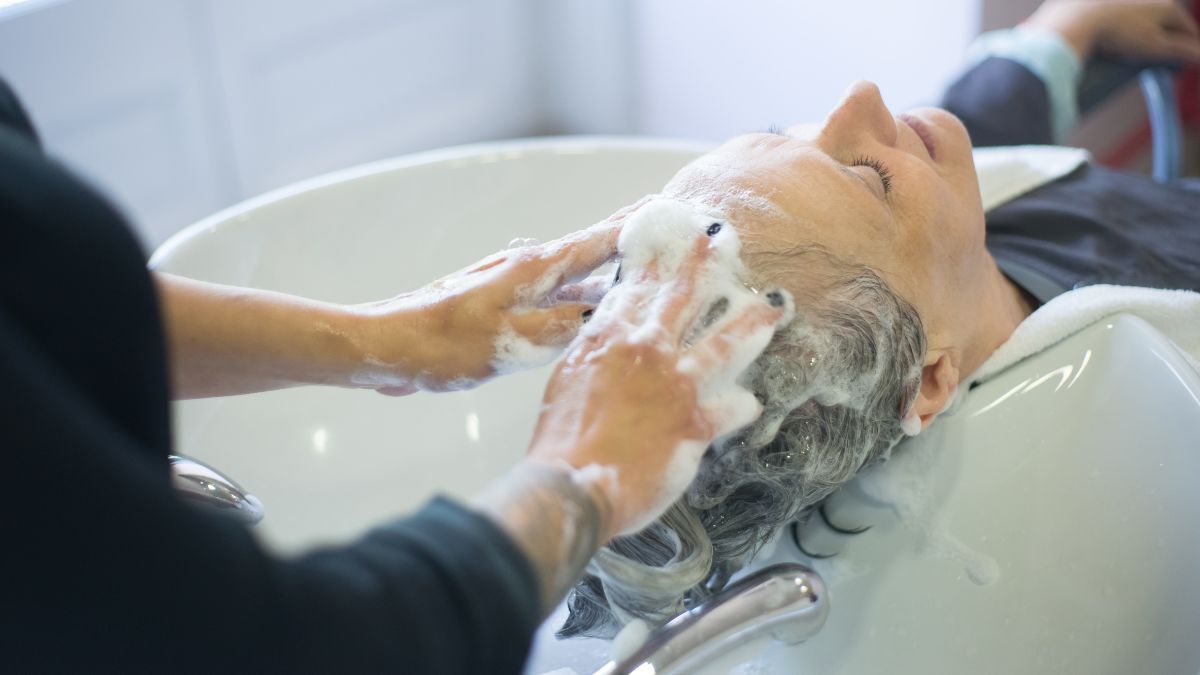
A rebonding treatment is a multi-step process, and according to Wiley, can take anywhere from 3 to 8 hours depending on your hair density and length, so make sure to clear your calendar, or make it a work-from-salon kind of day. “You’ll start with a thorough wash and dry, and from there, your hair will be sectioned and the relaxant will be applied,” she says. “The relaxant is typically left on for about 30 minutes, and once it’s finished processing, your hair will be steamed.” Your hair will then be rinsed and blow-dried, followed by a keratin lotion designed to neutralize your strands. The formula will be left on for another 30 minutes, and after a final rinse and blow-dry, your stylist will apply a serum and flat-iron your hair to lock in the sleek texture. “It’s a process, so be patient, because the results can be a game changer,” Colombini says.
Hair Rebonding vs. Hair Straightening
While rebonding and hair straightening are similar in terms of technique and the end goal, the key difference is in the ingredients used in each formulation. “One main difference is that the straightening formula typically uses formaldehyde, when the rebonding treatment does not,” Wiley says. “Additionally, the rebonding treatment uses the keratin treatment lotion, which adds proteins back into the hair, which lasts 3 to 4 months and isn’t permanent, so it doesn’t change the bonds in your hair.” Straightening, on the other hand, is a permanent process. While your hair will revert back to its natural state once the keratin in a rebonding formula wears off, you’ll typically have to cut off the processed length if you want to get rid of hair treated through straightening, as it stays straight until grown out.
Potential Side Effects: Is It Safe?
As with any chemical hair treatment, there are potential side effects, so finding a hairstylist who is skilled at rebonding is key in mitigating any risks. “Some of the most common potential risks are breakage and scalp irritation.” Wiley says. “Retouches over time may cause weakness in the hair bond and cause hair loss.” Additionally, because the treatment can be somewhat fume-heavy, Colombini recommends masking up so that you aren’t breathing in the chemicals. Read More...