Heaviest Neutron Star Ever Discovered Is a “Black Widow†Devouring Its Mate
-
 Loading...
 - Jakov Saric
- 01 Aug 2022
- 87 Views
- 0 Like
- 0 Comment
Observations of faint, planet-size star help weigh its millisecond pulsar companion.
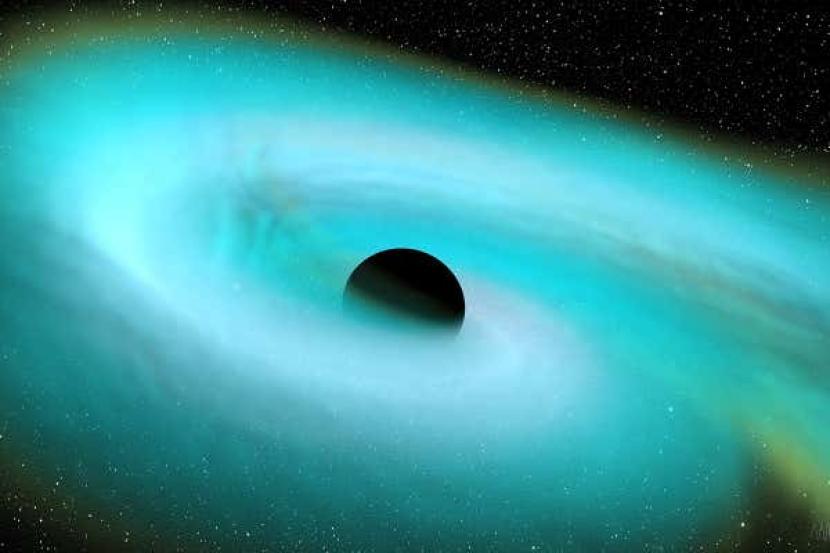
A dense, collapsed star has shredded and consumed nearly the entire mass of its stellar companion and, in the process, grown into the heaviest neutron star observed to date. It is spinning at 707 times per second — making it one of the fastest spinning neutron stars in the Milky Way galaxy.
Weighing this record-setting neutron star, which tops the charts at 2.35 solar masses (the mass of our sun), helps astronomers understand the weird quantum state of matter inside these extremely dense objects. If they get much heavier than that, neutron stars collapse entirely and disappear as a black hole.
“We know roughly how matter behaves at nuclear densities, like in the nucleus of a uranium atom,” said Alex Filippenko, Distinguished Professor of Astronomy. “A neutron star is like one giant nucleus, but when you have one-and-a-half solar masses of this stuff, which is about 500,000 Earth masses of nuclei all clinging together, it’s not at all clear how they will behave.”
According to Roger W. Romani, astrophysics professor, neutron stars are incredibly dense, with 1 cubic inch weighing over 10 billion tons. This means that their cores are the densest matter in the universe short of black holes, which are impossible to study because they are hidden behind their event horizon. Therefore the neutron star, a pulsar designated PSR J0952-0607, is the densest object within sight of Earth.
The extreme sensitivity of the 10-meter Keck I telescope on Maunakea in Hawai’i was what made it possible to measure of the neutron star’s mass. It recorded a spectrum of visible light from the hotly glowing companion star, which is now reduced to the size of a large gaseous planet. Located in the direction of the constellation Sextans, the stars are about 3,000 light-years from Earth.
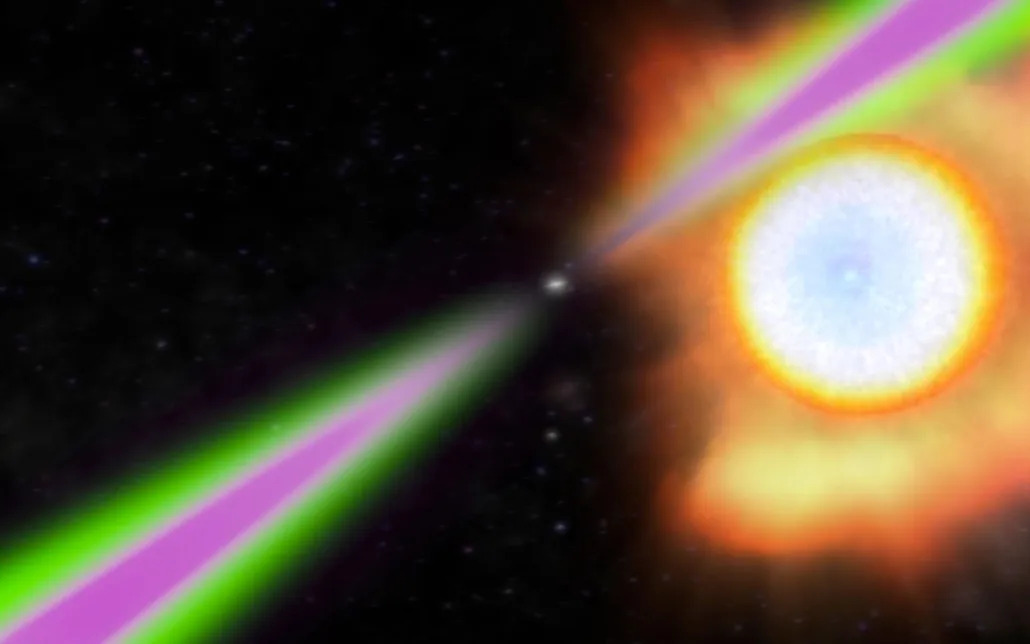
Discovered in 2017, PSR J0952-0607 is referred to as a “black widow” pulsar. Their name is an analogy to the tendency of female black widow spiders to consume the much smaller male after mating. Hoping to establish the upper limit on how large neutron stars/pulsars can grow, Filippenko and Romani have been studying black widow systems for more than a decade.
“By combining this measurement with those of several other black widows, we show that neutron stars must reach at least this mass, 2.35 plus or minus 0.17 solar masses,” said Romani, who is a professor of physics in School of Humanities and Sciences and member of the Kavli Institute for Particle Astrophysics and Cosmology. “In turn, this provides some of the strongest constraints on the property of matter at several times the density seen in atomic nuclei. Indeed, many otherwise popular models of dense-matter physics are excluded by this result.”
If 2.35 solar masses is close to the upper limit of neutron stars, the astronomers say, then the interior is likely to be a soup of neutrons as well as up and down quarks — the constituents of normal protons and neutrons — but not exotic matter, such as “strange” quarks or kaons, which are particles that contain a strange quark.
“A high maximum mass for neutron stars suggests that it is a mixture of nuclei and their dissolved up and down quarks all the way to the core,” Romani said. “This excludes many proposed states of matter, especially those with exotic interior composition.”
Romani, Filippenko and graduate student Dinesh Kandel are co-authors of a paper describing the team’s results that were published in The Astrophysical Journal Letters.
How large can they grow?
Astrophysicists generally agree that when a star with a core larger than about 1.4 solar masses collapses at the end of its life, it forms a dense, compact object with an interior under such high pressure that all atoms are smashed together to form a sea of neutrons and their subnuclear constituents, quarks. These neutron stars are born spinning, and though too dim to be seen in visible light, reveal themselves as pulsars, emitting beams of light — radio waves, X-rays or even gamma rays — that flash Earth as they spin, much like the rotating beam of a lighthouse.
“Ordinary” pulsars spin and flash about once per second, on average, a speed that can easily be explained given the normal rotation of a star before it collapses. But some pulsars repeat hundreds or up to 1,000 times per second, which is hard to explain unless matter has fallen onto the neutron star and spun it up. But for some millisecond pulsars, no companion is visible.
One possible explanation for isolated millisecond pulsars is that each did once have a companion, but it stripped it down to nothing.
“The evolutionary pathway is absolutely fascinating. Double exclamation point,” Filippenko said. “As the companion star evolves and starts becoming a red giant, material spills over to the neutron star, and that spins up the neutron star. By spinning up, it now becomes incredibly energized, and a wind of particles starts coming out from the neutron star. That wind then hits the donor star and starts stripping material off, and over time, the donor star’s mass decreases to that of a planet, and if even more time passes, it disappears altogether. So, that’s how lone millisecond pulsars could be formed. They weren’t all alone to begin with — they had to be in a binary pair — but they gradually evaporated away their companions, and now they’re solitary.” Read More...