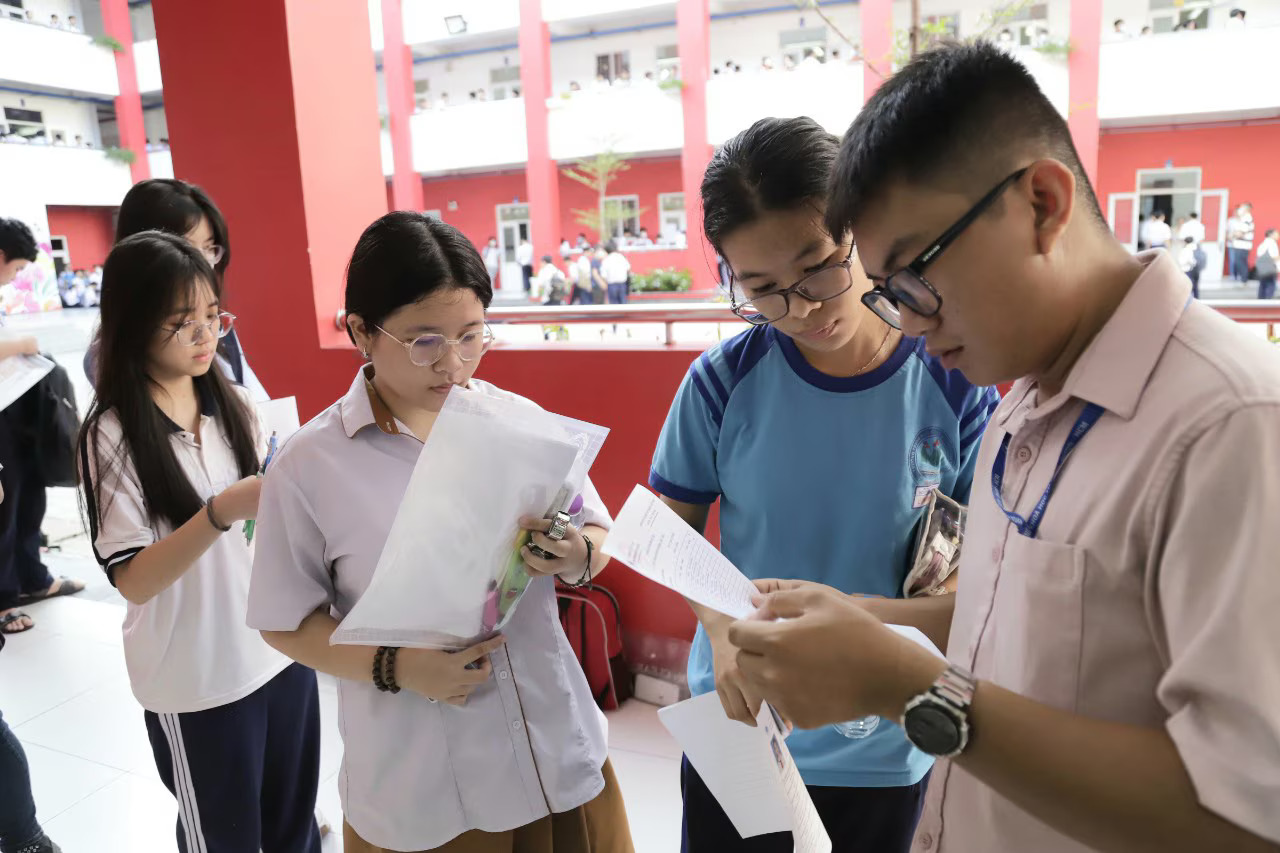
Ho Chi Minh City to make English a second language in public high schools
-
 Loading...
 - Mei Takehiko
- 26 Aug 2024
- 61 Views
- 0 Like
- 0 Comment
Ho Chi Minh City is set to launch a pioneering initiative in the 2024-25 school year by piloting English as a second language in selected public high schools. This move represents a significant advancement in the city's educational landscape, aiming to further enhance the language proficiency of its students.
Nguyen Van Hieu, director of the Ho Chi Minh City Department of Education and Training, confirmed the plan during a conference reviewing the 2023-24 school year and outlining the goals for the upcoming academic year. The new academic year is slated to begin at the end of this month.
This initiative is particularly timely, as students in Ho Chi Minh City already lead the nation in English proficiency, with an impressive average score of 6.73 in the 2024 national high school graduation exam. The city has long been at the forefront of integrating English into its education system, offering various English programs across public elementary, middle, and high schools. These include elective English courses, advanced English, and integrated English instruction in subjects like math and science.
The move aligns with a recent directive from the Politburo, which emphasizes the importance of international integration in education and the enhancement of foreign language skills, particularly in English, to improve the quality of human resources for national development.
During the conference, Deputy Minister of Education and Training Pham Ngoc Thuong underscored the importance of this initiative, citing Ho Chi Minh City's role as Vietnam's economic hub. He stressed the need for students to meet regional and global English proficiency standards and encouraged the city to set a high benchmark in English education.
In response, Director Hieu expressed confidence in the city's readiness to implement the plan, noting that schools will be carefully selected to pilot the program at the beginning of the new school year.
The initiative has garnered strong support from educational leaders. Tran Thi Hong Thuy, principal of Tran Dai Nghia Middle and High School in District 1, anticipated positive parental backing for the policy, as it offers students the opportunity to learn in an English-speaking environment. She highlighted the city's existing English curriculum, which starts from the third grade, as well as its effective English teaching programs.
Nguyen Thi Tu, principal of Practical High School under Ho Chi Minh City University of Pedagogy in District 5, echoed this sentiment, noting that her school's current English enhancement programs already enjoy strong support from both parents and students.
The high scores achieved by students in city and national English exams further demonstrate their readiness for this significant educational shift. As Ho Chi Minh City moves forward with this pilot program, it sets a new standard for English education in Vietnam, positioning its students to thrive in a globally interconnected world.