How to Clean a Camera Lens
-
 Loading...
 - Chang Pu Lin
- 07 Jun 2022
- 266 Views
- 0 Like
- 0 Comment
Realizing that your lens was dirty during a shoot is not a great feeling. While some specks of dust and other consequences of a dirty lens can be fixed via spot healing and other post-processing, it’s much easier to make sure your lens is clean to begin with and save editing time. Plus, attention to the state of your lens will help it retain its value over time and increase its longevity.
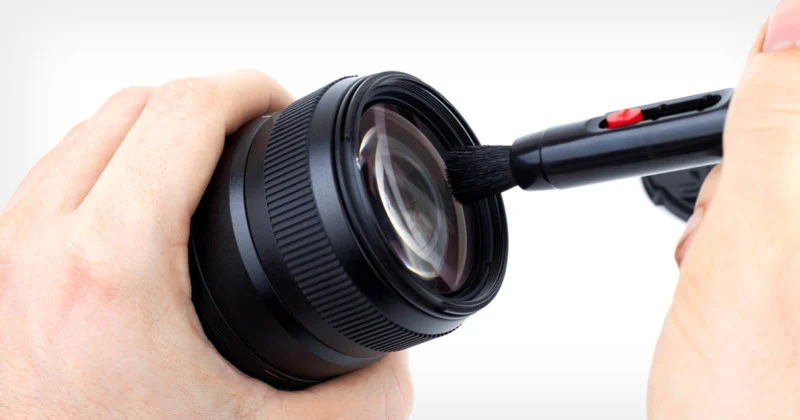
This guide will teach you how to clean your camera lens, advise what not to do, and explore other lens cleaning considerations.
Should You Clean Your Lens?
It’s important to understand that cleaning your lens isn’t always necessary, and it is entirely possible to clean your lens too much. Every time you clean your lens, you risk damage to important optical coatings as well as the lens glass itself. That being said, if you clean a dirty lens properly, these risks are minimized, and you will see positive results.
How to Tell If Your Lens Needs Cleaning
There are different ways to gauge whether your lens should be cleaned or not. We will cover two of them: with simple visual inspection and by shooting a photo of a plain surface.
Visual Inspection
One of the simplest ways to check for a dirty lens is to look at it using a flashlight. Set your lens somewhere safe and use a light as necessary to look for smudges, dust, and other signs of a dirty lens. You may want to use reading glasses to help you see small details.
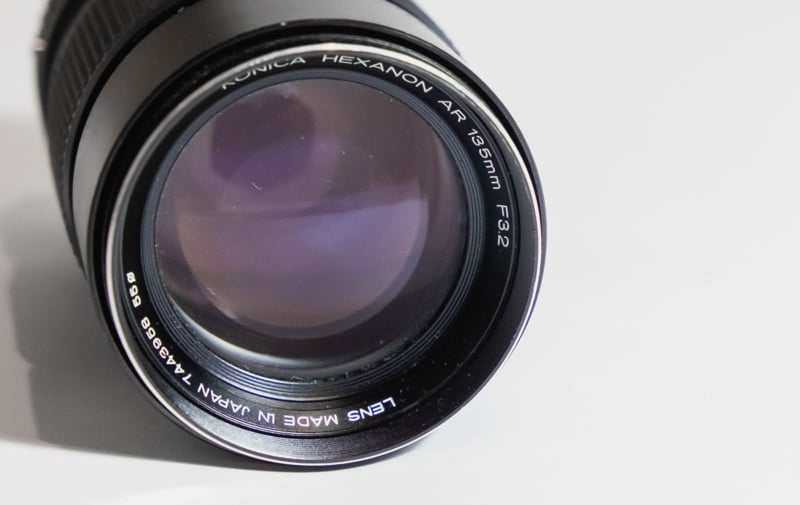
For best results, open the aperture as wide as possible (the smallest f-stop) so that you can shine the light through the lens and see imperfections. Try not to shine the light at your eyes through the lens, because this could hurt your eyes.
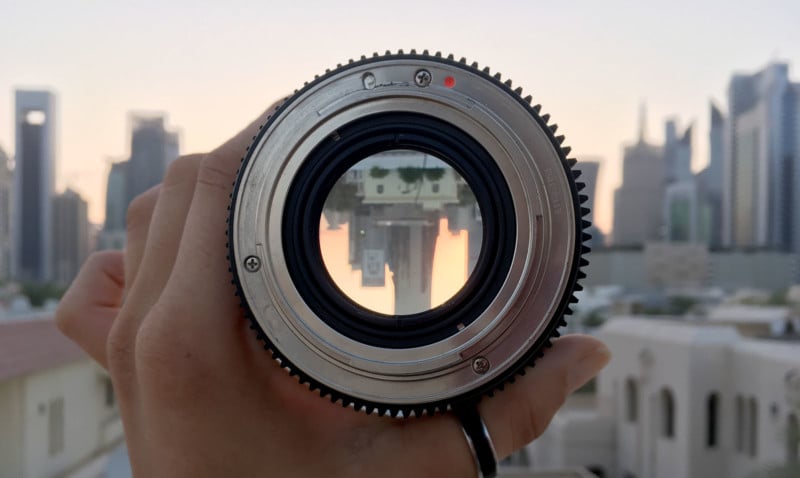
Note that these techniques can also be useful when inspecting a pre-owned lens to judge its quality. This method will allow you to detect scratches, chips, fungus, and other imperfections.
Be sure to check both the front element and the back element of the lens. While the back element is less likely to get dirty because it isn’t exposed, dust and smudges on the back element are most noticeable because of the way light travels through your lens.
Note: If you notice imperfections on your lens that have branches extending from them, this is likely lens fungus. This is discussed further in this article, but fungus is usually more complicated to remove than dust and smudges.
Photograph a Plain Surface
One of the most simple and defining techniques is to check for spots on an image of a blank sheet of paper or the sky.
1. Set your aperture to the highest number available (Aperture Priority mode might be useful for this). This ensures that the depth of field is as high as possible, and you are more likely to get any unwanted specks to show up. Read More...