How to Sell Limited Edition Prints as a Photographer
-
 Loading...
 - Belkis Bekele
- 10 Aug 2022
- 71 Views
- 0 Like
- 0 Comment
At some point in time during your photography career, you will probably decide to start offering limited edition prints of some of your best work. It’s a good idea to sell your prints as editions because it’s the way you can court collectors and galleries to purchase or represent your work.
Knowing that there are only a limited number of prints and sizes available increases the gravity of the buying task.
There are a few components to creating limited editions that both galleries and collectors want to envision when purchasing, how many prints are in the edition, what they are printed on, and that they are signed and dated suitably. Here are some factors to consider.
How Many Prints to Produce in the Edition
Deciding on what size your edition run will have has no hard and fast rules. It’s entirely your choice. You’ll have to consider how many you think you can sell; also knowing that once the run is sold out – that’s it! There are no more.
Another factor to include in your decision is how are you making the prints. If they are fiber-based prints that you do in the darkroom, you may want to have a smaller edition for those since they are time-consuming and a challenge to create. If the prints are created at a printing service using archival materials to create the prints, you should do the print run all at once.
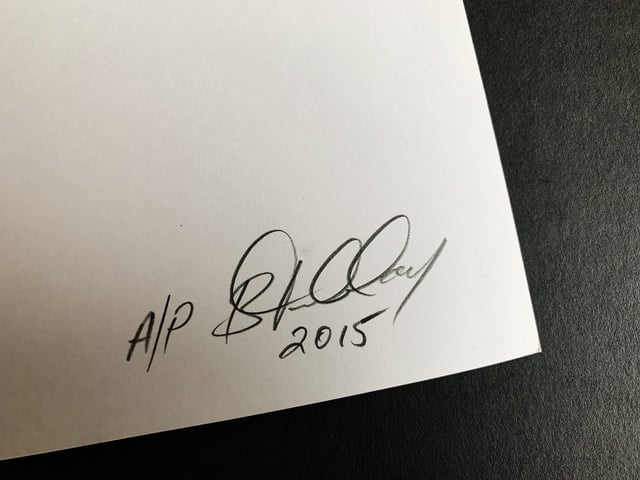
Don’t forget, you can label the first prints when you finally got the print looking exactly like you wanted as Artist Proofs. These can fetch a higher price than the numbered editions.
Remember that a smaller print run indicates an exceptional value to the buyer.
Whatever you do, don’t breach the trust of the gallery or collector and go back on your word and make more prints than you originally decided for the edition. It will quickly devalue your work and your reputation will suffer.
Choose What Sizes to Offer in the Edition
If your edition run only has five or ten, you may want to sell different sizes in the edition. That doesn’t mean you should offer everything from 4×6 to 20×24 prints. Pick three to five at most. When doing multiple sizes in a print run, it allows you to lower the price some and reach a broader audience. The choice is yours.
Choosing a Printer
The next thing you’ll want to start researching is finding a printer that can deliver the highest quality prints. You may be fortunate enough to find a printer in your area or you can find photo printing services that specialize in creating high-quality, archival prints. If you have networked with any other fine art photographers who are selling editions, you may want to ask them where they get their prints done.
You might also get lucky and find a printer that can do both the printing and will ship directly to your client. Sure it will cost extra, but it will free up more of your time so you can get back to creating photographs.
Some of the things you might want to look out for when finding a printer for your photos are:
The type of printer and pigments they use.
The various photographic papers and finishes they offer.
Who are some of the clients that they create prints for?
One well-known printer posts a list of some of their clients and it reads like a who’s who of the greatest photographers known today!
Labeling your Limited Edition Prints
Once you’ve decided on how you’re going to sign your prints keep using that same method for all of them. This isn’t just a matter of where to place your signature on the print, but also adding the title and edition numbering.
My suggestion, when creating your prints, is don’t make a borderless print of the image. A full bleed print will leave you no place to sign and don’t sign on the actual image! Signing directly on the image will result in a discoloration of the ink that could affect the print in that area making an unsightly stain. Print your image so there is a border around the image and leave a larger border (approximately twice the size of the other borders) at the bottom. It’s in this space that you can now begin your labeling. Read More...