These dazzling photos of the Milky Way will take your breath away
-
 Loading...
 - Henry Williams
- 24 May 2022
- 293 Views
- 0 Like
- 0 Comment
Starlight, star bright, we hope to see the Milky Way on a cloudless night. Astrophotography inspires and reveals wonder and majesty all around us, and dedicated photographers are often out when the world sleeps, documenting dazzling displays.
Capture the Atlas recently announced the winners of its annual Milky Way Photographer of the Year contest, and it’s safe to say that the entries will have us making more than a few wishes on all those beautiful, brilliant stars.
About the Milky Way Photographer of the Year contest
Since 2017, Capture the Atlas, a travel and photography blog focusing on landscapes and astrophotography, has published a collection of the best Milky Way photos from around the world. Each annual compendium features astounding images of the galaxy, alongside the photographers’ anecdotes.
This year, 12 countries and 14 nationalities are represented in the top 25. Here are 10 of our favorite images from the 25 awe-inspiring winning entries.
Ice age
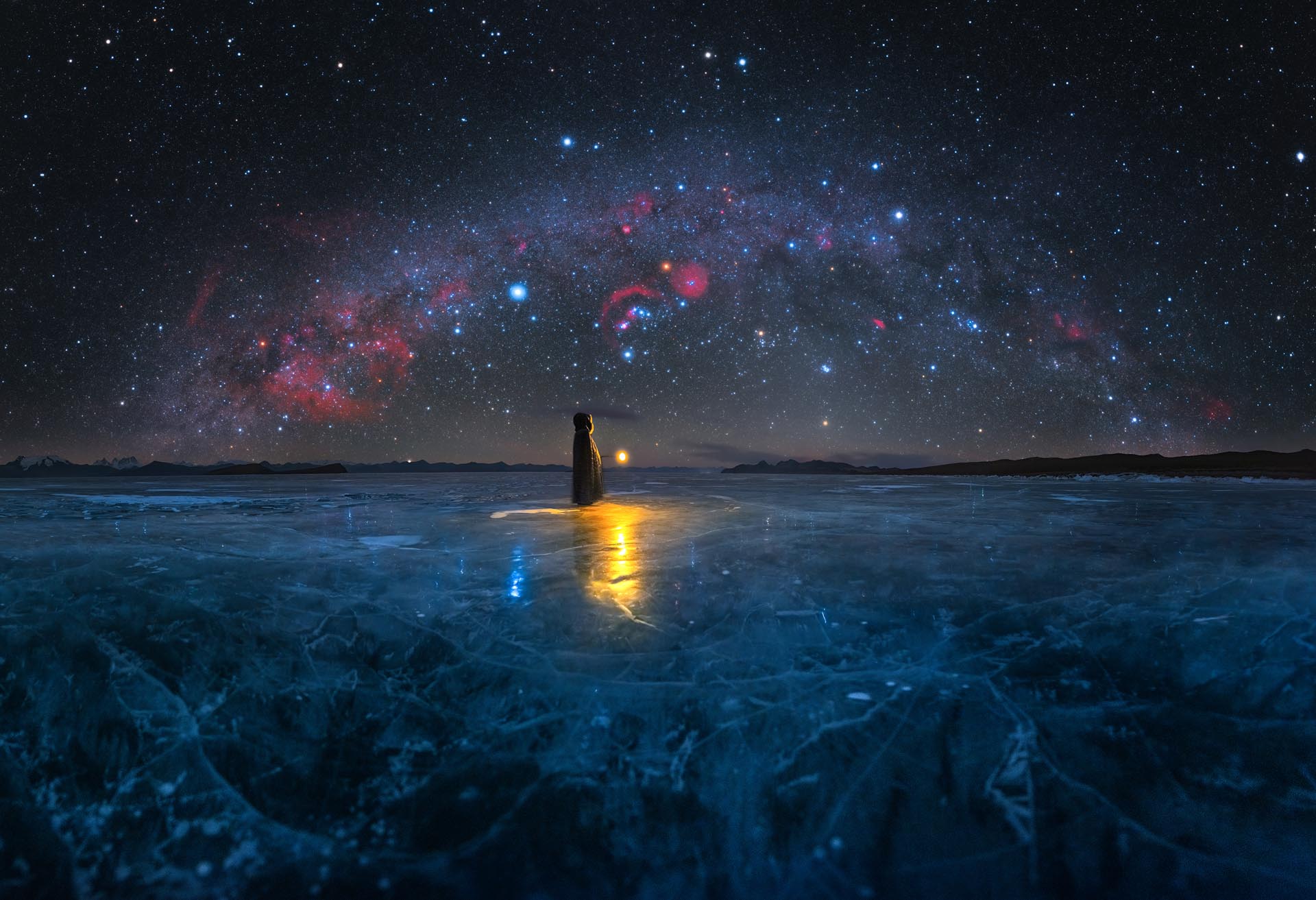
The dashes of red, the icy blue, and the warm glow of the light all contribute to the feeling of magic and wonder on a cold winter night.
“This lake, located in Tibet, freezes every winter,” explains photographer Alvin Wu. “At night, under the low temperatures of minus 20 °C (-4 °F), you can listen to the sound of the ice cracking while capturing the most beautiful winter sky. The blue ice surface and dazzling Orion constellation create a fantasy landscape.”
Egyptian nights
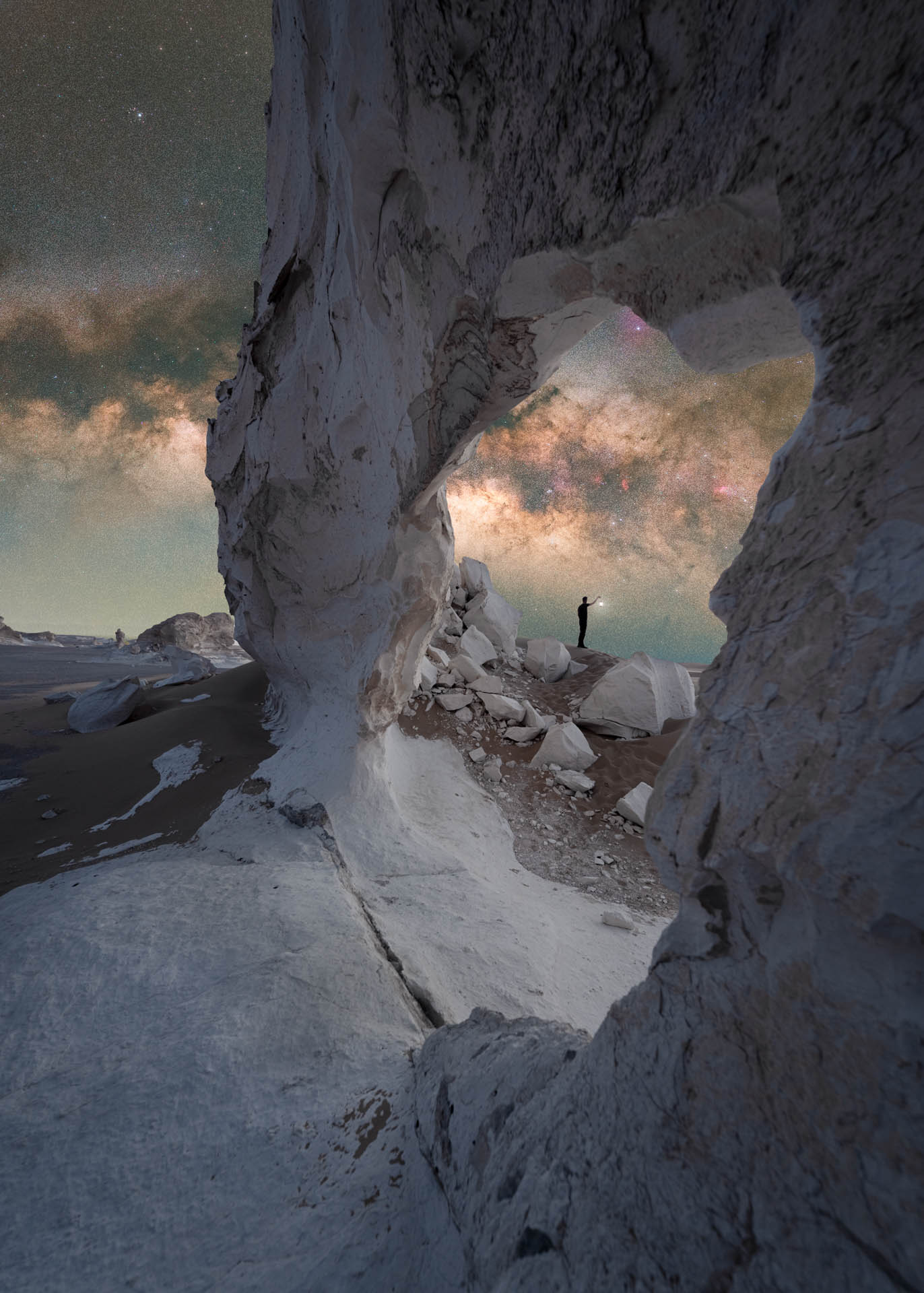
In one coup, photographer Burak Esenby captures both the formidable formations of the White Desert in Egypt with the ephemeral Milky Way splashed across the sky. The expert framing draws the viewers’ eyes along the arch to the brightest patch of stars, and finally to the lonely human form in a stunning reference to the Romantic movement. I instantly thought of Caspar David Friedrich’s ‘Wanderer Above the Sea of Fog.’
“I went to Egypt for the first time,” Esenby recounts. “The White Desert was our focus here, in a place full of nature and Bortle 1-2 skies. In addition to photogenic sand dunes, there are also a lot of particularly shaped rock formations. Due to the many sandstorms, many of these rock formations are uniquely shaped and thus offer a wide variety of compositions. You will easily believe me when I say that it was really fun to be here.”
House of lavender
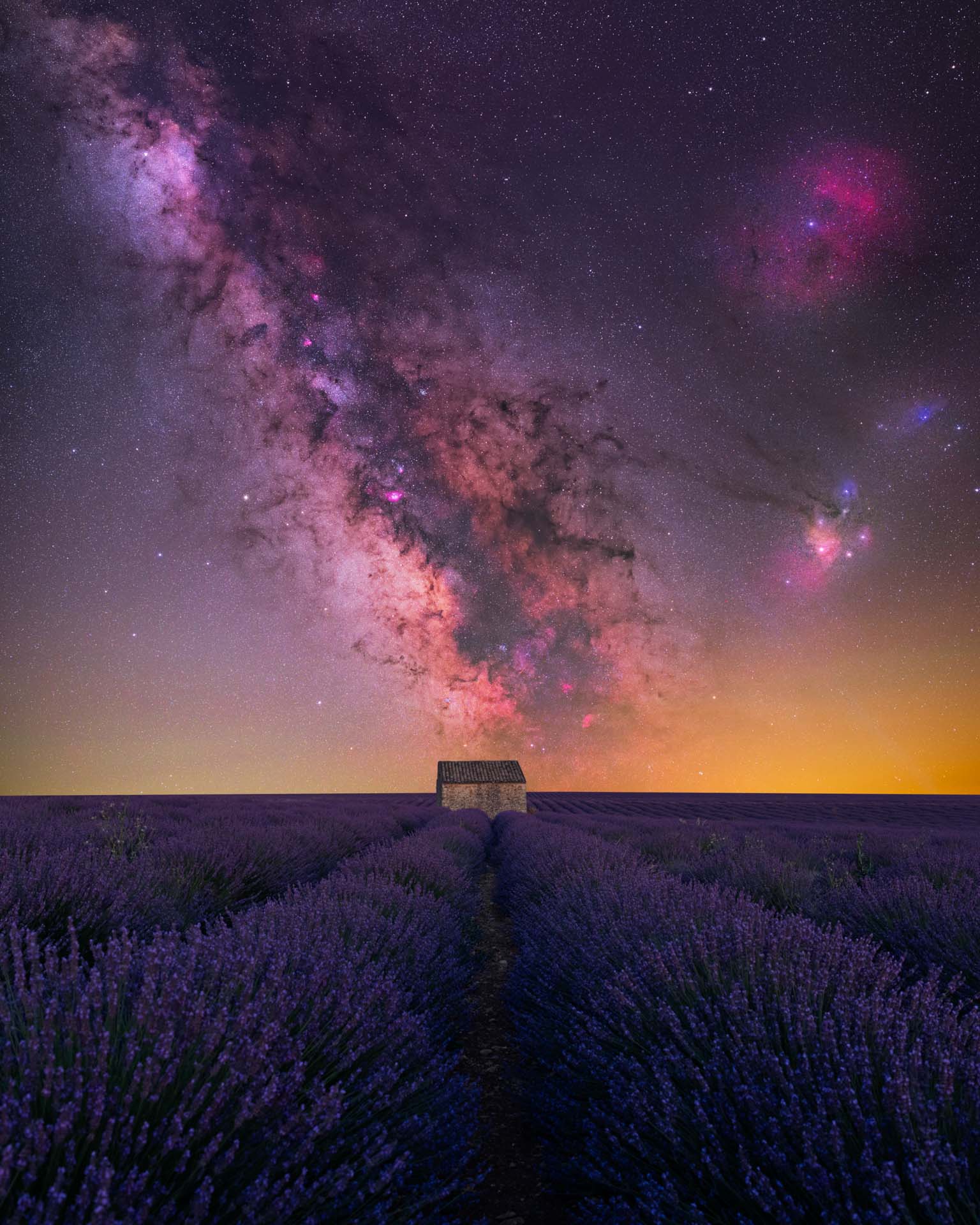
“The smell and atmosphere of these lavender fields are unreal, and standing there among them in the middle of the night is blissful, especially since the bees have gone to sleep and you don’t risk getting stung!” Benjamin Barakat shares. “Nothing is better than a warm summer night with a beautiful view of the night sky and this lonely, iconic house that sits in the middle of the lavender plateau!”
Mt. Fuji and the Milky Way over Lake Kawaguchi
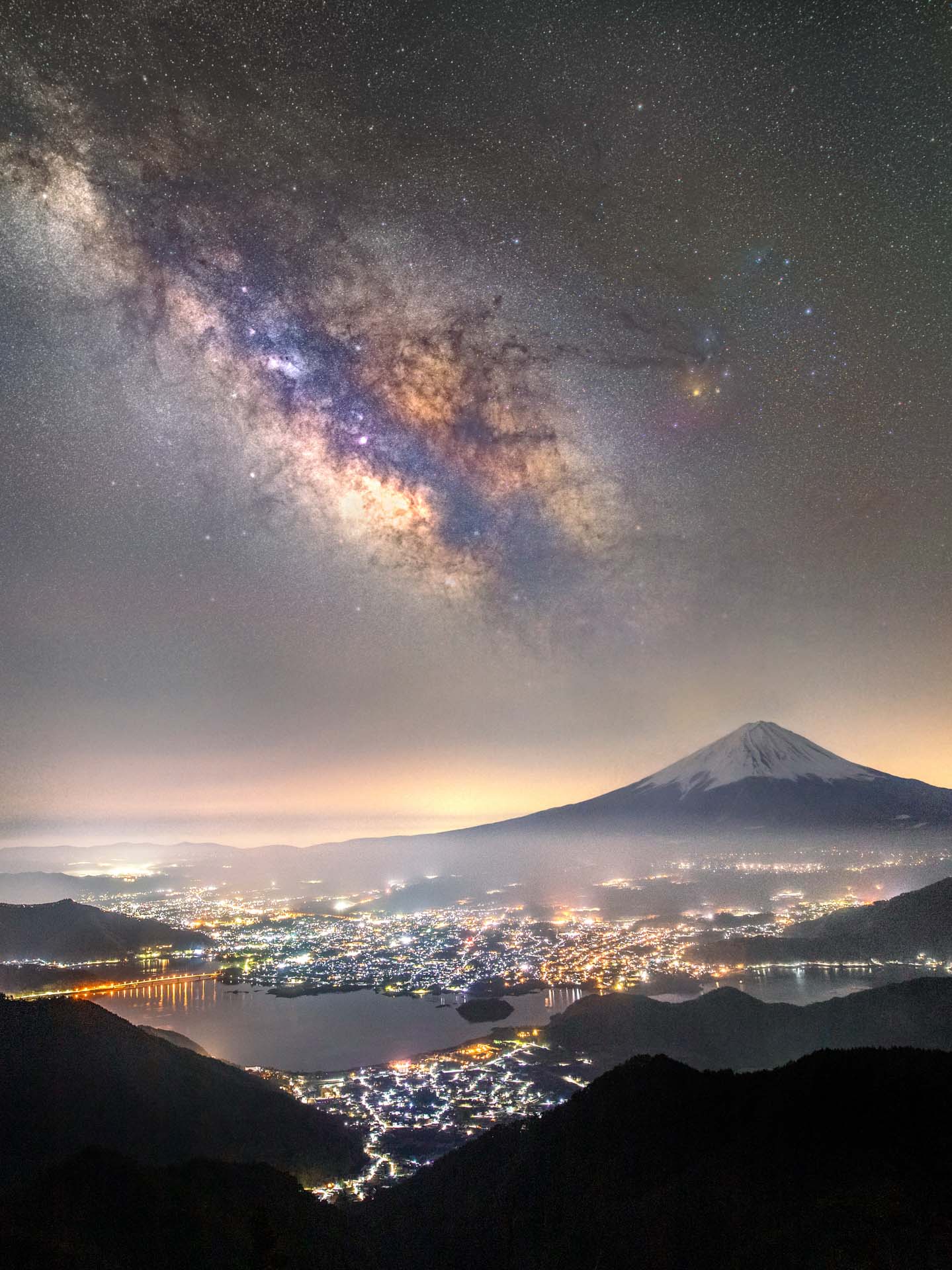
I love this juxtaposition between the stark urban lights, the imposing rise of Mt. Fuji, and how the Milky Way seems to be reaching for the mountain. Takemochi Yuki went out at 3 a.m. for this shot, but it looks like it was worth it.
“This is the only time in spring that you can take a picture of this night view, with Mt. Fuji and the Milky Way,” Yuki explains. “In winter, it becomes difficult to reach the road, since it’s covered in snow. When it gets warmer in the summer, the Milky Way rises to the west and it’s out of frame. I photographed different exposures for the different areas of the scene to balance all the light.”
Perseid meteor shower on Mangart Saddle
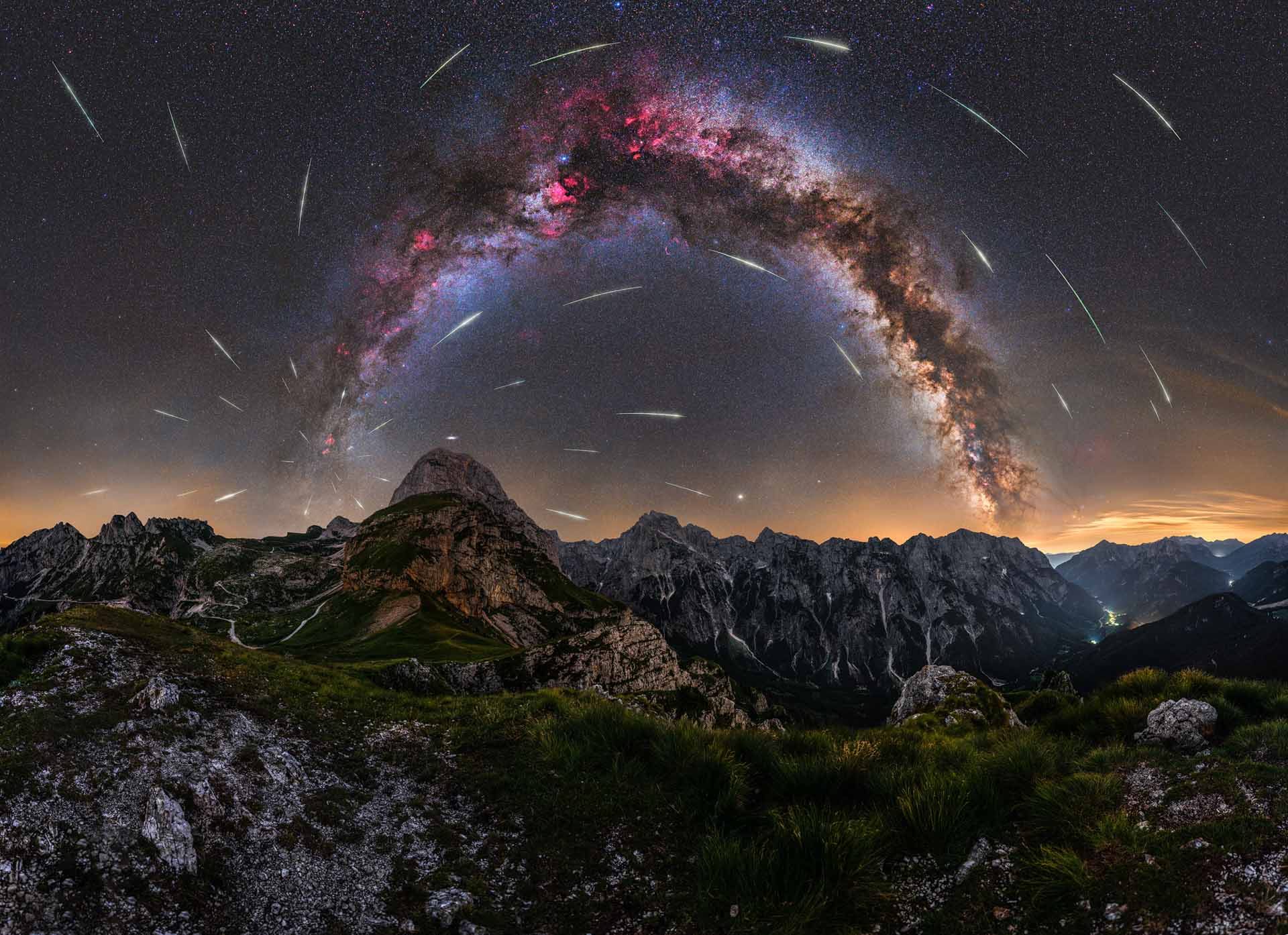
“I love nature and being somewhere outside under a starry sky in serene silence. That’s when I feel free, but, at the same time, so small,” Fink says. “What always excites me about photographing the night sky is that you never know what to expect; surprises are happening all over the sky. The highest peak in this part of the Julian Alps is Mangart (2,679 meters), the third highest mountain in Slovenia above which the Andromeda Galaxy emits its light. Slightly to the right of it are Jalovec Mountain and the Loška walls, which rise above the Alpine valley of Loška Koritnica.”
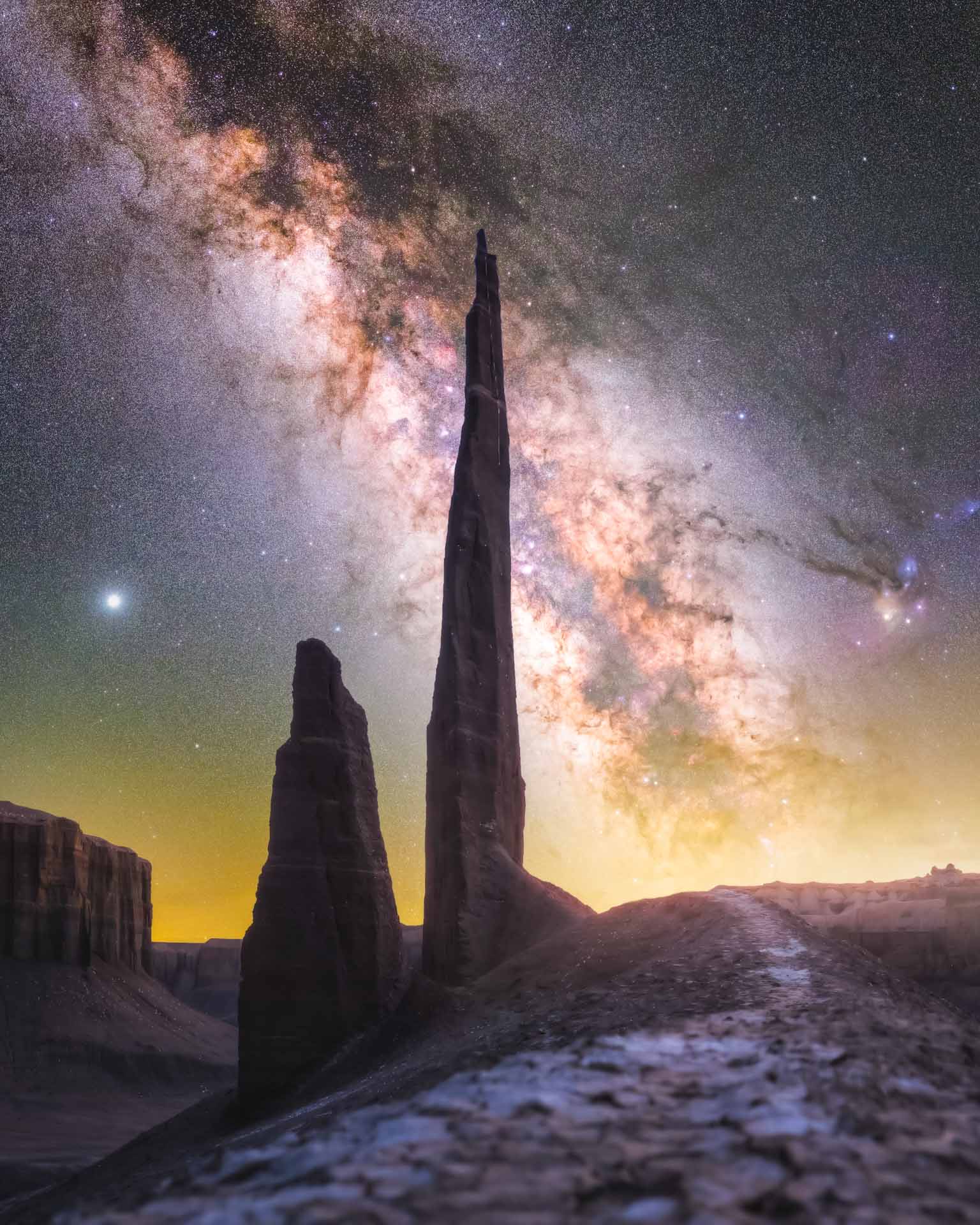
“This needle-like pinnacle is one such location nestled below a set of blue shale cliffs in the Hanksville Badlands,” Spencer Welling reveals. “The night sky over this region offers some of the darkest, clearest views of the stars in the entire Southwest. On clear, moonless nights, the stars shine bright enough to cast perceptible shadows on the ground, as they did on this night when I was standing below the Needle.” Read More...