In Bolivia, a new species of piranha is discovered.
-
 Loading...
 - Larkin Eacock
- 09 Jul 2024
- 61 Views
- 0 Like
- 0 Comment
A new species of piranha has been found in Bolivia's upper Madeira River system by a group of biologists led by the Universidad Autónoma de Madrid (UAM). The newly discovered Serrasalmus magallanesi ties the abundant biodiversity of the Amazon basin together in a new way. This finding highlights the significance of proceeding with research on the district's ichthyofauna for its legitimate protection.
Types of the genera Serrasalmus, Pygocentrus and Pygopristis are normally known as piranhas or palometas in the districts of the upper Madeira Stream framework in Bolivia. These piranhas, like many others in South America, are predators that primarily consume fish, small invertebrates, and even plant materials like seeds and fruits.
The taxonomy of Bolivian Serrasalmus species is poorly understood. There are not many investigations that attention on the distinguishing proof of these species through outer morphology or hereditary data. The morphological ID of types of the family Serrasalmus, both in the field and in historical centers, addresses a test for ichthyologists and oceanic scientists because of variables like the distinction in the ontogeny of these species and morphological variety inside similar species. Hence, concentrates on that incorporate morphological and hereditary procedures are expected to describe and analyze the types of this sort satisfactorily.
A new species of piranha belonging to the genus Serrasalmus has been discovered in the upper Madeira River system after recent revisions of material from Bolivian ichthyological collections. Due to the similarity in the location at the base of the caudal fin in Bolivian collections, this species had been mistakenly identified as Serrasalmus hollandi. In any case, S. hollandi has a short, hearty nose and an undeniable humeral spot, though the new species has a lengthened nose and the humeral spot is diffuse or missing.
159 individuals from the eight known species of Serrasalmus as well as the potential new species of Serrasalmus that are present in Bolivia were analyzed in order to verify the existence of this new species. Thirty-three morphological measurements, 17 morphological counts (including scale counts, fin ray counts, and tooth counts), and an analysis of ten coloration variables were carried out. Previous research on species belonging to the genus Serrasalmus examined a number of these variables. Radiographs were also taken to count and measure some bones and osteological structures like vertebrae, ribs, and fin rays. Comparative diagnoses were also determined by reviewing original descriptions and works on the 24 species of the genus Serrasalmus that were not reported in Bolivia.
Genetic analyses based on the mitochondrial COI (Cytochrome Oxidase I) gene were part of the study. Complementary sequences of other species were obtained from GenBank, while sequences of Bolivian species were obtained from the Canadian Center of Barcoding (Guelph, Canada) and deposited in the Barcode of Life Data Systems (BOLD). MEGA 11 and PhyML were used to conduct genetic analyses.
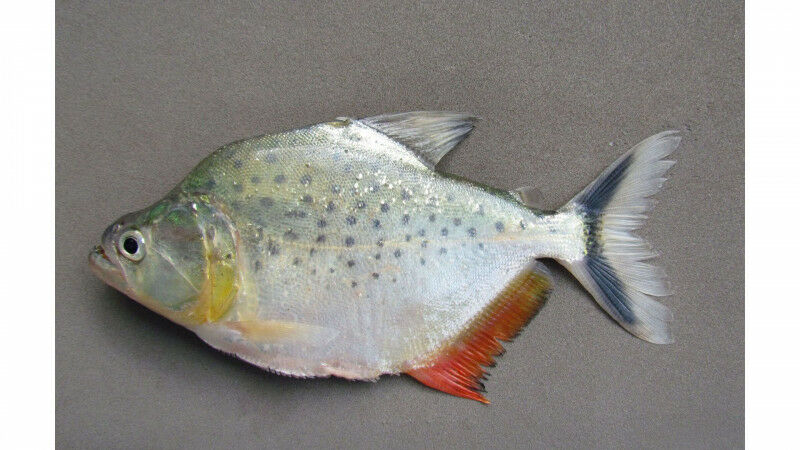
Serrasalmus magallanesi: Serrasalmus magallanesi sp., a new species nov. distinguishes itself from the rest by a unique set of characteristics: in its natural state, it has a silvery body, an anal fin with a distinctive crescent-shaped spot at the base, and a deep red anal fin with a dark stripe along the edge. It has an elongated snout and a diffuse or absent humeral spot, and it can grow to 20 cm in length. The anal fin's red color and the body's silver color disappear when alcohol is used to preserve it.
A group of Bolivian biologists from the Limnology and Aquatic Resources Unit (ULRA) at the Universidad Mayor de San Simón in Cochabamba, Bolivia, described the new species. This species' type locality is: Laguna 27 de Mayo, sub-bowl of the Beni Stream, Branch of Beni, upper Madeira Waterway, Amazon bowl, Bolivia.
Serrasalmus magallanesi is the 32nd species of piranha discovered in South America and the ninth in Bolivia. Because the ichthyofauna of the Amazon basin are such an important part of the planet's natural heritage, this finding emphasizes the importance of continuing research into them in order to both preserve them and discover new species.