Greek conservationists collaborate to protect endemic species in face of climate change
-
 Loading...
 - Darby Hughes
- 16 Sep 2022
- 83 Views
- 0 Like
- 0 Comment
High above sea level on the central Greek mountain of Oiti, the mythological place of Hercules’ funeral, snow melts in the springtime. As the soil becomes wet, grasses start growing and ponds that last three months or longer per year begin to form.
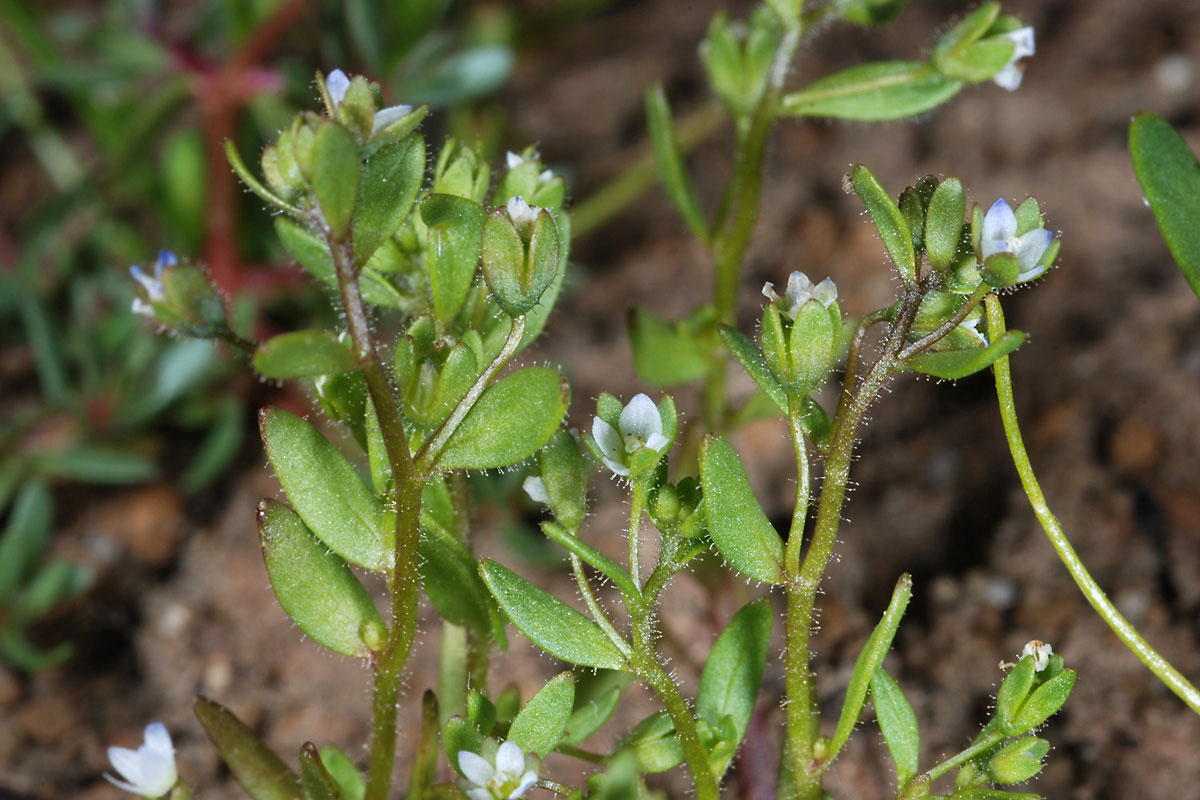
When the weather warms, the ponds, once up to half a meter (1.5 feet) deep, evaporate, and a flower species with four dot-sized white petals sprouts, typically in May. These dried ponds on Mount Oiti are the only place in the world where it’s possible to find the tiny flower Veronica oetaea.
Since 2013, scientists at the National and Kapodistrian University of Athens have annually monitored the dwarf flower’s population across the three pond sites where it’s found. Scientists have recorded tens of thousands of flowers in all the sites every June — until 2021, when they recorded the flower in only one dried pond.
Central Greece has experienced unusually early warm spring weather for the past four years, especially in 2021. The plant likely bloomed earlier than normal, because ponds dried quicker, and in smaller populations, said Avra Stamellou, a biologist at Mount Oiti National Park who arranges researchers’ visits to the mountain.

The survey results show how much changes in the weather’s timing can disturb a flower’s life cycle. In Europe, climate change has driven a trend of early spring weather for two decades, as reported in a 2020 Global Change Biology study. If Greece’s early springs become more consistent, they will place V. oetaea at extinction risk, Stamellou said.
“I think the species will disappear very soon. Now, it’s close to disappear[ing]. I think in the future, you won’t have this species, at least, in the two lowest ponds,” Stamellou said in an interview with Mongabay.
The Mediterranean Basin is a global hotspot for limited-range (or endemic) species. The Greek government’s biodiversity conservation plan reported that 22% of plant species in Greece are found only in Greece, one of the highest proportions of any European nation. The country also has more than 4,000 unique animals, mostly insects and several vertebrates.
Some of Greece’s endemic species are restricted to a single mountaintop, lake, island or national park — which makes them vulnerable to extinction amid disturbances like a changing climate. Habitat destruction and unsustainable farming practices also threaten such species.
Discussions of how to protect endemic species has taken center stage at the United Nations Biodiversity Conferences. These meetings between governments from around the world, including Greece, have led to the signing of international treaties aiming to prevent extinctions. Read More...