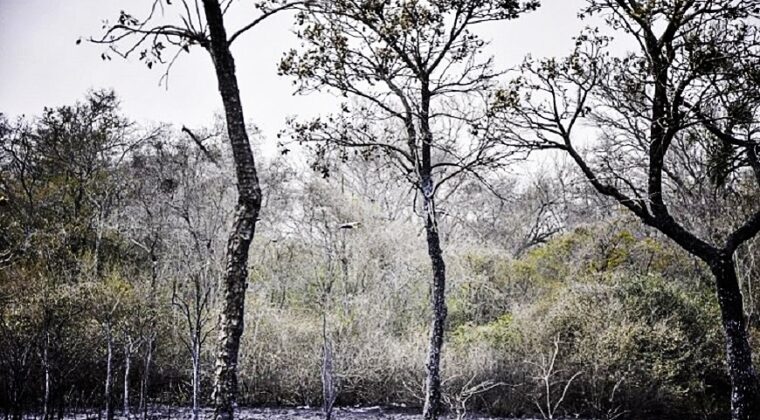
With forest fires come innumerable problems in biodiversity

Official data from the Geomatics Directorate of the Ministry of the Environment reports that during the month of August, some 48 heat sources were detected in 4 protected wild areas.
The Wild Protected Areas affected were the Cerrado del Río Apa, Gran Chaco, Lago Ypoa and Mbaracayú.
It is worth mentioning that each year, these protected areas are consumed by fire, affecting several hectares, thus putting all biodiversity at risk.
In this sense, the Ministry of the Environment and Sustainable Development (MADES), each year is in charge of carrying out campaigns with the aim of raising awareness among people about the serious effects of fire on the ecosystem. One of the responsible agencies is the Wildlife Department, which warned about the risks that are triggered by the fires generated for the ecosystems.
It is important to highlight that a forest fire affects the entire ecosystem, the soil, the microorganisms, the flora and the fauna. "It not only involves the burning of a tree, a plant or an animal," they indicate from the Mades.
In this regard, it should be noted that these individuals play a specific role in the environment and the impact occurs at the ecosystem level. In recent days, several animals were observed trying to flee from the fires, such as the case of the Puma that entered a house in Remansito and the Karaja that sought refuge in the Fernando de la Mora area.
Normally, these animals are affected by burns or suffocation due to the high concentration of gases, without being able to escape from the flames. The most common species that are often affected are felines, monkeys, anteaters, armadillos, birds, amphibians and reptiles, as well as wasps and bees, whose honeycombs and nests are usually in trees. Read More…