Is This The Silver Age Of Irish Food?
-
 Loading...
 - Noemi Alonge
- 27 May 2022
- 307 Views
- 0 Like
- 0 Comment
More often than I care to be, I am asked by a) people who are thinking of going to Ireland and b) people who have never been to Ireland and c) people who worry about what to expect from the food, the teeth-grinding question, “Is there really anything to eat in Ireland besides fish and chips and corned beef and cabbage?”
Such ignorance persists among those same people who think all Indian food is a form of curry, all Thai food is searingly hot and all German food is heavy. (Actually, that last one is pretty close to the truth.) The fact that corned beef and cabbage is more of an Irish-American favorite than it is in the Old Country shows just how myopic the question is. And even if one were to factor in a well-deserved reputation for rather bland cooking even twenty years ago in Ireland, the answer to the question is that Irish food now can be among the best in Europe simply because of the exceptional quality of its ingredients—including seafood ranging from wonderful crabs and lobsters to sea fish, trout and salmon; superb lamb and chickens with real flavor; and dairy products unmatched by any but the French. And the fact that Ireland has enjoyed an entire generation of young chefs who have trained in much heralded kitchens on the Continent and adapted their techniques to Irish provender has resulted in a widespread, imaginative cuisine all its own, from Dublin to Belfast. Let’s call it the Gaelic Gastro Revolution.

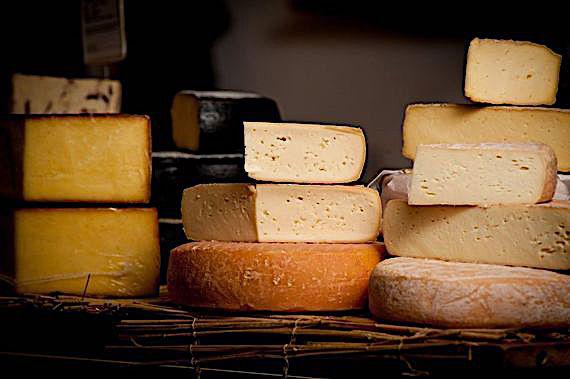
By far the most comprehensive assessment of Irish food culture is the book The Country Cooking of Ireland (2009) by Colman Andrews, who writes, “There is a sense in which all Irish cooking – at least the good stuff, the real thing – is country cooking. It is almost inevitably straightforward, homey fair, based on first-rate raw material whose identity shines through. Even in sophisticated urban restaurants, it tends to have an underlying earthiness and solidity that suggest honest and respect for rural traditions.” That was written a dozen years ago and it’s truer than ever, particularly of Irish cheeses, which are artisanal homestead creations with no registered or traditional names behind them, like Camembert, Gorgonzola or Stilton. Only a handful of names have become well known, like Gubeen and Castel Blue. These small producers are making cheeses according to their own learning curve, using the local milk and winging it with little to draw on in the past. Thus, rare is the Irish cheese available outside of Ireland itself, though a good store like Dublin-based Sheridan’s, with branches in Galway, Meath, Cork, Limerick, Kerry, Kildare and Waterford, proudly stock man small farms’ cheeses. For that reason a particular cheese will be available only until its current production runs out. In the years to come this may change, owing to the enormous success of the Irish brand Kerrygold, which is now, after Land O’ Lakes, the best-selling branded butter in the U.S. Kerrygold also now sells cheddar-style cheese. Ten years ago you would be hard put to find a restaurant in Ireland with an interesting cheese plate; now, many proudly serve an array. Read More...