“It's a massive problem†– Doc spotlights meth in rural Czech communities
-
 Loading...
 - Marek Pokorny
- 25 Mar 2022
- 383 Views
- 0 Like
- 0 Comment
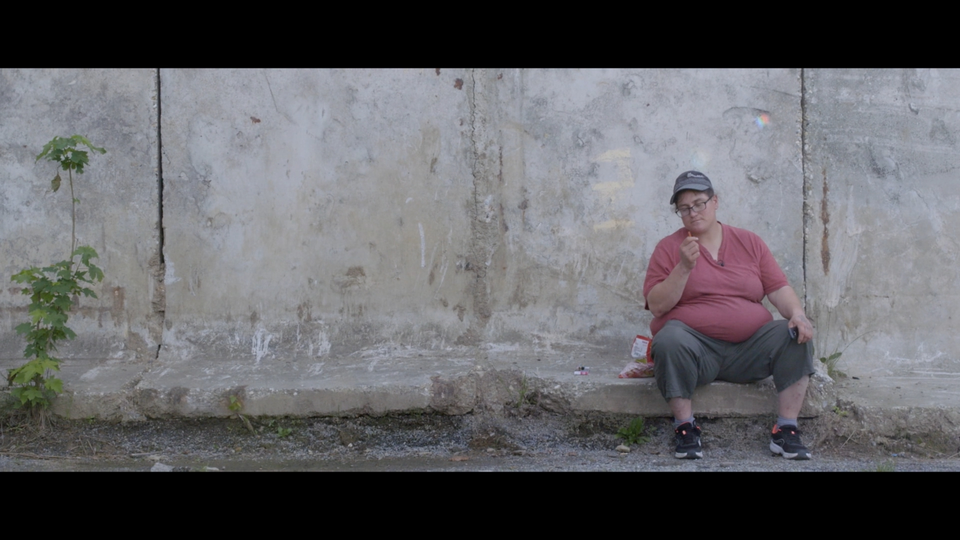
Lenka, which was recently released as a Guardian Documentaries film, offers a sensitive depiction of a methamphetamine addict in a rural Czech community. The documentary is the graduation film of Barbora Benešová, a Czech who has been living in the UK for a decade and a half. I discussed her protagonist’s situation and the Czech Republic’s relatively high levels of meth usage with the director. But first she explained how she made the switch from her original career of banking into film.
“I joined a roller skating group, where I made one of my best friends, who had a video production company.
“Sometimes I would end up helping on music video shoots.
“Very quickly I became a runner, and later a cinematographer.
“I was helping with video shoots for Kylie Minogue, Rudimental and Enya.
“This was a big revelation to me, because in my previous life in the Czech Republic the idea of filmmaking felt very unreachable.
“And living in London made me sort of realise, This world is opening up – and what I thought was never possible, is.”
That’s really an amazing story. We’re speaking because you’ve made a film, Lenka, about a methamphetamine addict. How serious is the meth problem in the Czech Republic?
“The Czech Republic is now the biggest meth producer of all the countries in Europe.”
“The problem of meth use is very big.
“The Czech Republic is now the biggest meth producer of all the countries in Europe, and I think it also has the longest use of this drug.
“I remember coming across the statistic that approximately 90 percent of all the illicit meth labs dismantled by law enforcement in the EU have been in the Czech Republic.
“So it is a massive problem.”
But do you know why that is? Is there any particular reason? Especially if you consider that there weren’t drugs here very much 30 something years – why is it such a big illegal industry now?
“From the journey that I have been on with Lenka, I know that it is very easy to buy over-the-counter cold flu medications in Poland or Bulgaria.
“Poland is really close to the Czech Republic, so it’s very easy to drive across the border and go to a pharmacy.
“Some of the pharmacies sell a lot of these drugs, without limiting how many one can buy.
“Another aspect of the production is that traditionally meth is produced in homes or in garden sheds – and people pass this knowledge on from one to another.
“So it’s really hard to catch. It’s really hard to find this out.”
Just to clarify, when we say meth, that’s what Czech people would call pervitin?

“Yes.”
Is it really so easy to make? If you can acquire this cough medicine or whatever, you can make methamphetamine?
“You can.
“There are different methods and obviously some methods require some kind of equipment.
“It’s a little bit harder and you need to know a little bit of chemistry to make a very pure drug.
“But you can also different methods that maybe produce a less good, or less pure, drug, but it’s still functioning in the way people want.”
Do you know what kind impact meth is having on communities? I presume there are some areas of the country where a lot of people, relatively speaking, are taking it?
“I think it’s related to the conditions in those communities. It’s very interconnected.
“Where I met Lenka is a very remote part of the Czech Republic. It’s very far away from Prague. There is big unemployment.
“Obviously all of these things are conditions for people to be more likely to take drugs.
“There is also quite big poverty in this area, and I think it’s all interconnected.”

What about treatment? Would somebody like Lenka be able to get appropriate treatment, living a long way from urban centres?
“There is some treatment that’s being offered.
“I think the problem with Lenka is somewhere else, because she is choosing to take meth – she doesn’t look for treatment.
“She’s in a situation where she almost depends on the meth to be able do everything she needs to do in her life.
“This includes looking after her mum, who can barely walk, helping with the house chores for her father in the house and also doing her daily job in a recycling centre.
“In addition she’s got a small business scrapping metal, which she sells to have a bit of profit, because she couldn’t survive without it.
“That effectively means that she has only a few hours a day to sleep, so the meth gives her the energy boost she needs to be able to do all of these things in a day.”
I couldn’t really tell watching the documentary – how old is Lenka?
“Traditionally meth is produced in homes or in garden sheds – and people pass this knowledge on from one to another.”
“She was 37 when I met her in 2020.”
This leads me to my question of how you met her. What was the original spark for making a film about her?
“I was researching an idea for my graduation film and it was during the time when Covid hit – basically it was March 2020 and the UK went into the first national lockdown.
“I waited a little bit and I realised that the Covid situation was much better in the Czech Republic.
“So I called a friend who is a reporter in the Czech Republic; I haven’t lived there for 15 years.
“I was sort of gauging what the stories were and he told me about a rural village where he once visited.
“He said it was quite an incredible experience. He half-joked that if you go and visit a family at home the grandmother wouldn’t bake a cake, as is the tradition in the Czech Republic, but would bring fresh meth.
“He was saying that everyone in the village was on meth, even some people who had children.
“I was completely shocked to hear that about my own country.
“All I knew about meth at the time was from the Netflix series Breaking Bad – and I didn’t know that the Czech Republic had this problem of crystal meth as well.
“So I was obviously immediately very curious and I wanted to learn more.
“That was the initial spark for the film.”

How did you win her trust? And not just her trust – you also film the people who are close to her, in sometimes very intimate situations.
“It took a while, but not that long.
“I first met Lenka in her work, in the scrap yard, in the recycling centre, and we exchanged numbers.
“That was with the help of a social worker, but then it was up to me to meet her on my own.
“I came to her garden shed later in the evening and to be honest I just listened to her for many hours – she had so many things to tell me.
“She was very willing and open to talk about everything.
“This was part of my recce and two weeks later I came back, to initiate the filming process.
“But for the first week I didn’t turn my camera on, I was just spending time with her – and she was happy for me to be around.
“And I think from there grew mutual trust.
“I think she knew that I was genuinely interested in her life and I genuinely wanted to understand her.
“I think that was really important, because Lenka met a lot of people in her life who just wanted meth from her, or who wanted her to teach them how to cook meth.
“So there was always this problem of drugs in these relationships that she was surrounded by.
“I just wanted to hear her story, and I think that really helped me.
“So in that sense I think I came really more as a friend – and that was enough for her to trust me.”
I was kind of surprised watching the film by the apparent level of poverty in this community. Living in Prague, it’s a relatively prosperous place. But then you see this village, wherever it is, and they really seem poor.
“Yes, the family were very poor.
“They didn’t have a proper kitchen, where the mum lives, so Lenka needs to carry buckets of water for her constantly.
“All I knew about meth was from Breaking Bad – I didn’t know that the Czech Republic had this problem of crystal meth as well.”
“They had to use found wood to make the house warm in the winter.
“So Lenka cuts wood with her father, who is over 80 years old, and they always have to make sure they have enough for the winter.
“Lenka’s family is very poor.”
It’s a really great film. I felt like I learned a lot from watching it and it’s very well made. But I was wondering if you felt that you learned anything from the process of making Lenka?
“I did interview Lenka, though the interview is not in the film.
“And there’s one thing she said when I asked her why she tried to take the drug for the first time.
“This is what she said: ‘I just wanted to try to it, to have this invincible feeling. You take it and you see everything from a different perspective. You think of a thousand things. You realise that not everything is as bad as it looks. It gives you strength to look beyond. Everyone faces different problems. Someone has a problem to tie his shoelace, someone has a problem to divorce. So everyone’s attitude is a little bit different, and this gives you a new perspective.’ Read More...