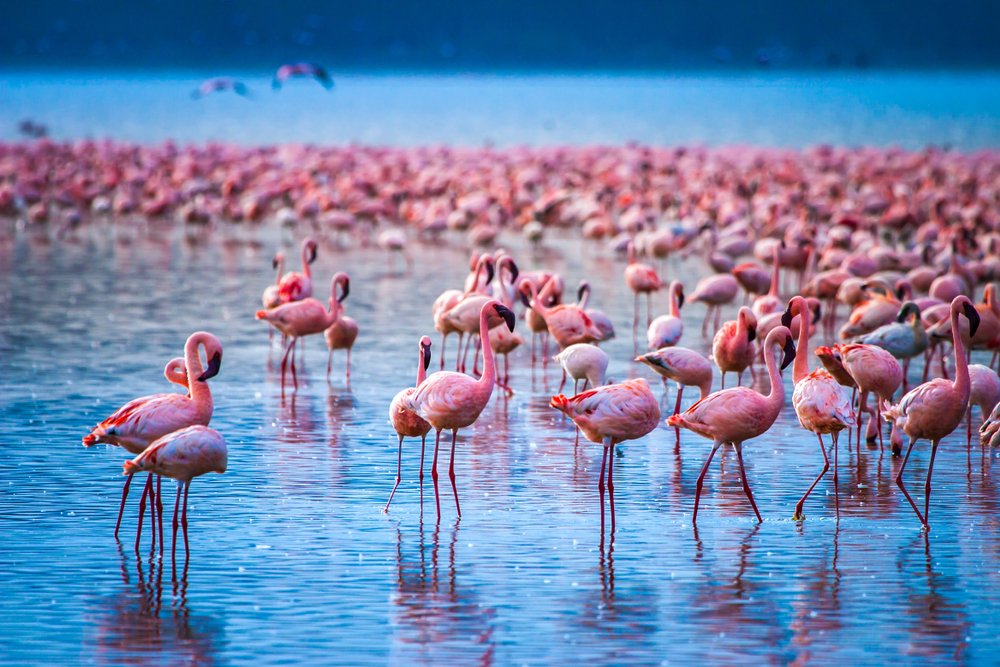
Lake Nakuru National Park Threatened By Climate Change
-
 Loading...
 - Simiyu Kibet
- 31 May 2023
- 70 Views
- 0 Like
- 0 Comment
The decrease in the population of flamingoes at the renowned Lake Nakuru National Park, caused by seismic flooding, has had a detrimental impact on tourism, particularly among bird watchers.
According to Mr. Titus Mitau, the Park Warden, the flooding, suspected to originate underground and affect all the Rift Valley lakes, has led to the dilution of the water and a significant reduction in the algae that flamingoes rely on for sustenance.
During an interview with KNA today, the Warden mentioned that the flooding not only forced the flamingoes to relocate but also compelled the nearby villagers to migrate to other areas.
He further explained that scientists have proposed various theories regarding the cause of the flooding, including the heavy rainfall experienced between 2019 and 2020. However, the prolonged drought resulting from climate change has not led to a decrease in water levels.
Moreover, he stated that the fluctuating salinity levels of the lake due to rising water levels naturally lead to a decrease in the algae, which is the sole food source for flamingoes.
Furthermore, the flamingoes have migrated to Lake Natron in Tanzania, disrupting their previously predictable migration patterns. There is uncertainty regarding their return to Lake Nakuru National Park.
The warden expressed his concern about the decline in the number of tourists visiting the park but refrained from providing specific figures as he lacks the authority to do so. He emphasized that this decline has had a negative impact on the local curio sellers and hotels situated within the park, such as the Sarova Lion Hill lodges.
"Previously, this park was internationally renowned, particularly among birdwatchers who valued its vast population of flamingoes and other rare bird species not commonly found in many countries. However, all of this has changed due to the effects of climate change," lamented the warden.
He further added that the flooding has not only affected the park's infrastructure, such as roads and buildings, but has also reduced the grazing areas for other wildlife. Fortunately, providing water for the animals has never been an issue, even during the extended drought.