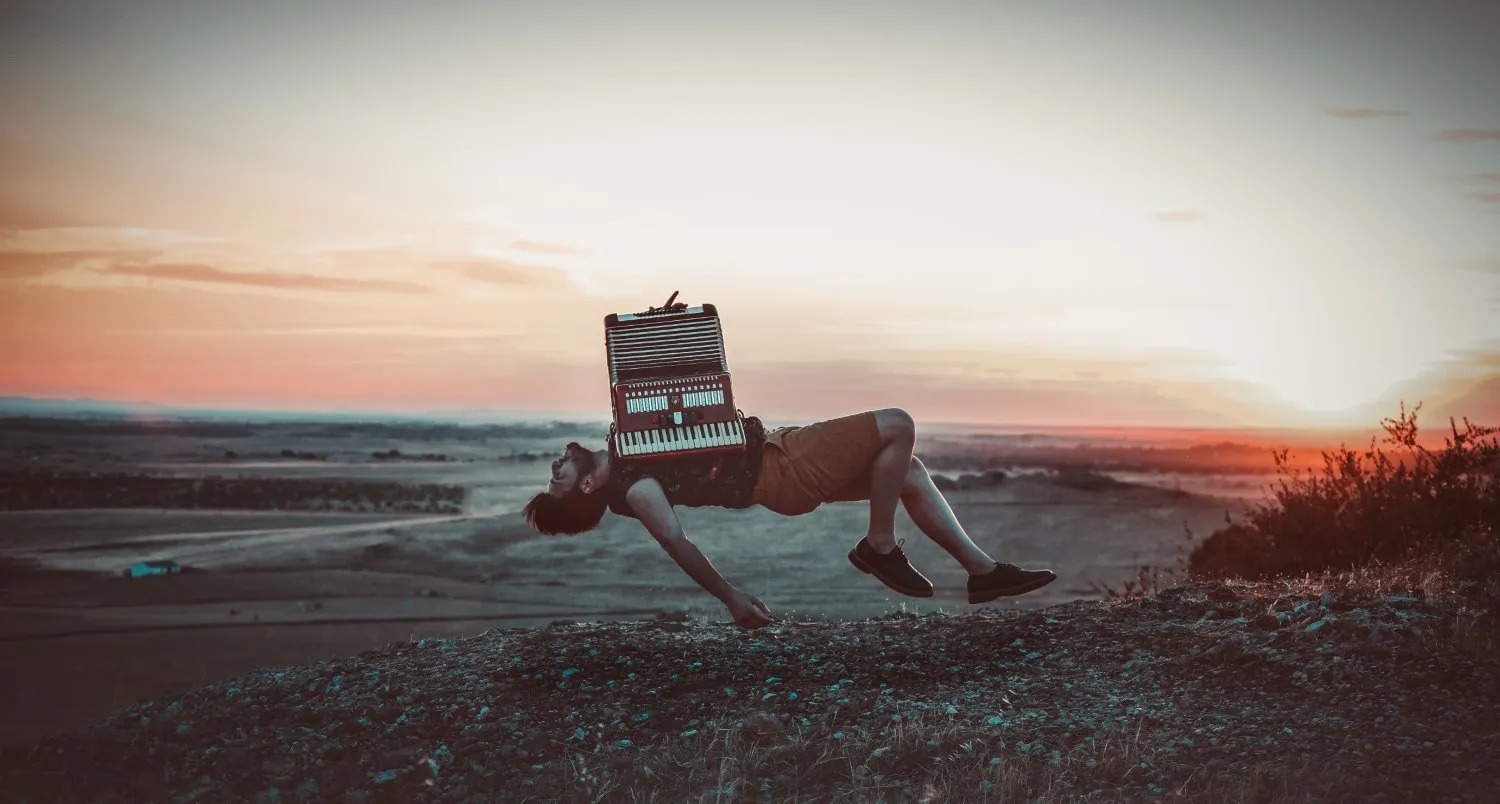
Levitation Photography: A Comprehensive Guide (+ Tips)

Now, I’ll be the first to admit it: When I started out with levitation photography, I struggled. But over time, I made tweaks and improvements to my approach and capturing good levitation shots got easier and easier. Today, I’m ready to share that approach with you – so you can skip past my mistakes and start making great shots right away.
Below, I share everything you need to know to conduct successful levitation photoshoots, including:
· All the gear you do (and don’t) need
· How to choose the right angle and composition for a stunning effect
· How to process the levitation shots for the best results
· Much more!
Ready to become a levitation master? Then let’s dive right in.
What is levitation photography?
Levitation photography refers to images depicting subjects that appear to be floating, or levitating, in the air.

Levitation images are designed to look strange, spooky, or just generally surreal. The goal is not to display reality, but to instead create mindbending compositions that perplex the viewer.
While you can technically create a levitation shot by asking your subject to jump (or by throwing your subject into the air) and firing the shutter at the right time, most levitation photos are created with some post-production trickery, which I explain in depth later on.
What subjects work best for levitation photography?
Unless you want to spend dozens of hours in Photoshop carefully removing, compositing, and cloning different subjects, I’d recommend selecting levitation subjects that are capable of standing or lying on a stool.
Most levitation photographers work with portrait subjects; after all, you can instruct people to stand in the right place, to balance atop different objects, and so on.
Note that you can create interesting arrangements with multiple portrait subjects. For instance, you might do a group levitation shot, where an entire family or wedding party appears to be floating above the ground. Or you might give one subject the “non-magic” role and have them stand on the grass while other subjects float around the scene.

That said, if you don’t have any portrait subjects or you simply want to create more original photos, you can certainly have fun levitating inanimate objects. You might levitate:
· Couches
· Chairs
· Broomsticks
· Food
· Computers
· Soap bottles
· Cameras
In particular, levitation can be a potent technique for professional food or product photography. By levitating items (or pieces) of food, you can create a very modern, fresh look. And by levitating products, you can create a sense of energy and vitality that complements images of shoes, portable technology, and more. Read More…