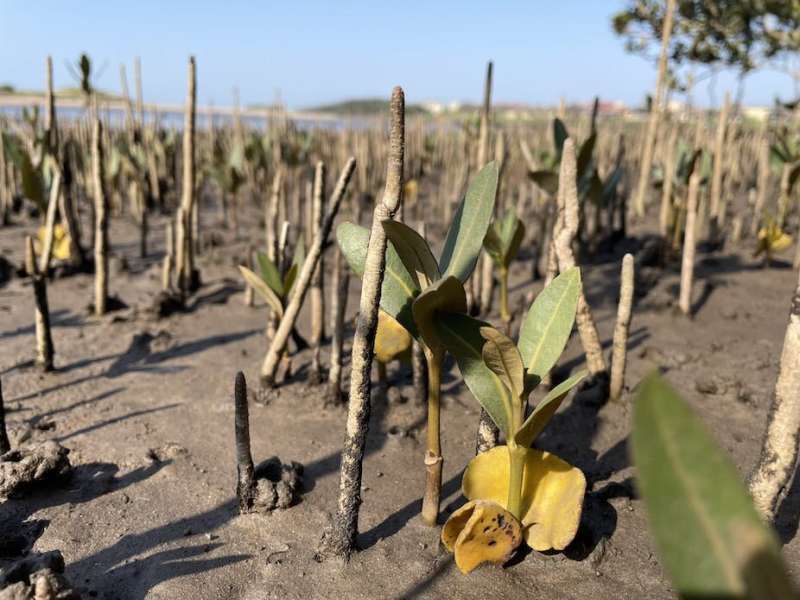
Mangrove forests won't be able to spread further in South Africa, so protecting them is crucial
-
 Loading...
 - Kelvin Mgbutete
- 30 Jan 2023
- 78 Views
- 0 Like
- 0 Comment
Mangrove forests are a common sight in some tropical and sub-tropical areas of the world like Indonesia, Florida in the US, parts of Brazil and Australia. They can also be found on African coasts, including South Africa's KwaZulu-Natal and Eastern Cape provinces.
These tidal forests of trees and shrubs are often talked about in the context of climate change. Along with other coastal wetlands like salt marshes and seagrasses, they are able to store more carbon than terrestrial ecosystems. Waterlogged soils preserve the organic carbon and prevent decomposition—and if they're left undisturbed, this "blue carbon" is locked up over thousands of years. This means they can play a key role in the oceans' carbon cycle.
Mangroves are also valuable assets as ecosystems because they support a significant amount of biodiversity.
Mangroves won't grow in cool climates. In the northern hemisphere, their range ends at areas where it snows in winter. But, even though the coasts of places like Brazil, Australia and South Africa don't get freeze events, mangroves still stop occurring at a certain latitude in the southern hemisphere.
We wanted to know why this is the case and to determine whether there are other areas along South Africa's coast that are climatically suitable for mangroves but where the forests don't grow.
We also wondered, since climate change will make some parts of the world warmer in the coming years and decades, whether mangroves might in future be able to grow in parts of South Africa where they're not found now. Finally, we wanted to understand whether climate change will make areas in South Africa where mangroves currently exist unsuitable for the forests in future. Read More…