MedAT: Up to 15,200 Applicants in This Year's Medical Entrance Tests
-
 Loading...
 - Rebecca Harris
- 05 Jul 2024
- 66 Views
- 0 Like
- 0 Comment
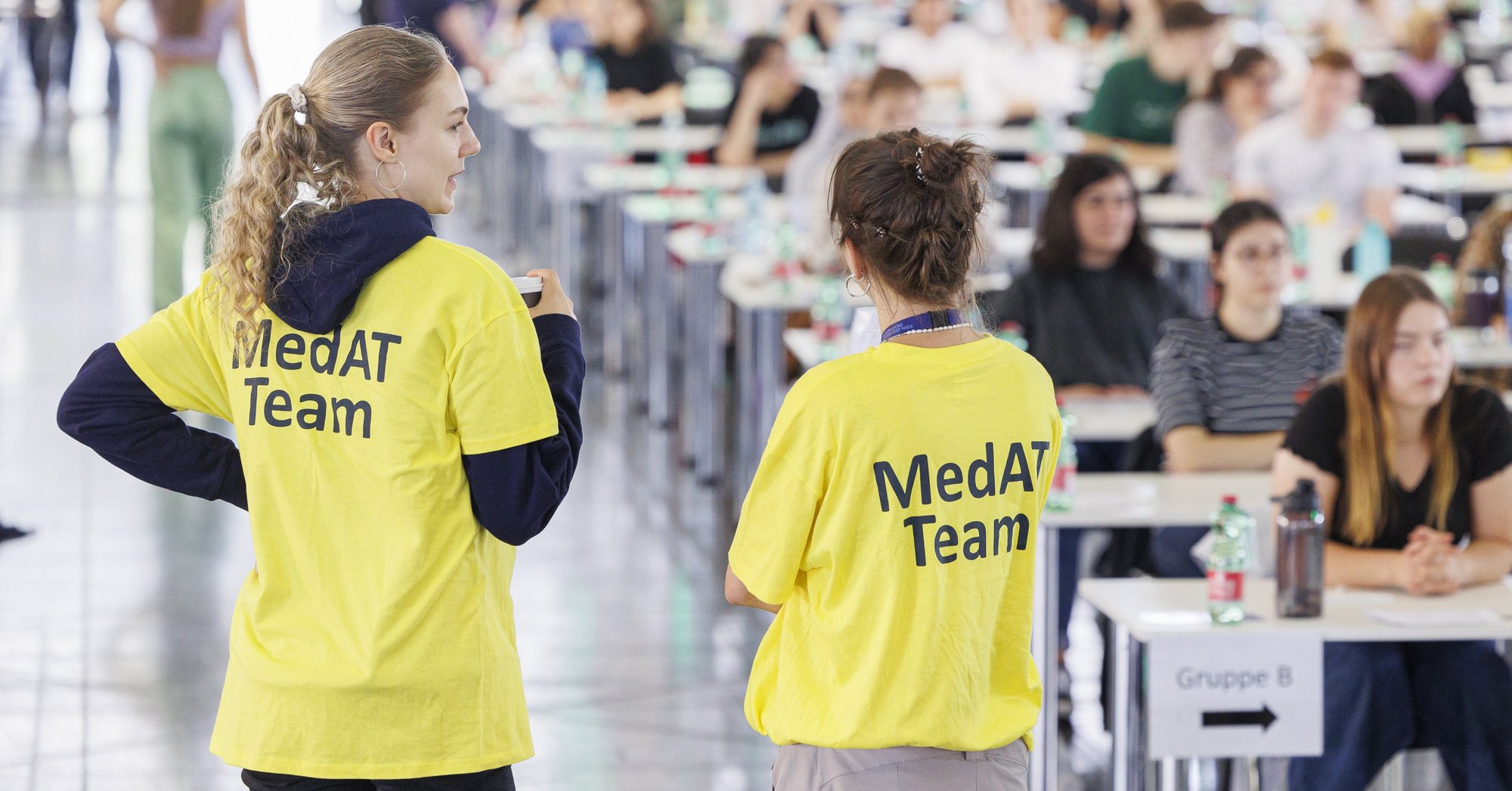
The entrance exam for medical studies commenced on Friday morning in Vienna, Innsbruck, Graz, and Linz. This year, 15,158 individuals registered for the MedAT exams, competing for a total of 1,900 study places at medical universities. For the first time, a significant number of these places are "dedicated" study places for roles in the public interest, with up to 85 reserved for federal states, the Austrian Health Insurance Fund, the Interior Ministry, and the Ministry of Defense.
Compared to the previous year, there are about 200 fewer applicants and 50 more available places. Statistically, there are around ten applicants per place in Vienna, eight in Innsbruck, seven in Graz, and six in Linz. Notably, at least 95 percent of places in human medicine are reserved for EU citizens, and 75 percent are allocated for applicants with an Austrian high school diploma. There is no such quota for dentistry.
In Vienna, the entrance tests are conducted in the exhibition hall, with around 7,000 applicants expected. Historically, 15 to 20 percent of registered applicants do not attend. Vice Rector Anita Rieder emphasized the efficiency of the entrance exam system, noting that while 50 to 70 percent of students did not complete their studies over 20 years ago, this figure has now reduced to around ten percent. This summer, approximately 600 human medicine graduates are expected in Vienna.
Rieder dismissed calls for more study places due to the doctor shortage, stating, "That would absolutely no longer be possible." She highlighted that a high-quality course of study is offered, but the shortage is particularly evident in the health insurance system. Practically, "50 students cannot march past a patient in one day." In Vienna, 300 applicants are competing for the "dedicated" study places in this inaugural year.
"The MedAT has proven itself in recent years," stated Education Minister Martin Polaschek (ÖVP) in a written statement. The objective is to ensure a fair and objective selection of new students in human and dental medicine. Austria trains a very high number of doctors in international comparison. The "Med-Impuls-2030" initiative aims to create 200 additional medical study places by 2028, increasing the total from 1,800 to 2,000 places.
However, the Austrian Student Union (ÖH) reiterated its call for the abolition of the test on Friday. "The MedAT and similar admission procedures are fundamentally socially selective. In the end, what counts is who can prepare best," the ÖH stated in a press release. They advocate for open and free access to higher education.