Mother’s last words after Colombia plane crash: ‘Get out of here’

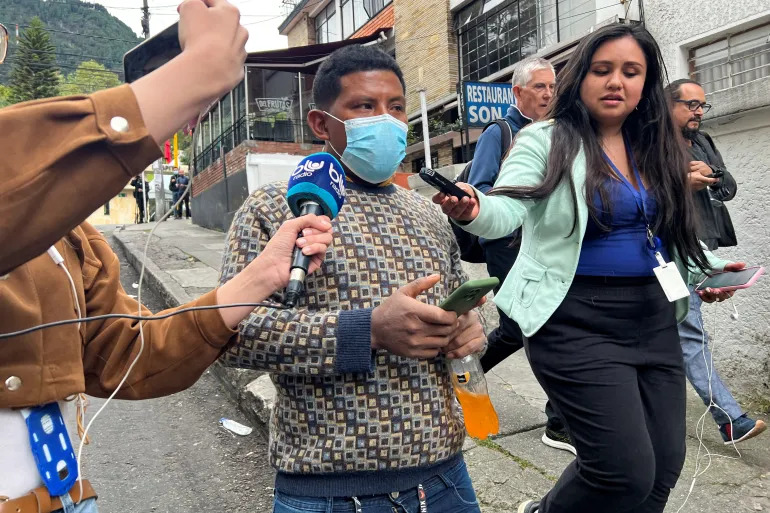
The mother of four Huitoto Indigenous children, who were injured in a plane crash in Colombia on May 1, courageously urged her kids to escape before she passed away four days later. Manuel Miller Ranoque, the children's father, revealed that their 13-year-old daughter recounted how Magdalena Mucutuy, severely injured, breathed her last breath in the jungle with her children by her side. Ranoque shared this heartbreaking account with the media outside a hospital in Bogota last Sunday.
The ill-fated incident occurred shortly after takeoff when their small aircraft, a Cessna 206, encountered engine problems near Araracuara, a remote area deep within the Amazon. The pilot promptly reported the issue, but tragically, the plane crashed before reaching its destination, San Jose del Guaviare, approximately 350km (220 miles) away. The wreckage was found nestled vertically in the trees, claiming the lives of the pilot, the children's mother, and another adult.
The children, aged 12, nine, five, and one, remained missing in the Amazon for 40 days until a rescue operation successfully located and airlifted them out of the jungle last Friday. In a televised interview, members of the rescue group revealed that the children's first words upon their rescue were, "I'm hungry" and "My mom is dead." These initial expressions provided a poignant glimpse into the children's harrowing ordeal. Indigenous members of the search and rescue team, who themselves possess extensive knowledge of the region, recounted the emotional encounter with the children.
"One of the daughters, Lesly, rushed toward me, cradling the youngest child," recounted Nicolas Ordonez Gomes, a member of the search and rescue crew. "Lesly said, 'I'm hungry,'" he continued, adding, "One of the boys was lying down but stood up and told me, 'My mom is dead.'" A video released on Sunday depicted the emaciated condition of the children, evidence of their ordeal in the wilderness. Throughout their time in the jungle, Lesly assumed the role of caretaker, guiding her younger siblings and celebrating their birthdays amidst the challenging circumstances.
The survival of the children can be attributed, in part, to the local knowledge possessed by the children themselves and the Indigenous adults involved in the search operation, who worked alongside Colombian soldiers. Despite the dangers posed by jaguars, snakes, and relentless downpours that hindered search efforts, their familiarity with the area allowed them to sustain themselves until rescue arrived. Additionally, the region is known for harboring armed drug smuggling groups.
The children relied on their upbringing in the Amazon region, utilizing Indigenous knowledge systems to identify edible seeds, fruits, roots, and plants for sustenance. Luis Acosta of the National Indigenous Organization of Colombia emphasized the importance of this connection with the natural environment, stating that "the survival of the children is a testament to the knowledge and relationship instilled from the mother's womb."
General Pedro Sanchez, the leader of the search operation, acknowledged the critical role played by the Indigenous people in finding the children. He hailed the success as a "confluence of Indigenous and military knowledge," demonstrating a "new path towards a transformed Colombia." Army chief Helder Giraldo celebrated the achievement on Twitter, highlighting the extraordinary efforts of the rescuers, who covered over 2,600km (1,650 miles) during the operation. He concluded by affirming that what seemed impossible had been accomplished.