Home Upload Photo Upload Videos Write a Blog Analytics Messaging Streaming Create Adverts Creators Program
Bebuzee Afghanistan Bebuzee Albania Bebuzee Algeria Bebuzee Andorra Bebuzee Angola Bebuzee Antigua and Barbuda Bebuzee Argentina Bebuzee Armenia Bebuzee Australia Bebuzee Austria Bebuzee Azerbaijan Bebuzee Bahamas Bebuzee Bahrain Bebuzee Bangladesh Bebuzee Barbados Bebuzee Belarus Bebuzee Belgium Bebuzee Belize Bebuzee Benin Bebuzee Bhutan Bebuzee Bolivia Bebuzee Bosnia and Herzegovina Bebuzee Botswana Bebuzee Brazil Bebuzee Brunei Bebuzee Bulgaria Bebuzee Burkina Faso Bebuzee Burundi Bebuzee Cabo Verde Bebuzee Cambodia Bebuzee Cameroon Bebuzee Canada Bebuzee Central African Republic Bebuzee Chad Bebuzee Chile Bebuzee China Bebuzee Colombia Bebuzee Comoros Bebuzee Costa Rica Bebuzee Côte d'Ivoire Bebuzee Croatia Bebuzee Cuba Bebuzee Cyprus Bebuzee Czech Republic Bebuzee Democratic Republic of the Congo Bebuzee Denmark Bebuzee Djibouti Bebuzee Dominica Bebuzee Dominican Republic Bebuzee Ecuador Bebuzee Egypt Bebuzee El Salvador Bebuzee Equatorial Guinea Bebuzee Eritrea Bebuzee Estonia Bebuzee Eswatini Bebuzee Ethiopia Bebuzee Fiji Bebuzee Finland Bebuzee France Bebuzee Gabon Bebuzee Gambia Bebuzee Georgia Bebuzee Germany Bebuzee Ghana Bebuzee Greece Bebuzee Grenada Bebuzee Guatemala Bebuzee Guinea Bebuzee Guinea-Bissau Bebuzee Guyana Bebuzee Haiti Bebuzee Honduras Bebuzee Hong Kong Bebuzee Hungary Bebuzee Iceland Bebuzee India Bebuzee Indonesia Bebuzee Iran Bebuzee Iraq Bebuzee Ireland Bebuzee Israel Bebuzee Italy Bebuzee Jamaica Bebuzee Japan Bebuzee Jordan Bebuzee Kazakhstan Bebuzee Kenya Bebuzee Kiribati Bebuzee Kuwait Bebuzee Kyrgyzstan Bebuzee Laos Bebuzee Latvia Bebuzee Lebanon Bebuzee Lesotho Bebuzee Liberia Bebuzee Libya Bebuzee Liechtenstein Bebuzee Lithuania Bebuzee Luxembourg Bebuzee Madagascar Bebuzee Malawi Bebuzee Malaysia Bebuzee Maldives Bebuzee Mali Bebuzee Malta Bebuzee Marshall Islands Bebuzee Mauritania Bebuzee Mauritius Bebuzee Mexico Bebuzee Micronesia Bebuzee Moldova Bebuzee Monaco Bebuzee Mongolia Bebuzee Montenegro Bebuzee Morocco Bebuzee Mozambique Bebuzee Myanmar Bebuzee Namibia Bebuzee Nauru Bebuzee Nepal Bebuzee Netherlands Bebuzee New Zealand Bebuzee Nicaragua Bebuzee Niger Bebuzee Nigeria Bebuzee North Korea Bebuzee North Macedonia Bebuzee Norway Bebuzee Oman Bebuzee Pakistan Bebuzee Palau Bebuzee Panama Bebuzee Papua New Guinea Bebuzee Paraguay Bebuzee Peru Bebuzee Philippines Bebuzee Poland Bebuzee Portugal Bebuzee Qatar Bebuzee Republic of the Congo Bebuzee Romania Bebuzee Russia Bebuzee Rwanda Bebuzee Saint Kitts and Nevis Bebuzee Saint Lucia Bebuzee Saint Vincent and the Grenadines Bebuzee Samoa Bebuzee San Marino Bebuzee São Tomé and Príncipe Bebuzee Saudi Arabia Bebuzee Senegal Bebuzee Serbia Bebuzee Seychelles Bebuzee Sierra Leone Bebuzee Singapore Bebuzee Slovakia Bebuzee Slovenia Bebuzee Solomon Islands Bebuzee Somalia Bebuzee South Africa Bebuzee South Korea Bebuzee South Sudan Bebuzee Spain Bebuzee Sri Lanka Bebuzee Sudan Bebuzee Suriname Bebuzee Sweden Bebuzee Switzerland Bebuzee Syria Bebuzee Taiwan Bebuzee Tajikistan Bebuzee Tanzania Bebuzee Thailand Bebuzee Timor-Leste Bebuzee Togo Bebuzee Tonga Bebuzee Trinidad and Tobago Bebuzee Tunisia Bebuzee Turkey Bebuzee Turkmenistan Bebuzee Tuvalu Bebuzee Uganda Bebuzee Ukraine Bebuzee United Arab Emirates Bebuzee United Kingdom Bebuzee Uruguay Bebuzee Uzbekistan Bebuzee Vanuatu Bebuzee Venezuela Bebuzee Vietnam Bebuzee World Wide Bebuzee Yemen Bebuzee Zambia Bebuzee Zimbabwe
Blog Image

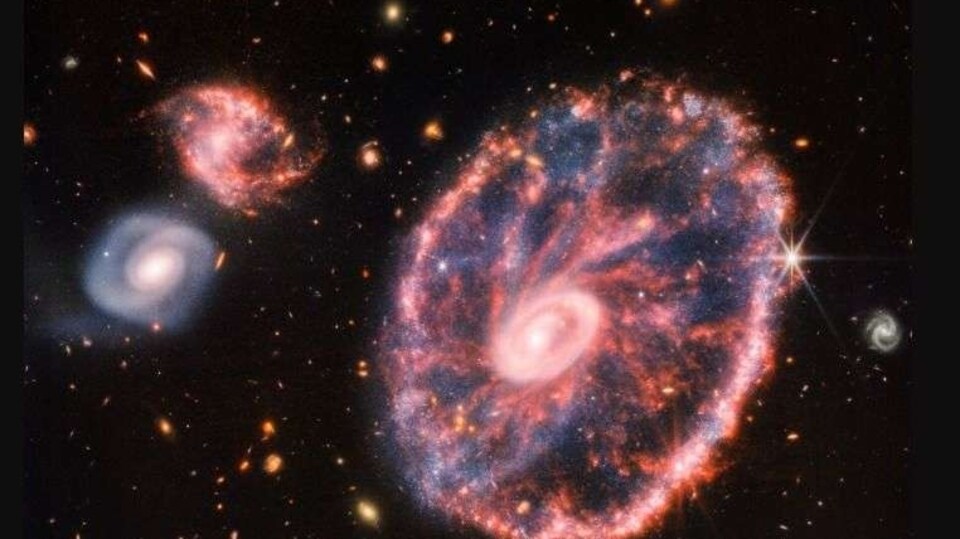
NASA's James Webb telescope has made a groundbreaking discovery by detecting an enormous galaxy situated an astounding distance of 25 million light-years from Earth

NASA's remarkable James Webb Space Telescope (JWST) has once again achieved a momentous breakthrough, uncovering a colossal galaxy situated an astonishing 25 million light-years away. 

Dubbed GS-9209, this galaxy, born approximately 600 to 800 million years after the cataclysmic event known as the Big Bang, is now hailed as the earliest of its kind ever discovered. The profound revelations about GS-9209 were brought to light by a team of accomplished researchers from the University of Edinburgh, who made use of the world's most exorbitant telescope to conduct their groundbreaking study.

Leading the investigation was Dr. Adam Carnall, an esteemed scholar from the School of Physics and Astronomy at the University of Edinburgh. Dr. Carnall expressed his enthusiasm, stating, "The James Webb Space Telescope has already surpassed our expectations by demonstrating the rapid growth of galaxies during the initial billion years of cosmic history. Our research delves deeply into the unique attributes of these early galaxies, meticulously documenting the captivating journey of GS-9209, which remarkably managed to produce a staggering number of stars, equivalent to those found in our own Milky Way, within a mere 800 million years following the Big Bang. Additionally, the existence of an immensely massive black hole within this galaxy took us by surprise, lending substantial support to the notion that these black holes played a pivotal role in suppressing star formation in early galaxies."

Despite its relatively smaller size compared to the grandeur of the Milky Way, GS-9209 boasts a comparable quantity of stars. The combined mass of these stars, as detailed in the study published in the esteemed journal Nature, totals a staggering 40 billion times that of our sun. These celestial bodies underwent a rapid formation process before star production came to a halt in GS-9209.

Intriguingly, GS-9209 represents the earliest known instance of a quiescent galaxy, a galaxy that ceases to create new stars. When observed 1.25 billion years after the Big Bang, no new stars had emerged within GS-9209 for approximately half a billion years. 

Furthermore, the study suggests the presence of a supermassive black hole at the core of GS-9209, surpassing astronomers' expectations for a galaxy housing a star population of this magnitude. This astonishing discovery may elucidate the reason behind the cessation of star formation in GS-9209.

As supermassive black holes expand, they emit copious amounts of high-energy radiation, capable of heating up and expelling gas from galaxies. According to the researchers, this phenomenon potentially impeded star formation in GS-9209 since stars materialize from the gravitational collapse of gas and dust clouds within galaxies.

The credit for the initial detection of GS-9209 in 2004 goes to Karina Caputi, a Ph.D. student at the University of Edinburgh at the time, under the supervision of Professors Jim Dunlop and Ross McLure from the School of Physics and Astronomy.

The awe-inspiring James Webb telescope, with a staggering cost of $9 billion, embarked on its space journey on Christmas Day of 2021. Its anticipated impact on the field of astronomy is monumental, as it allows scientists to delve deeper into the cosmos with unparalleled precision, unravelling the mysteries of the universe's inception.


Previous Post

Mesmerizing Close-Up Shots Unveil Astonishing Details Concealed within the Sun's Radiance

Next Post

Japan's Timber Satellite Nears Completion for Space

Comments