National Plan Against Tree-Destroying Insect in France
-
 Loading...
 - Frieda Wagner
- 07 Mar 2025
- 24 Views
- 0 Like
- 0 Comment
France has initiated a comprehensive national plan to combat the invasive bark beetle, a pest that poses a significant threat to the country's forests. This insect, which operates strategically, sends out pheromones to attract other beetles once it lands on a tree, making it difficult to detect until it's too late for the tree's survival. The bark beetle's destructive behavior leads to the death of trees, as it burrows beneath the bark to lay eggs, with the larvae subsequently feeding on the wood.
The bark beetle has already caused extensive damage to French coniferous forests, particularly since 2018. The Agriculture Ministry reports that approximately 37 million cubic meters of wood have been affected, with 110,000 hectares of forest damaged in the northeastern regions of France. This devastation not only impacts the landscape and ecosystems but also threatens the supply of quality wood for the forestry sector.
Four-Part National Action Plan
To address this crisis, the French government has implemented the "Plan national d'actions Scolytes et Bois de crise," which focuses on four key areas:
i. Study Mission Launch: Forestry groups are tasked with better anticipating crises and their consequences, aiming to improve wood storage and processing while educating communities about the issue.
ii. Aid for Tree Debarking Kits: A financial aid scheme covering 65% of the cost of debarking kits was introduced in April 2024. These kits are essential for forestry professionals to treat infested trees, as debarking is currently the most effective method to combat the beetles.
iii. Expansion of Biomass Power Plant Supply Radius: The supply areas for state-supported biomass power plants are being expanded to prioritize the use of damaged wood from crisis areas. This initiative is in collaboration with the French environment and energy management agency, ADEME.
iv. Increased Aid for Forest Renewal: Under the France Nation Verte program, aid for forest renewal will increase by 20%. Trees affected by bark beetles are classified as "crisis wood," making them eligible for this support.
Training and Prevention Measures
Workers from the national forestry office are being trained to identify infested trees, which are then promptly cut down and processed to prevent the beetles from completing their life cycle. Additionally, the forest health department has begun installing pheromone traps to attract and capture female beetles, further reducing the risk of tree infestations.
Identifying Affected Trees
Homeowners and land managers can look for several signs to determine if their trees are affected by bark beetles:
- Deposits of sawdust on the trunk and ground
- Dried-out twigs and branches
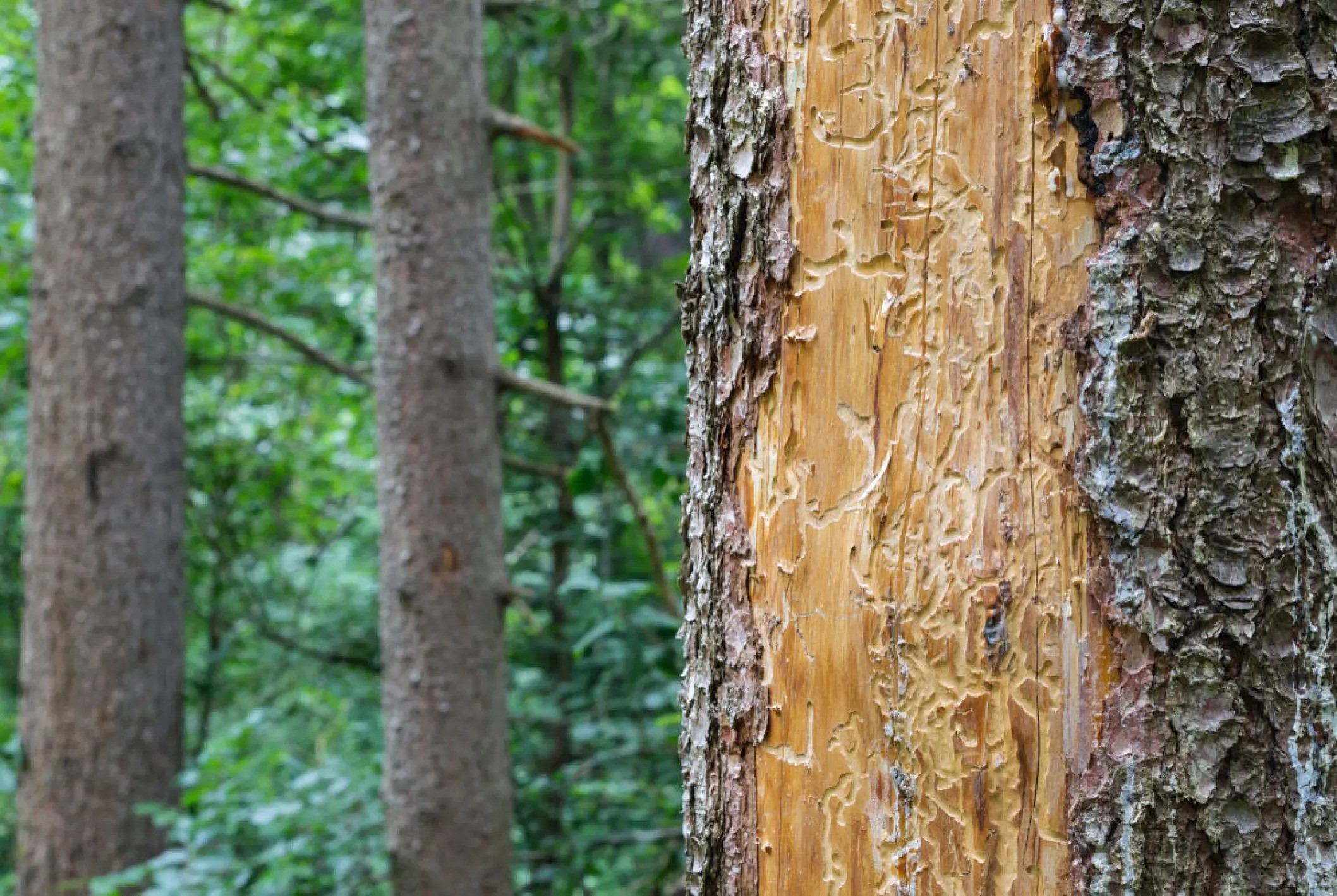
- Lifting bark in certain areas
- Small holes in the bark and visible tunnels
- Brown fir needles that fall prematurely
- Blackened hardwoods due to fungal growth in the tunnels
If trees show these symptoms, they should be felled immediately and either submerged in water, debarked, or burned to prevent the spread of the beetles.
The national plan against the bark beetle represents a proactive approach to safeguarding France's forests and the forestry industry. By combining research, financial support, and community education, the government aims to mitigate the impact of this invasive pest and promote the health and sustainability of its woodlands.