Nature Journal: Sharp-shinned hawks seem to appear out of nowhere
-
 Loading...
 - Vicente Montoya
- 07 Jun 2022
- 265 Views
- 0 Like
- 0 Comment
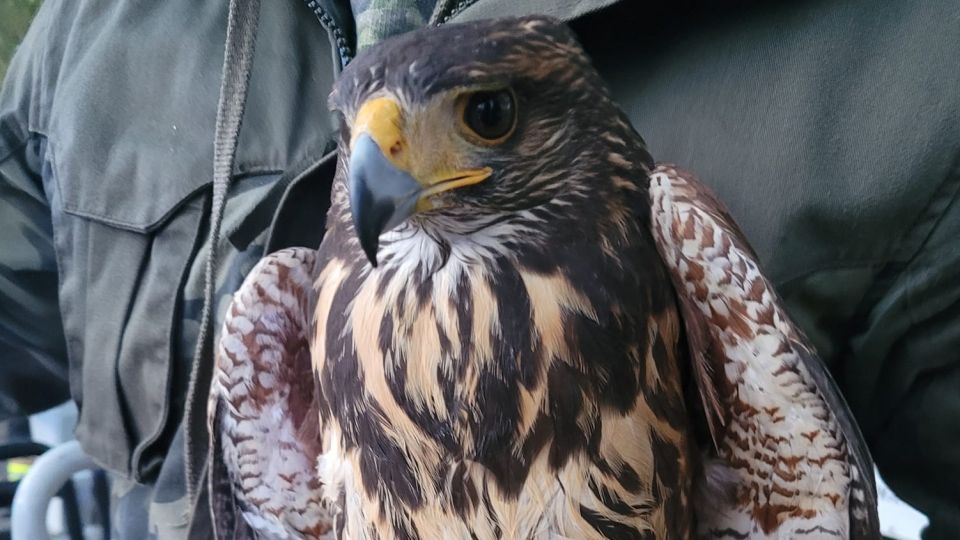
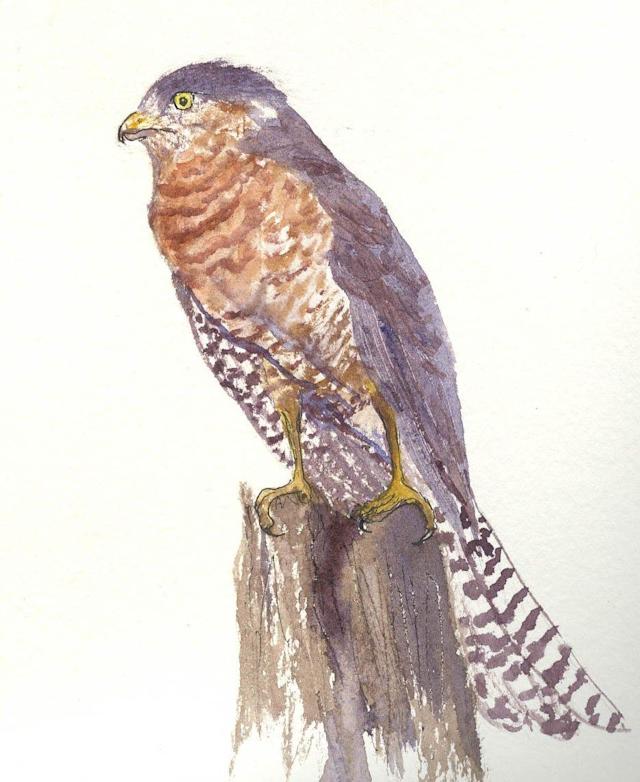
While observing your feeders, you may be startled by a “blue flash” that suddenly appears as if from out of nowhere, snatches one of your birds in its talons and disappears. The “blue flash” will be either a sharp-shinned or a Cooper's hawk, the infamous "chicken hawks" of rural lore that feed primarily on other birds. Because of their blue-gray backs and lightning-quick movements, when tracking prey through brush or into a hen house, they were widely known in the rural South as "blue darters." The smaller sharp-shinned hark was the Little Blue Darter while the larger Cooper’s hawk was the Big Blue Darter.
Some readers who reside in the South may have heard the term “blue darter” used to describe a light early-season snow that comes and goes quickly. Baseball fans will have heard the term used to describe a low hard-hit line drive. Readers with an urban background may have heard the term used to describe gas with a high menthol content that has been ignited.
During the Great Depression era of the 1930s, when chickens were essential items in the home economies of most southern families, "chicken hawks" were despised and shot on sight. Writing in Birds of the South (1933), North Carolina naturalist Charlotte Hilton Green — normally a mild-mannered bird-loving sort — flew into a tirade regarding the vices of these species in a chapter titled "Two Bad Hawks":
'The two hawks responsible for the hatred and suspicion which farmers have for birds of prey as a whole are the sharp-shinned and the Cooper's. These two villains of hawkdom are the ones that continuously raid poultry yards and war upon small birds. ... Liking young `fryers' as well as any good southerner, if these hawks once make a successful raid on the poultry yard, they are likely to make daily visits ... either until they literally clean out the farmer, or the farmer brings down the hawk.'
Ornithologist and nature writer Scott Weidensaul thinks the late twentieth century inclination of the "two bad hawks" to ravage bird feeders came about because of the nationwide decline of chicken coops and yards. His description of a sudden “blue darter” attack is vivid:
'Within a few seconds the soothing tapestry disintegrates. What a moment before had been a flock of songbirds gathered peacefully at a feeder is now a frenzy of alarm calls and flashing wings. ... One junco is an instant too slow in fleeing and is pinned to the ground dead, its blood a few flecks on the snow. The sharp-shinned hawk ... daintily plucks its meal and begins feeding.' Read More...