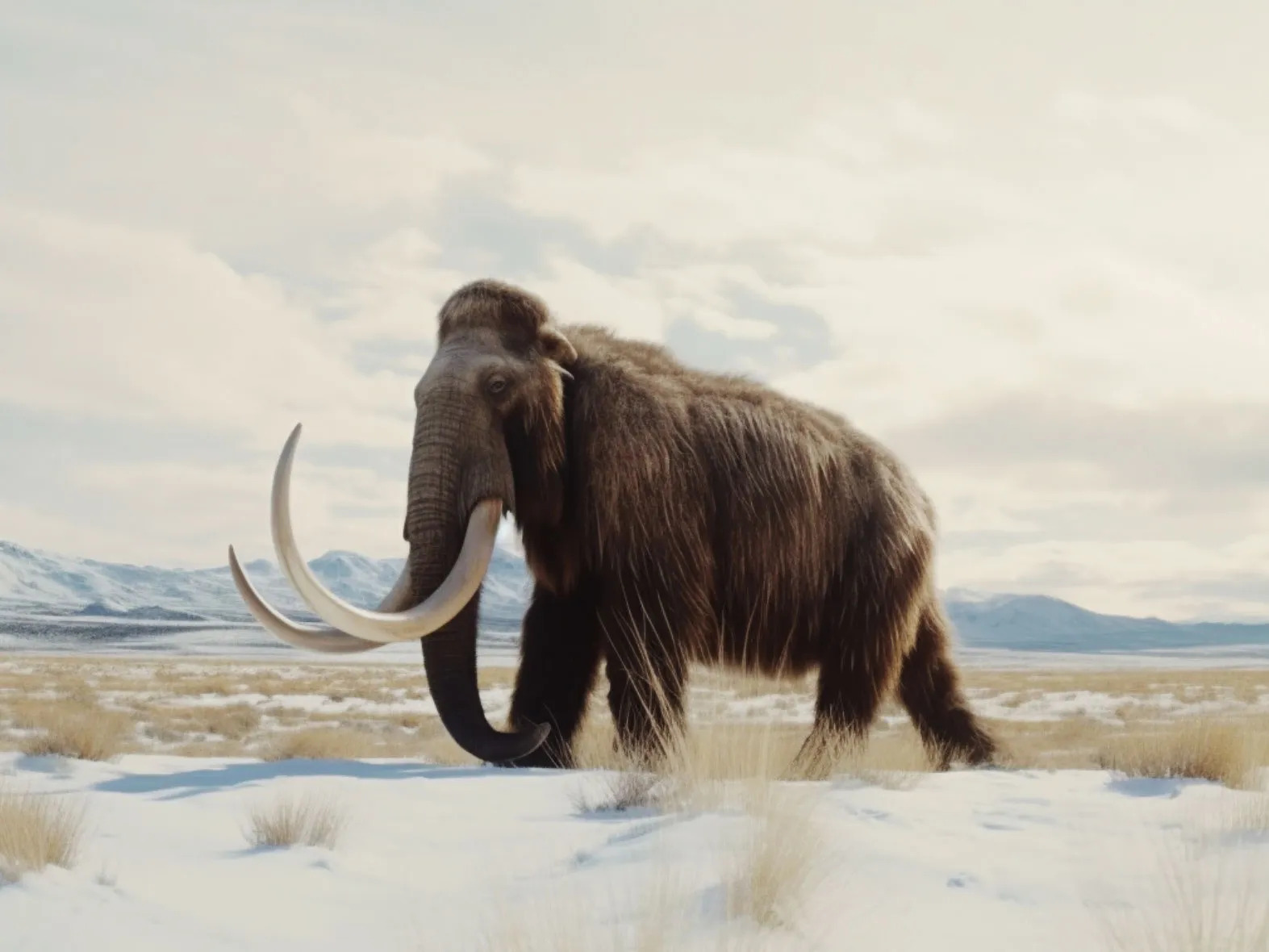
New Genetic Study in Stockholm Reveals the Woolly Mammoths' Journey Towards Extinction
-
 Loading...
 - Franz Sommer
- 28 Jun 2024
- 63 Views
- 0 Like
- 0 Comment
A groundbreaking study published in the journal Cell by researchers from the Centre for Palaeogenetics in Stockholm has shed new light on the evolutionary changes leading to the extinction of woolly mammoths. This research provides unparalleled insights into the long-term genetic impacts that species experience following severe population declines.
A significant concern in conservation biology is the viability of populations after sudden population drops. Previous studies have shown that demographic bottlenecks are linked to a loss of genetic diversity and inbreeding depression. However, the long-term genomic effects of such declines, even after partial recovery, have remained largely unexplored. The woolly mammoth (Mammuthus primigenius) serves as an ideal model to examine these genetic consequences.
"Not only did the last mammoth population survive on a small Siberian island for 6,000 years before becoming extinct," explained Dr. Marianne Dehasque, lead author of the study, "but thanks to the cold arctic conditions, the DNA has been extremely well-preserved in many of the remains."
Researchers from the Centre for Palaeogenetics, jointly funded by the Swedish Museum of Natural History and Stockholm University, sequenced high-quality genomes from 21 woolly mammoths. These DNA samples were obtained from radiocarbon-dated remains spanning the last 50,000 years of the mammoths' existence. The findings reveal that up until 10,000 years ago, the genetic diversity of mammoths in northeastern Siberia remained relatively stable.
"This suggests that the number of mammoths remained remarkably stable throughout the last Ice Age, despite the arrival of modern humans and numerous climatic changes, including the Bølling-Allerød interstadial," noted Dr. Dehasque.
The story of the last surviving mammoths on Wrangel Island, however, unfolds differently. When the island formed due to rising sea levels, fewer than ten mammoths survived and established the Wrangel Island population, which persisted for another 6,000 years. The genomic data indicate that after the initial bottleneck, the population size quickly rebounded, leading to a stabilization in genetic diversity. Nonetheless, the mammoths were burdened by harmful mutations for several thousand years despite this recovery.
"Despite recovering from a near-extinction event to approximately 300 reproducing individuals, our findings reveal persistent inbreeding depression. These findings suggest that the mammoths were suffering from genetic diseases for hundreds of generations after the recovery," stated Love Dalén, a Professor of evolutionary genomics at the Centre for Palaeogenetics.
Dr. Dehasque emphasized the broader implications for conservation biology: "Our research underscores the importance of long-term genetic monitoring in conservation efforts. Even after population recovery, the impact of deleterious mutations may persist for generations, compromising the viability of endangered populations."
The ultimate cause of the Wrangel Island mammoth population's extinction around 4,000 years ago remains unknown. The study's results indicate that, despite experiencing inbreeding depression, the population size remained at approximately 300 reproducing individuals until just a few generations before their extinction. This suggests that whatever triggered the extinction led to a very rapid decline in population size.