Newly Found Works Highlight the Nigerian Who Sculpted the Queen
-
 Loading...
 - Tuoyo Williams
- 10 Jan 2025
- 43 Views
- 0 Like
- 0 Comment
Ben Enwonwu, a prominent Nigerian artist known for his unique blend of Igbo heritage and modernist techniques, has recently regained the spotlight following the discovery of two of his artworks in the UK. Enwonwu, who passed away 30 years ago, is celebrated as one of Africa’s greatest artists, with his works displayed in galleries and public venues worldwide. The recent findings not only underscore his artistic legacy but also highlight the significance of his contributions to global art.
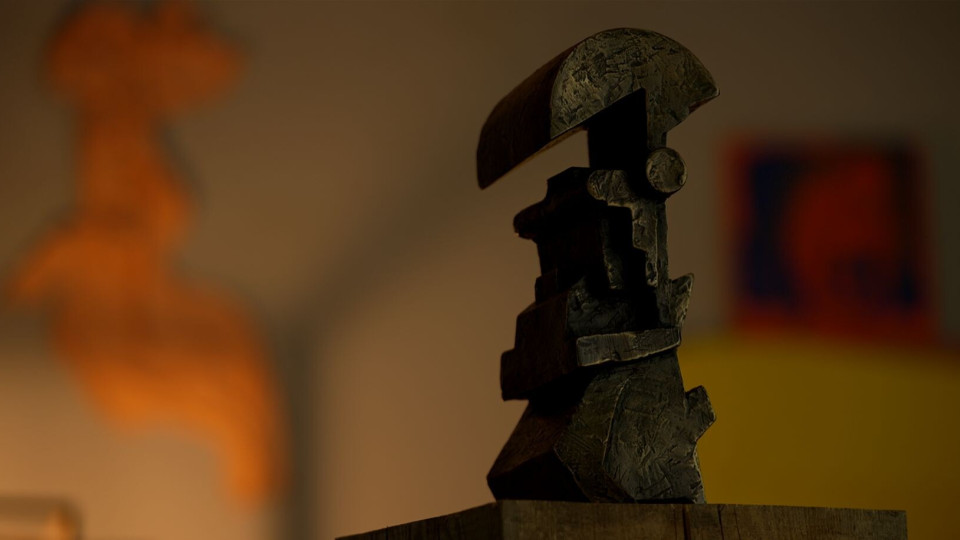
The first of the newly discovered works was a rare sculpture that had been unknowingly used as a doorstop. A guest brought the item to the BBC TV series Antiques Roadshow, where it was appraised and identified as a Ben Enwonwu piece. Purchased for just £50 at a car boot sale, its current estimated value is around £15,000. The sculpture features a plaque reading “Ben Enwonwu–Igbo Sculpture” and bears the signature of Zwemmer Gallery, a former art gallery in London, confirming its authenticity and dating it to the 1970s, during Enwonwu’s peak fame.
In addition, a previously unknown watercolour poster titled Yams, created in 1942, was found in the UK’s National Archives. Commissioned by the UK’s Ministry of Information during World War II, the poster aimed to promote food production and self-sufficiency in West Africa. This discovery was verified by experts who had not previously been aware of its existence.
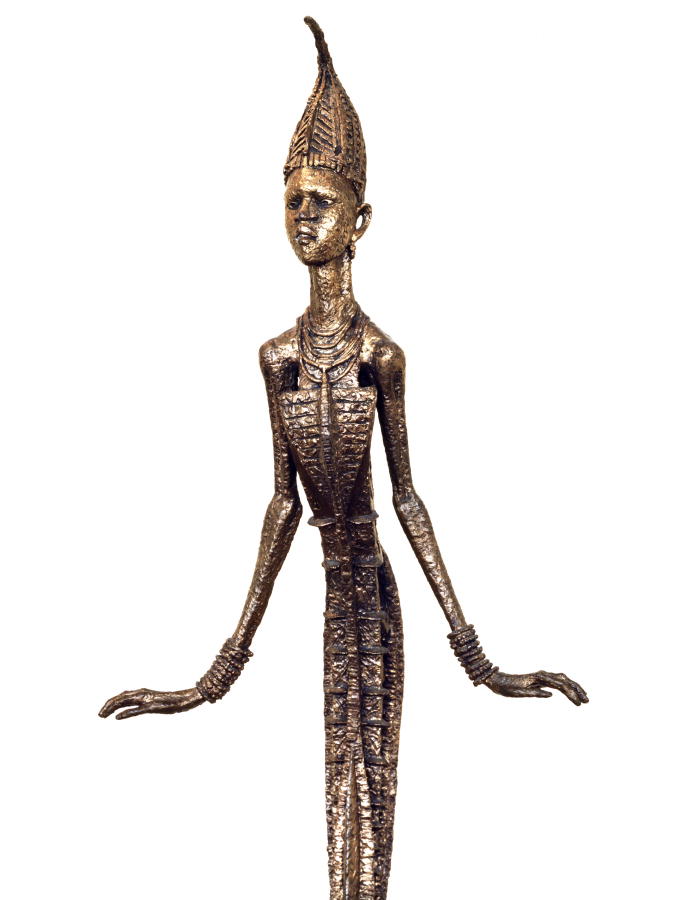
Ben Enwonwu was born in Onitsha, Nigeria, in 1917, during colonial rule. He inherited his father’s tools and began carving in the style of indigenous Igbo sculpture. After studying fine art in Nigeria, Enwonwu gained recognition with his first solo exhibition in Lagos in 1944, which earned him a scholarship to the Slade School of Fine Art in London. His career flourished as he became an art adviser to the Nigerian government and created significant works, including the bronze statue Anyanwu, representing the Igbo goddess, commissioned for Nigeria’s independence.
Enwonwu gained international acclaim in 1957 when he sculpted an over life-sized bronze statue of Queen Elizabeth II, making him the first African artist to produce an official portrait of a European monarch. The Queen sat for Enwonwu in London, and the statue was unveiled later that year. His biographer, Sylvester Ogbechie, noted that the statue combined the Queen’s features with the serene expression characteristic of Enwonwu’s work.
Despite his achievements, Enwonwu faced criticism for his association with the British monarchy, with some viewing it as a betrayal of Nigerian nationalism. He was awarded an MBE (Member of the British Empire) for his sculpture of the Queen while Nigeria was on the brink of independence. Critics, including Professor Nkiru Nzegwu, accused him of seeking validation from colonial powers. However, Enwonwu was a staunch supporter of Nigerian independence and spoke out against the suppression of native traditions in art.
Throughout his life, Enwonwu navigated a complex identity, striving to unify his success in the British art world with his African heritage. He faced racism during his time in London but remained committed to promoting black art and artists. His works, including the Africa Dances series, celebrated African culture and identity.
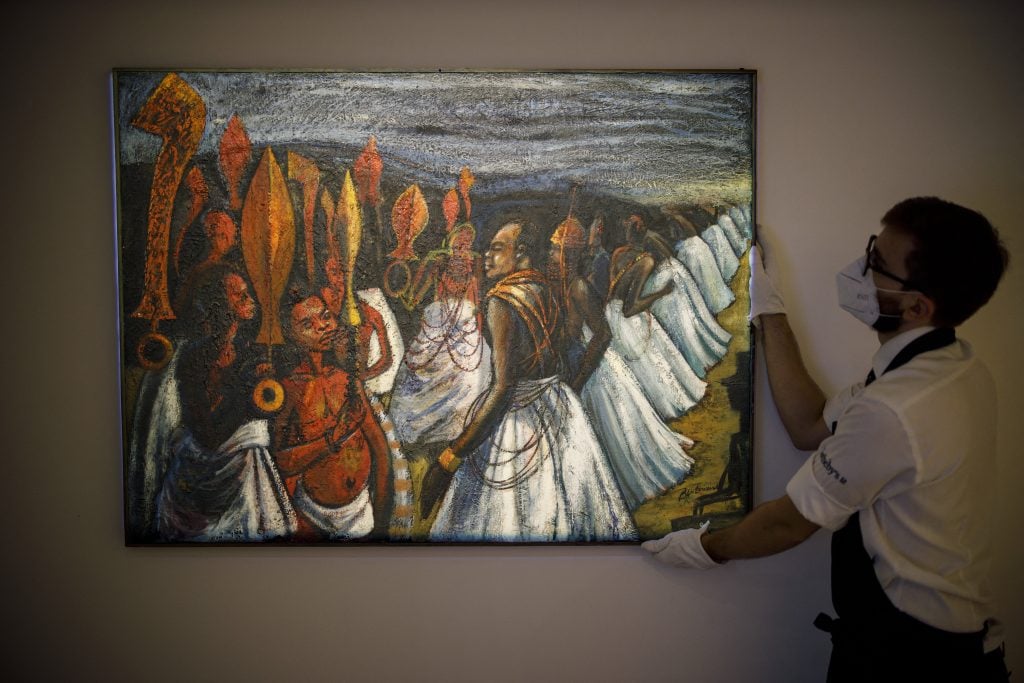
In the years following the Biafran War, Enwonwu’s works increasingly celebrated Igbo culture. His painting Christine, created in 1971, sold for £1.1 million in 2019, while his most famous work, Tutu, created in 1973, became a symbol of reconciliation. The rediscovery of Tutu in 2017 was hailed as a significant moment in contemporary African art.
Enwonwu passed away in 1994, leaving behind a legacy that continues to inspire artists today. His ability to fuse European artistic techniques with African culture challenged Western perceptions of African art and asserted Nigeria’s identity on the global stage. His works are now displayed in prominent locations worldwide, including the United Nations headquarters in New York.
Ben Enwonwu’s recent rediscoveries serve as a reminder of his profound impact on the art world and the importance of recognizing and preserving African artistic heritage. As the defining voice of modernist art in Africa, Enwonwu’s legacy endures, inspiring future generations to embrace their cultural identities and push the boundaries of artistic expression. His story exemplifies the power of art to transcend cultural divides and foster understanding in an ever-changing world.