Plesiosaur fossils found in the Sahara suggest they weren't just marine animals
-
 Loading...
 - Claire Lavigne
- 27 Jul 2022
- 96 Views
- 0 Like
- 0 Comment
Fossils of small plesiosaurs, long-necked marine reptiles from the age of dinosaurs, have been found in a 100-million year old river system that is now Morocco's Sahara Desert.
Fossils of small plesiosaurs, long-necked marine reptiles from the age of dinosaurs, have been found in a 100-million year old river system that is now Morocco's Sahara Desert. This discovery suggests some species of plesiosaur, traditionally thought to be sea creatures, may have lived in freshwater.
Plesiosaurs, first found in 1823 by fossil hunter Mary Anning, were prehistoric reptiles with small heads, long necks, and four long flippers. They inspired reconstructions of the Loch Ness Monster, but unlike the monster of Lake Loch Ness, plesiosaurs were marine animals—or were widely thought to be.
Now, scientists from the University of Bath and University of Portsmouth in the U.K., and Université Hassan II in Morocco, have reported small plesiosaurs from a Cretaceous-aged river in Africa.
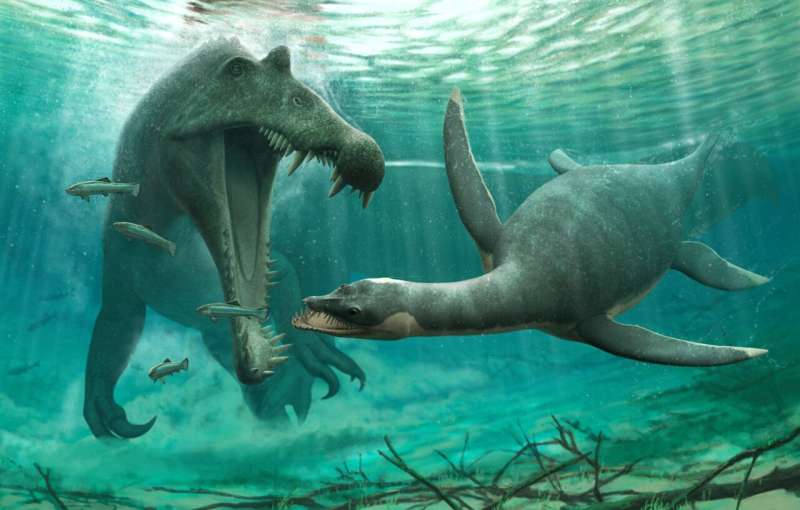
The fossils include bones and teeth from three-meter long adults and an arm bone from a 1.5 meter long baby. They hint that these creatures routinely lived and fed in freshwater, alongside frogs, crocodiles, turtles, fish, and the huge aquatic dinosaur Spinosaurus.
These fossils suggest the plesiosaurs were adapted to tolerate freshwater, possibly even spending their lives there, like today's river dolphins. Read More...