Study of Ancient Mass Extinction Reveals Dinosaurs Took Over Earth Amid Ice, Not Warmth
-
 Loading...
 - Josefine Hansen
- 07 Jul 2022
- 114 Views
- 0 Like
- 0 Comment
Thriving in a Series of Sudden Global Chills That Killed Competitors
Many of us are familiar with the popular theory of how the dinosaurs died 66 million years ago: in Earth’s violent collision with a meteorite, followed by a global winter caused by dust and debris choking the atmosphere. But there was a far more mysterious and less discussed previous extinction: the one 202 million years ago, which wiped out the big reptiles who up until then ruled the planet, and apparently cleared the way for dinosaurs to take over. What caused the so-called Triassic-Jurassic Extinction, and why did dinosaurs thrive when other creatures perished?
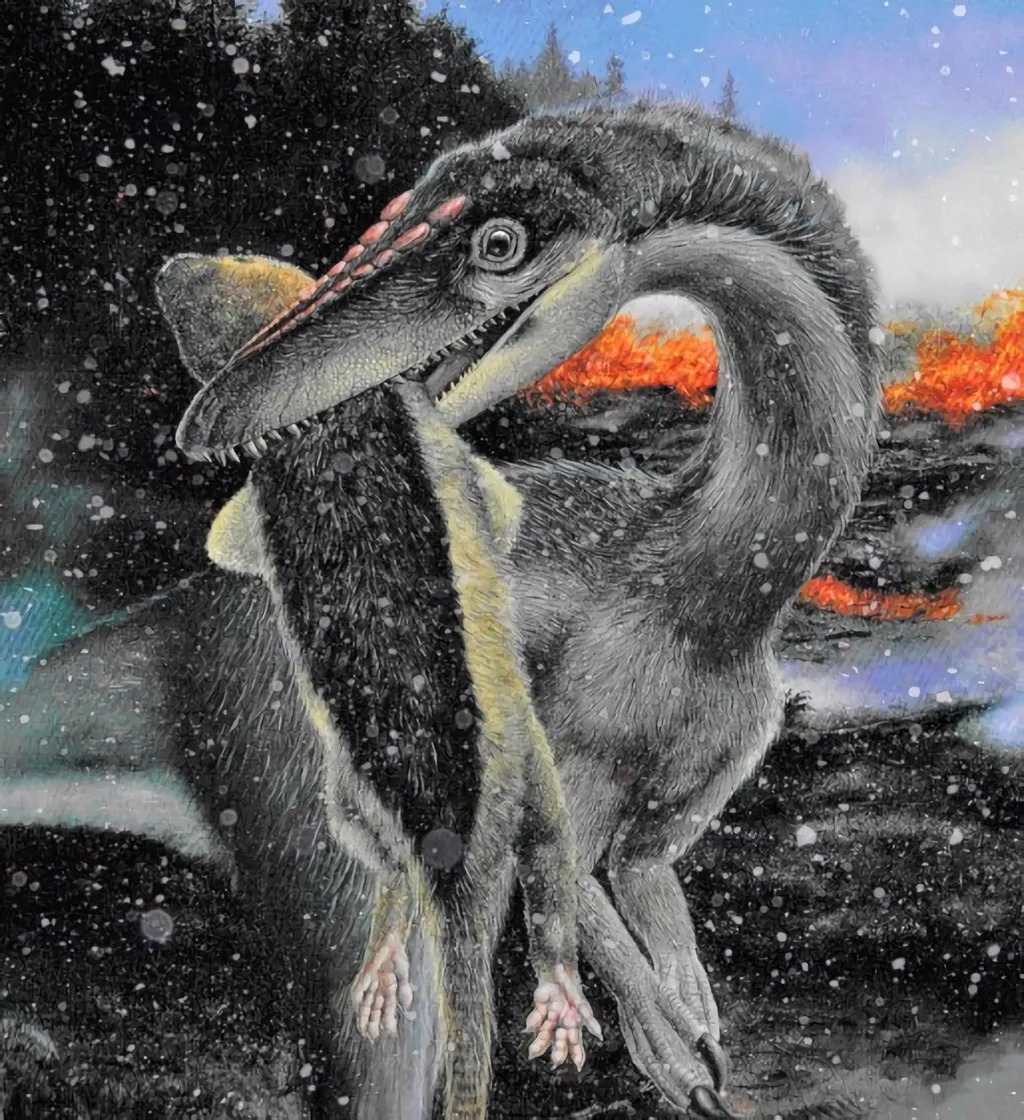
We know that the world was generally hot and steamy during the Triassic Period, which preceded the extinction, and there were similar conditions during the following Jurassic, which kicked off the age of dinosaurs. However, new research turns the idea of heat-loving dinosaurs on its head: It presents the first physical evidence that Triassic dinosaur species, which were a minor group largely relegated to the polar regions at the time, regularly endured freezing conditions there.
The telltale indicators are dinosaur footprints along with odd rock fragments that only could have been deposited by ice. The authors of the study explain that during the extinction, cold snaps already happening at the poles spread to lower latitudes, killing off the cold-blooded reptiles. Dinosaurs, which had already adapted, survived the evolutionary bottleneck and spread out. The rest is ancient history.
“Dinosaurs were there during the Triassic under the radar all the time,” said Paul Olsen, a geologist at Lamont-Doherty Earth Observatory, and lead author of the study. “The key to their eventual dominance was very simple. They were fundamentally cold-adapted animals. When it got cold everywhere, they were ready, and other animals weren’t.” Read More...