Poland’s First Domestically-Made Research Instrument for NASA Mission Integrated with Satellite
-
 Loading...
 - Murray Barnes
- 03 Feb 2025
- 38 Views
- 0 Like
- 0 Comment
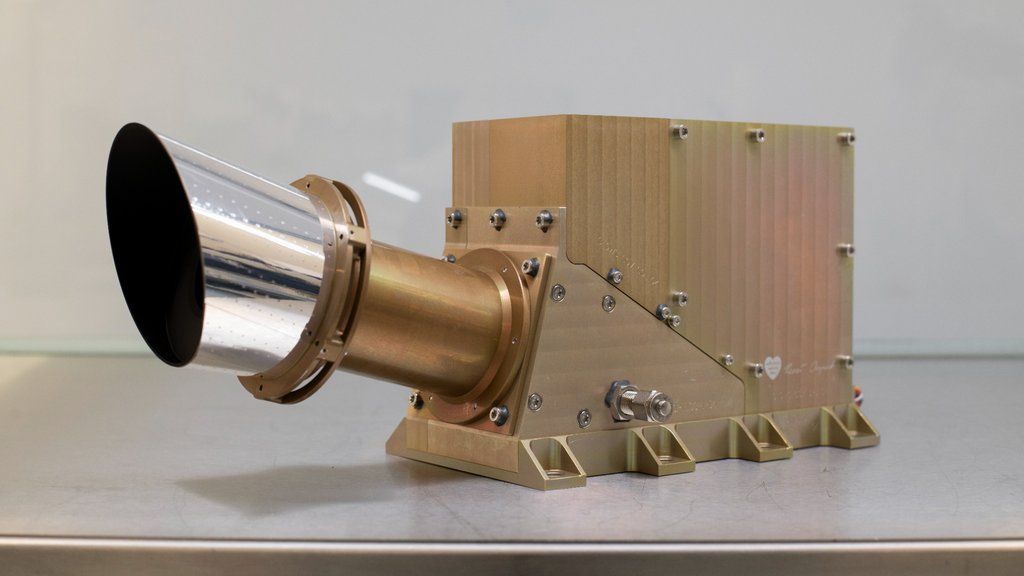
Poland has achieved a milestone in space exploration with the successful integration of its first scientific instrument designed and built entirely in the country into NASA’s Interstellar Mapping and Acceleration Probe (IMAP) satellite. The instrument, named GLOWS (Global Solar Wind Structure), was developed by Poland’s Space Research Center (CBK PAN) and is set to play a crucial role in understanding the solar wind and its interactions with the heliosphere.
GLOWS is a photometer specifically designed to study the three-dimensional structure of the solar wind and its evolution throughout the solar cycle. This innovative device will assist scientists in analyzing the distribution of interstellar neutral hydrogen and radiation pressure within the heliosphere, providing valuable insights into solar and interstellar phenomena.
As one of ten instruments aboard NASA’s IMAP spacecraft, GLOWS is integral to the mission's objectives. The IMAP mission is scheduled to launch in the second half of 2025, with initial satellite activation planned shortly after the launch.
The GLOWS instrument underwent rigorous testing in Poland, which included thermal, vibration, electromagnetic, and functional assessments to ensure its reliability and performance in the harsh conditions of space. After its arrival in the United States, the instrument underwent additional testing before being successfully integrated with the IMAP satellite.
The IMAP mission is currently slated for launch in September 2025. If all instruments, including GLOWS, remain functional, the mission has the potential to cover a complete 11-year solar cycle, providing comprehensive data on solar activity and its effects on the heliosphere.
In a meaningful gesture, the casing of the GLOWS instrument features the logo of a major Polish charity organization, WOŚP (Great Orchestra of Christmas Charity), along with the name of a winner from one of its auctions. This engraving symbolizes the collaboration between science and community support, highlighting the importance of public engagement in scientific endeavors.
The successful integration of Poland’s GLOWS instrument into NASA’s IMAP satellite marks a significant achievement for the country’s space research capabilities. This project not only enhances Poland’s contributions to international space missions but also underscores the importance of collaboration between government, scientific institutions, and the public. As the IMAP mission approaches its launch date, the GLOWS instrument is poised to provide valuable insights into the solar wind and its interactions with the interstellar medium, advancing our understanding of space science.