Polish Parliament Passes Bill Changing Who Will Confirm Winner of Presidential Election
-
 Loading...
 - Brown Wilson
- 03 Feb 2025
- 109 Views
- 0 Like
- 0 Comment
Poland’s parliament has passed a bill that alters the process for confirming the validity of presidential election results. Under the new legislation, the decision will now rest with the 15 longest-serving judges of the Supreme Court, rather than the previously designated chamber of extraordinary review and public affairs, which was established during the tenure of the former Law and Justice (PiS) government.
This change comes amid ongoing tensions regarding the legitimacy of the judicial reforms implemented by the PiS, which have been criticized by the current government and the European Court of Justice (ECJ). The chamber in question is viewed as illegitimate due to its judges being appointed through the National Council of the Judiciary (KRS), a body that has come under political influence.
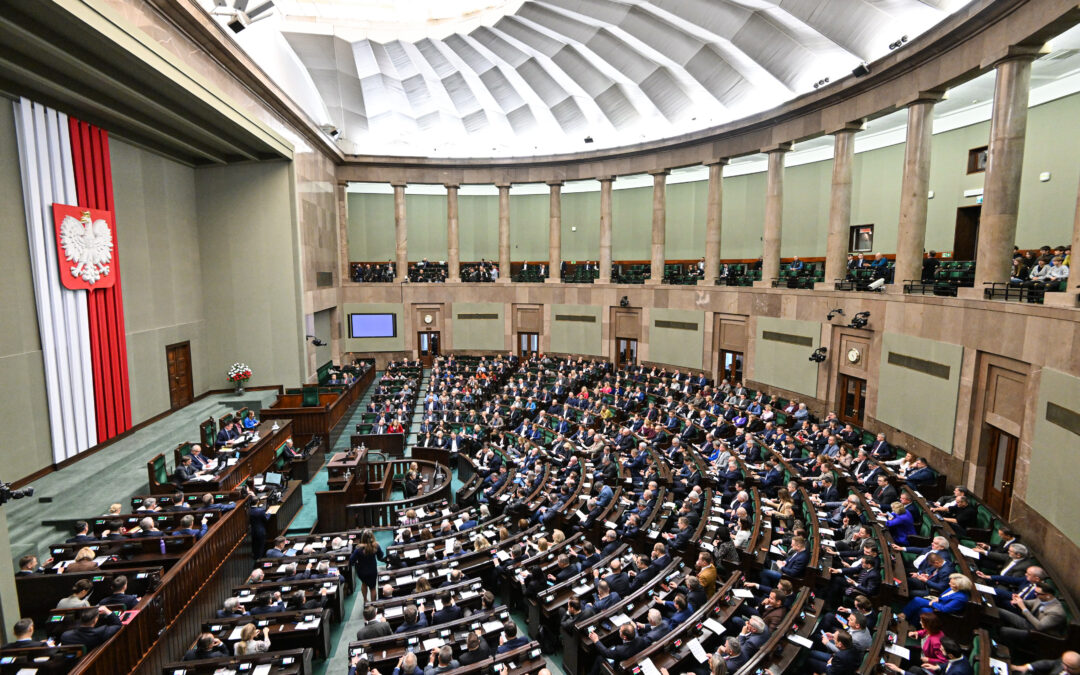
The draft law, which was approved by the Sejm (the lower house of parliament), aims to ensure that the upcoming presidential election on May 18, 2025, and any supplementary Senate elections are validated by a panel of judges deemed more impartial. The bill received support from 220 MPs, primarily from the ruling coalition, while 204 MPs voted against it, and 20 abstained. The Left party, also part of the ruling coalition, chose to abstain from the vote.
PSL MP Michał Pyrzyk emphasized that the legislation is designed to prevent politically motivated challenges to election outcomes. However, the opposition, particularly PiS, has criticized the bill as unconstitutional, arguing that it undermines the principles of citizen trust in the state and differentiates between judges.
Critics of the bill, including PiS MP Marek Ast, have raised concerns that the legislation violates fundamental constitutional principles. They argue that it undermines the president's exclusive prerogative to appoint judges and could lead to further politicization of the judiciary.
Initially, the proposed reforms included having the entire Supreme Court, excluding the disputed chamber, decide on election validity. However, the ruling coalition ultimately opted for the selection of the 15 longest-serving judges. The Confederation party had previously suggested that the entire Supreme Court, including the controversial chamber, should be involved in the decision-making process.
The bill will now move to the Senate, which is controlled by the ruling coalition and is expected to approve it. Following Senate approval, it will be sent to President Andrzej Duda, who has the option to sign it into law or veto it. Duda, aligned with PiS, has previously vetoed various pieces of legislation proposed by the ruling coalition, raising questions about whether he will support this bill.
As Poland approaches its presidential election on May 18, 2025, the implications of this legislative change could be significant. If a candidate from the ruling coalition wins, it may facilitate the passage of new legislation. Conversely, if an opposition candidate emerges victorious, it could lead to ongoing challenges in governance and cohabitation between the presidency and parliament.
The passage of this bill reflects the ongoing political tensions in Poland regarding judicial independence and the electoral process. As the country prepares for the upcoming presidential election, the changes to the confirmation process for election results will likely play a crucial role in shaping the political landscape and the relationship between the judiciary and the government.