Quantum-Inspired Technique Simulates Turbulence with High Speed
-
 Loading...
 - Daan Drukker
- 04 Mar 2025
- 39 Views
- 0 Like
- 0 Comment
In the realm of fluid dynamics, turbulence has long been a challenging phenomenon to simulate accurately due to its complex and chaotic nature. Traditional computational methods often require extensive resources and time, making it difficult to analyze turbulent flows in real-time or for large-scale applications. However, recent advancements in quantum-inspired techniques are transforming this landscape, offering high-speed simulations that promise to enhance our understanding of turbulence.
The Challenge of Turbulence
Turbulence is a common occurrence in various natural and industrial processes, from weather patterns and ocean currents to aircraft design and chemical mixing. The chaotic behavior of turbulent flows makes them difficult to predict and model accurately. Traditional computational fluid dynamics (CFD) methods, while effective, can be computationally intensive, often requiring days or even weeks to produce results for complex scenarios.
Enter Quantum-Inspired Techniques
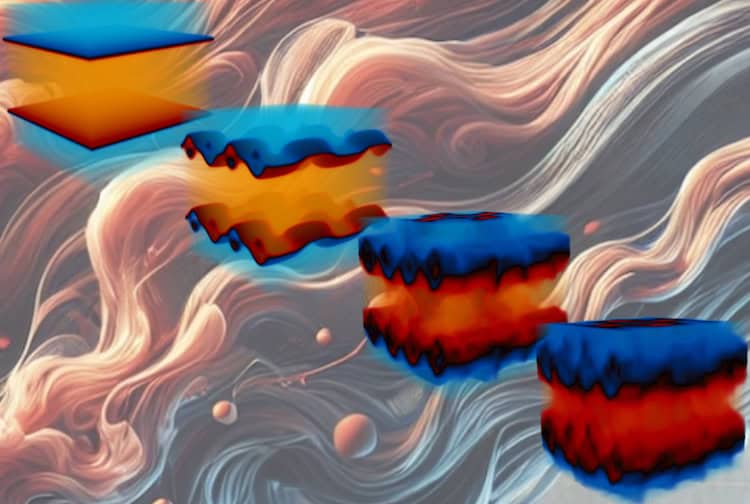
Recent developments in quantum computing and quantum-inspired algorithms have opened new avenues for simulating turbulence. These techniques leverage principles from quantum mechanics, such as superposition and entanglement, to process information more efficiently than classical methods. One notable approach involves the use of tensor networks, which can represent complex systems in a more compact form, significantly reducing the computational burden.
By employing these advanced algorithms, researchers can simulate turbulent flows with remarkable speed and accuracy. For instance, simulations that previously took days to complete can now be executed in just a few hours. This acceleration allows scientists and engineers to explore a wider range of scenarios and gain deeper insights into the underlying physics of turbulence.
Applications and Implications
The implications of high-speed turbulence simulations are vast. In aerospace engineering, for example, faster simulations can lead to more efficient aircraft designs by allowing engineers to test various configurations and materials in a fraction of the time. In environmental science, improved turbulence models can enhance predictions of weather patterns and climate change impacts, aiding in disaster preparedness and resource management.
Moreover, industries such as oil and gas, automotive, and chemical processing can benefit from these advancements by optimizing processes and reducing costs. The ability to simulate turbulent flows in real-time can lead to more efficient designs and operations, ultimately contributing to sustainability efforts.
Future Directions
As research in quantum-inspired techniques continues to evolve, the potential for further breakthroughs in turbulence simulation is significant. Ongoing studies aim to refine these algorithms, making them even more accessible and applicable across various fields. Additionally, the integration of machine learning with quantum-inspired methods could further enhance predictive capabilities, allowing for more accurate and efficient simulations.
In conclusion, the advent of quantum-inspired techniques marks a significant milestone in the simulation of turbulence. By dramatically increasing the speed and efficiency of these simulations, researchers are poised to unlock new insights into one of the most complex phenomena in fluid dynamics. As these technologies continue to develop, they hold the promise of transforming not only our understanding of turbulence but also the practical applications that rely on accurate fluid flow modeling.