Raja Ravi Varma: The Indian painter who made art accessible to the masses
-
 Loading...
 - Umayi Devi
- 03 Apr 2023
- 80 Views
- 1 Like
- 0 Comment
The artist's work is on show at Louvre Abu Dhabi as part of its Bollywood Superstars exhibition
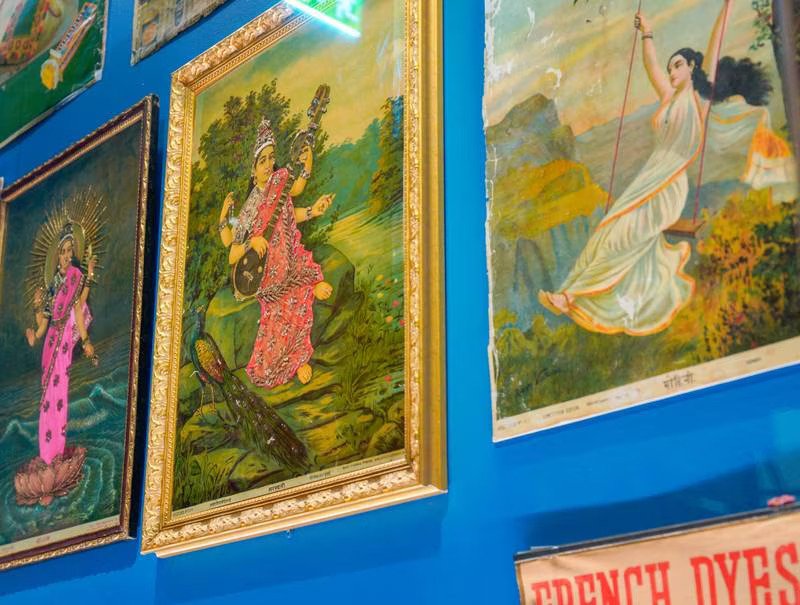
The Bollywood Superstars: A Short Story of Indian Cinema exhibition, running at Louvre Abu Dhabi until June 4, features nine lithographs from a vast collection of paintings by the famed Indian painter Raja Ravi Varma.
The chromolithographs were loaned to the museum by the Raja Ravi Varma Heritage Foundation in Bangalore, in the run-up to the 175th anniversary of the Indian master's birth, falling on April 29. Digital images of two original oil paintings belonging to important private collectors from India also feature in the exhibition's catalogue.
Varma was the first Indian artist to use western techniques and styles to depict uniquely Indian themes. While his depictions of royal portraiture and everyday scenes were popular, his work in providing faces to gods and goddesses captured the imagination of the masses. The artist is credited with painting close to 2,000 works in a career spanning almost four decades.
Born on April 29, 1848, in a small village called Kilimanoor in Kerala, his family was related to the royal family of Travancore. Even as a little boy, he used to draw pictures on the walls of his house. In her book Raja Ravi Varma: Painter of Colonial India, art curator and author Rupika Chawla writes that Varma’s uncle was impressed with the young boy’s talent and taught him everything he knew about art.
When Varma was 14, his uncle took him to the palace at Thiruvananthapuram so that he could learn from the royal painter. This opportunity enabled the budding artist to study European and Indian paintings in the palace. He also had a chance to observe court artists at work and read books on art provided to him by the maharajah.
:quality(70)/cloudfront-eu-central-1.images.arcpublishing.com/thenational/3C2J64D7Y5FATIQVKQNQKRYACQ.jpg)
His work soon started garnering attention. In 1873, he won the Governor’s Gold Medal at the Madras Fine Arts Society Exhibition for the painting Nair Lady Adorning Her Hair. In 1904, Varma was awarded the Kaiser-i-Hind gold medal by the British Viceroy of India.
Often referred to as the father of modern Indian art, Varma has contributed hugely to the history of his time through his works. “His style, themes, technique and work have deeply influenced and shaped the Indian aesthetic sense,” says Gitanjali Maini, managing trustee and chief executive of the Raja Ravi Varma Heritage Foundation.
Varma's works have not just popularised Indian iconography and popular historical stories, but actually shaped the nation and created an artistic legacy for India. He used textures, light and shadow to add depth to his paintings. His attention to detail in the clothing, jewellery, furniture, background etc also added a layered dimension to his artworks. Read More…