Rare Albino Orchid Species Renamed In The Philippines
-
 Loading...
 - Basilio Diwata
- 19 May 2023
- 89 Views
- 0 Like
- 0 Comment
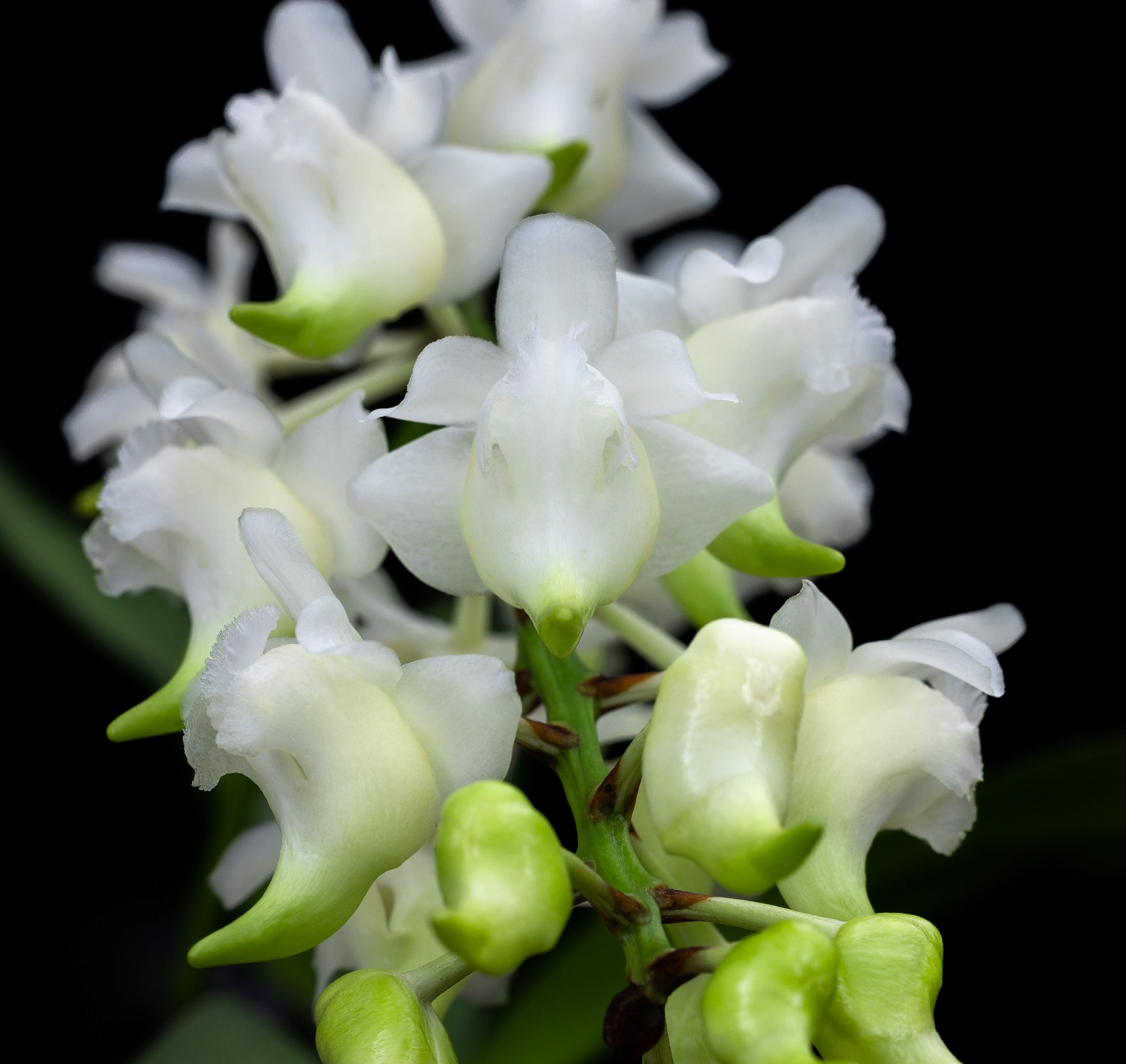
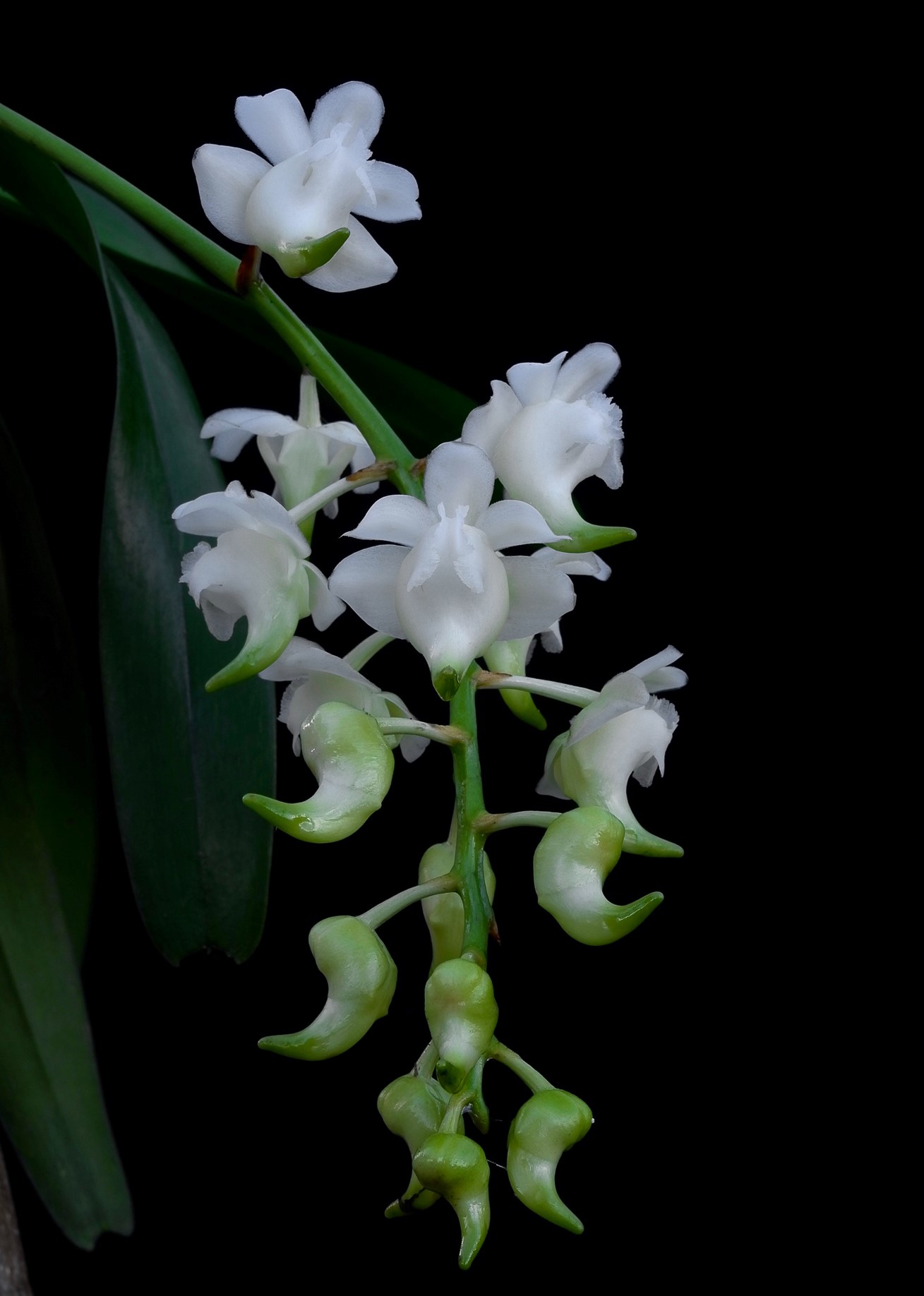
Dr. De Leon, a prominent scientist, highlights the remarkable and magnificent characteristics of the Aerides lawrenceae, particularly its exceedingly rare albino form which lacks red or purple pigments, resulting in a stunning combination of pure white and green hues.
For centuries, Europeans have been avid collectors of orchids in the Philippines, extensively exploring its forests in search of extraordinary specimens. However, the elusive albino form of the Aerides lawrenceae has remained undiscovered until now.
In 1935, the renowned botanist Oakes Ames and Eduardo Quisumbing described a white variant of this orchid, naming it Aerides lawrenceae var. fortichii, in honor of Representative Manuel Fortich, who obtained two specimens from his Bukidnon ranch. In 2007, Wolff and Gruß suggested reclassifying it as a forma, considering the previously published white variant as var. Fortichii. Since then, white or predominantly white forms have been presumed to be albino specimens, referred to as fma. (var.) fortichii.
However, Dr. Miguel David De Leon recently made an exciting discovery in Bukidnon, unearthing the genuine albino form named Aerides lawrenceae fma. composii. While perusing the complete 1925 volume of the Philippine Journal of Science for bird descriptions, Dr. De Leon stumbled upon the original description of Ames and Quisumbing's white variant. Upon careful examination of the description and illustration, he realized that the white variant they described was not a true albino, as it displayed a pink hue in the center of the flower. The authentic albino form of the orchid, on the other hand, exhibits a strikingly pure white and green coloration.

This extraordinarily rare and exquisite variety has been named after Joselito "Butch" Campos III, a prominent business tycoon, philanthropist, and staunch supporter of wildlife conservation in the Philippines. Dr. De Leon emphasizes Campos' dedication to organizations such as the Philippine Eagle Foundation and the Robert S. Kennedy Bird Conservancy (RSKBC), where he actively participates in various conservation projects. Moreover, as a philanthropist, Campos selflessly assists numerous individuals in need and provides livelihood opportunities for thousands of Filipinos through his owned companies.
Aerides lawrenceae, classified as an endangered species by the International Union for Conservation of Nature (IUCN), is endemic to the island of Mindanao in the Philippines. The Aerides lawrenceae fma. composii, being exceptionally rare with only one remaining plant in the wild, is safeguarded within a private conservation site dedicated to bird conservation by the Robert S. Kennedy Bird Conservancy. Dr. De Leon emphasizes that propagating this plant is highly challenging due to its sterile nature.
Partnerships and captive breeding play vital roles in Dr. Miguel David De Leon's conservation efforts. Collaborating with indigenous communities and private landowners, he strives to preserve the Philippines' biodiversity. As the Director of the Robert S. Kennedy Bird Conservancy, his organization aims to contribute to scientific knowledge while conserving Philippine habitats and wildlife. Through these partnerships, degraded lands are protected, existing biodiversity is conserved, and restoration efforts are undertaken. This approach has gained recognition from major conservation organizations like the United Nations and the Convention on International Trade in Endangered Species (CITES), who have embraced it as their slogan for the year.
Dr. De Leon acknowledges the inevitability of land development but emphasizes the necessity of establishing captive breeding and propagation programs to conserve plants and animals affected by infrastructure projects. This is mandated by the Department of Environment and Natural Resources and the Republic Act 9147, also known as the Wildlife Act. Displaced plants and animals resulting from development are rescued and cultivated in botanical gardens and dedicated conservation farms in collaboration with the DENR.
The significance of discovering and researching plant species is underscored by Dr. Miguel De Leon. He emphasizes that protecting something unknown or not understood is a challenging task. By naming and identifying species, public awareness and policy-making can be enhanced, enabling the identification and preservation of critical habitats.
The Philippines stands as one of the world's most biodiverse countries, and the discovery of new species further emphasizes its exceptional biodiversity. Naming and identifying species contribute to reinforcing the concept of biodiversity in the Philippines, fostering conservation efforts.
Dr. De Leon points out the irony that many Philippine orchid species are grown and traded in other countries, while the country of origin lags behind. He believes that promoting horticulture and conservation efforts can mutually benefit the environment and the economy, as many Philippine orchid species hold economic importance and can provide a viable means of livelihood for Filipinos.
In conclusion, the discovery of the true albino form of Aerides lawrenceae not only showcases the beauty and diversity of the Philippines but also serves as a reminder that there is still much to be explored and uncovered. This finding represents not only a scientific milestone but also a crucial step towards safeguarding endangered plant species through habitat conservation and plant propagation.