Reactor Crosses 'Crucial Milestone' in Achieving Nuclear Fusion
-
 Loading...
 - Thalia Doukas
- 07 Mar 2025
- 38 Views
- 0 Like
- 0 Comment
French scientists have announced a significant breakthrough in the pursuit of nuclear fusion, achieving a record plasma maintenance time of 22 minutes. This milestone, reached on February 12, marks a crucial step towards harnessing the potential of nuclear fusion as a clean, safe, and nearly limitless energy source.
Nuclear fusion aims to replicate the processes that occur in the core of stars by fusing two atomic nuclei, contrasting with nuclear fission, which involves splitting atoms and is currently used in nuclear power plants. To achieve fusion, temperatures exceeding 100 million degrees Celsius are required to create and sustain plasma, a hot, electrically charged gas that can easily become unstable, leading to energy loss and reduced efficiency.
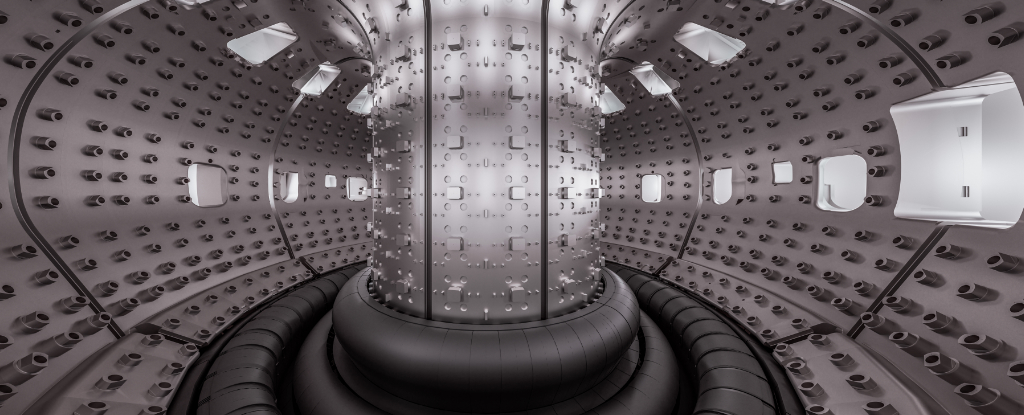
The WEST tokamak machine, located in southern France and operated by France's Atomic Energy Commission (CEA), successfully maintained plasma for 1,337 seconds, surpassing the previous record set in China by 25 percent. Anne-Isabelle Etienvre, head of fundamental research at the CEA, emphasized that this achievement demonstrates not only the ability to produce plasma but also to maintain it effectively.
Despite this progress, Etienvre cautioned that significant technological challenges remain before thermonuclear fusion can generate more energy than it consumes. The WEST team is now focused on extending plasma durations to several hours and increasing temperatures to better simulate conditions expected in fusion plasmas.
Additionally, researchers will study the impact of intense plasma on the interior of the tokamak machine, which is essential for preparing for the International Thermonuclear Experimental Reactor (ITER) currently under construction in France. Initiated in 1985, ITER is a collaborative project involving China, the European Union, India, Japan, South Korea, Russia, and the United States. Although it was initially slated to begin operations this year, ongoing delays and rising costs have pushed the timeline back to at least 2033.
As the quest for nuclear fusion continues, the recent advancements at the WEST facility represent a hopeful step towards realizing the long-sought goal of sustainable and abundant energy through fusion technology.