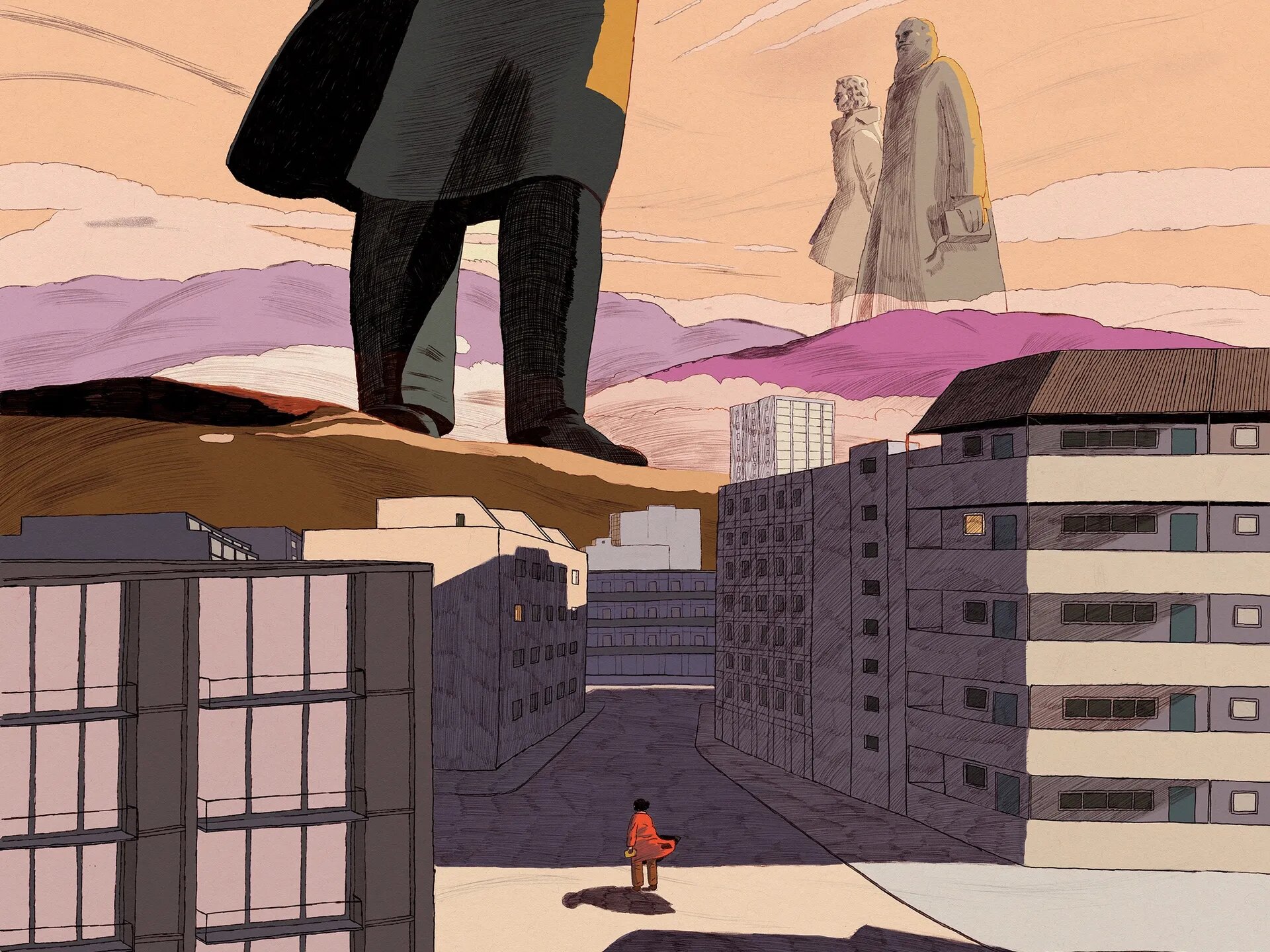
Rereading Russian classics in the shadow of the Ukraine War
-
 Loading...
 - Natasha Bobrik
- 12 Apr 2023
- 59 Views
- 0 Like
- 0 Comment
How to reckon with the ideology of “Anna Karenina,” “Eugene Onegin,” and other beloved books.
The first and only time I visited Ukraine was in 2019. My book “The Possessed”—a memoir I had published in 2010, about studying Russian literature—had recently been translated into Russian, along with “The Idiot,” an autobiographical novel, and I was headed to Russia as a cultural emissary, through an initiative of pen America and the U.S. Department of State. On the way, I stopped in Kyiv and Lviv: cities I had only ever read about, first in Russian novels, and later in the international news. In 2014, security forces had killed a hundred protesters at Kyiv’s Independence Square, and Russian-backed separatists had declared two mini-republics in the Donbas. Nearly everyone I met on my trip—journalists, students, cultural liaisons—seemed to know of someone who had been injured or killed in the protests, or who had joined the volunteer army fighting the separatists in the east.
As the visiting author of two books called “The Possessed” and “The Idiot,” I got to hear a certain amount about people’s opinions of Dostoyevsky. It was explained to me that nobody in Ukraine wanted to think about Dostoyevsky at the moment, because his novels contained the same expansionist rhetoric as was used in propaganda justifying Russian military aggression. My immediate reaction to this idea was to bracket it off as an understandable by-product of war—as not “objective.”
I had years of practice in this kind of distancing. As a student, I had often been asked whether I had Russian relatives and, if not, why I was so interested in “the Russians.” Was I perhaps studying the similarities between Peter the Great, who had Westernized Russia, and Atatürk, who had Westernized Turkey, where my relatives were from? Such questions struck me as narrow-minded. Why should I be studying whatever literature happened to have been produced by my ancestors? I was reading Russian literature from a human perspective, not a national one. I had chosen these books precisely for the universal quality expressed in titles like “Fathers and Sons,” “Crime and Punishment,” and “Dead Souls.” Read More…