Researchers find new cellular pathway that could help Alzheimer's, Parkinson's, and more
-
 Loading...
 - alex allie
- 24 Apr 2023
- 67 Views
- 0 Like
- 0 Comment
Stanford researchers find a new 'dump site' for misfolded proteins inside the cell.
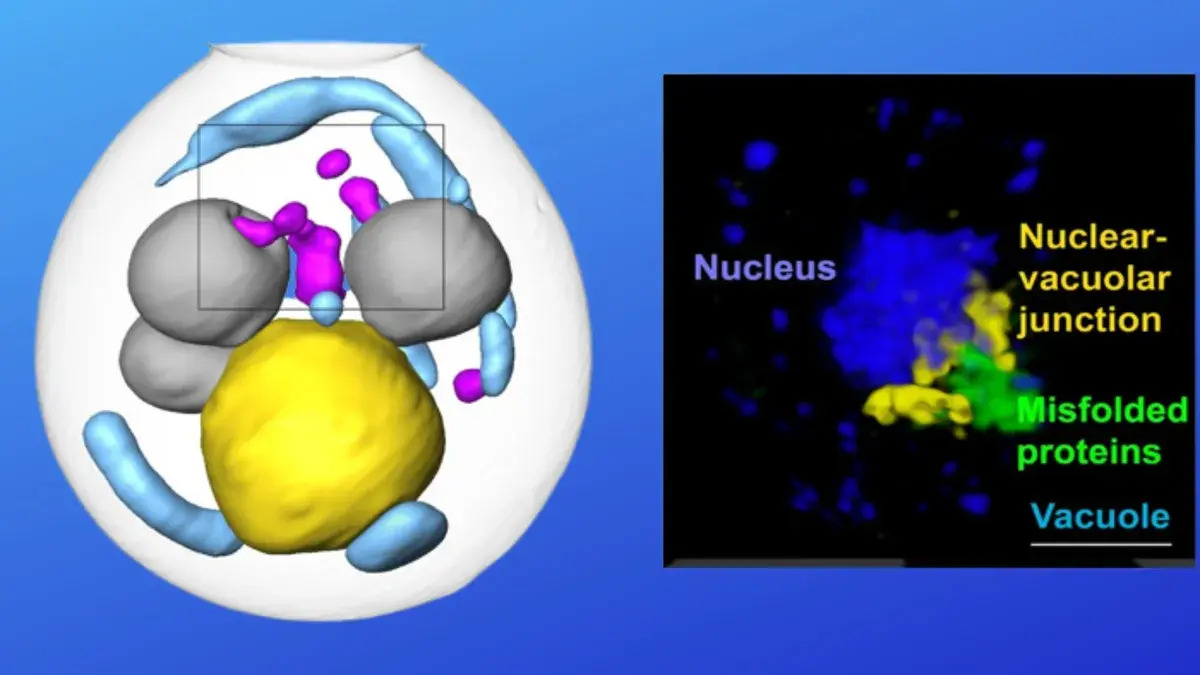
Researchers at Stanford University's School of Humanities and Sciences have found a novel pathway that is used by the cell to dispose of misfolded proteins. Using advanced microscopy and live cell imaging techniques, the researchers were able to visually follow misfolded proteins and learn about their fate in the cell.
Misfolded proteins are toxic to the cells and disrupt normal functioning. Previous research has shown that cells deal with misfolded proteins by either refolding them or simply eliminating them. Now, the research carried out under the leadership of Judith Frydman has shown that the cell can also opt to store them at a specified cellular location, which was previously unknown.
How do cells deal with misfolded proteins?
Using a wide range of techniques, the researchers found that the cellular nucleus, the main center of the cell which houses and processes the DNA, has a "garbage dump" site for misfolded proteins. The site is at the intersection of the nucleus and the vacuole – a cellular organelle that contains enzymes for degrading proteins.
Interestingly, the process is similar for misfolded proteins inside the nucleus as well as outside it. In the cytoplasm, the non-nuclear part of the cell that houses other organelles, the cellular machinery forms small misfolded protein inclusions that begin migrating toward the vacuole.

Not only is this process similar to one found in the nucleus, but the researchers also found the two processes to be constantly interacting with each other since both the protein inclusions finally ended up facing each other with the nuclear envelope – the wall of the nucleus separating them. Read More…