Rule of Thirds in Photography: A Complete Guide
-
 Loading...
 - Antea Vukovic
- 02 Jun 2022
- 267 Views
- 0 Like
- 0 Comment
The rule of thirds is widely considered to be one of the most important first techniques you can learn to create better compositions and help you progress from “taking pictures” to “making photographs.”
Don’t let the name throw you, though. It’s not really a rule. It’s a guideline or principle for composition that’s been used by artists for a long, long time. It works for landscapes, portraits, wildlife, and every other type of image, even abstracts. Not every picture has to use the rule of thirds, however, but it’s a great place to start when you are looking through your viewfinder and wondering what to do next.
What is the Rule of Thirds?
Imagine two evenly spaced vertical lines and two evenly spaced horizontal lines drawn over your viewfinder like a tic-tac-toe board. The lines divide the screen into a set of nine rectangles. Where the vertical and horizontal lines cross are “rule of thirds” points.
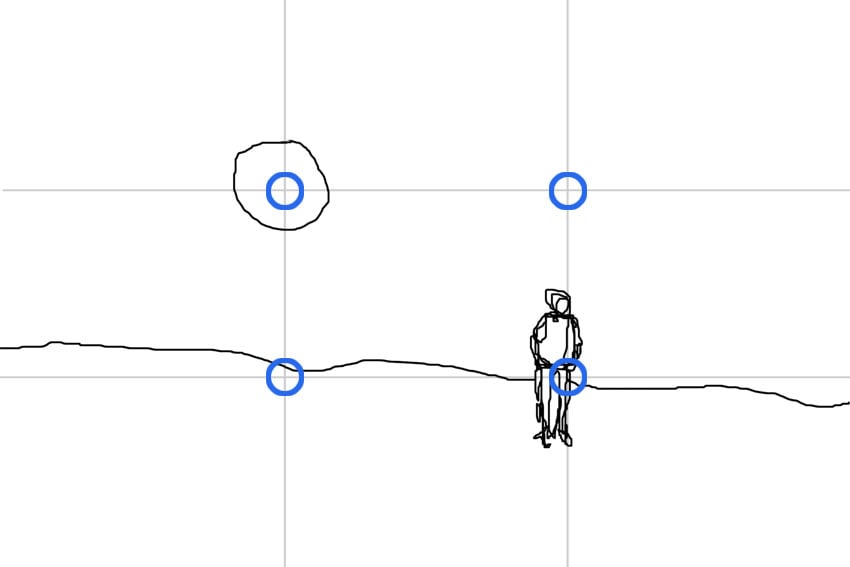
According to the rule of thirds, you should put your primary subject on one of those points (or along one of the lines).
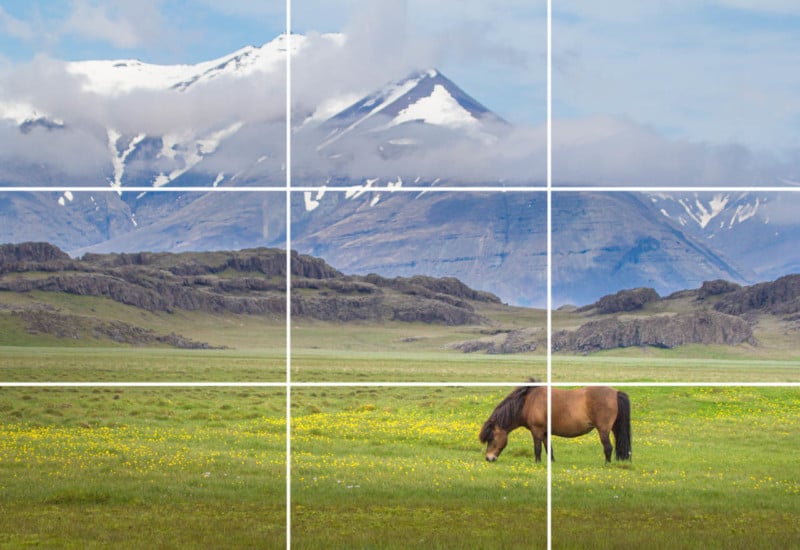
The rule of thirds is a composition guideline that suggest you should put a main point of interest on one of the four “rule of thirds” points.
In general (everything is “in general” because there are always exceptions), using the rule of thirds will help you create a pleasing, well-balanced image. It’s a way to give your main point of interest special emphasis, marking it as important. It feels natural and harmonious, whereas placing the main subject smack in the middle of the image can feel unbalanced and boring.
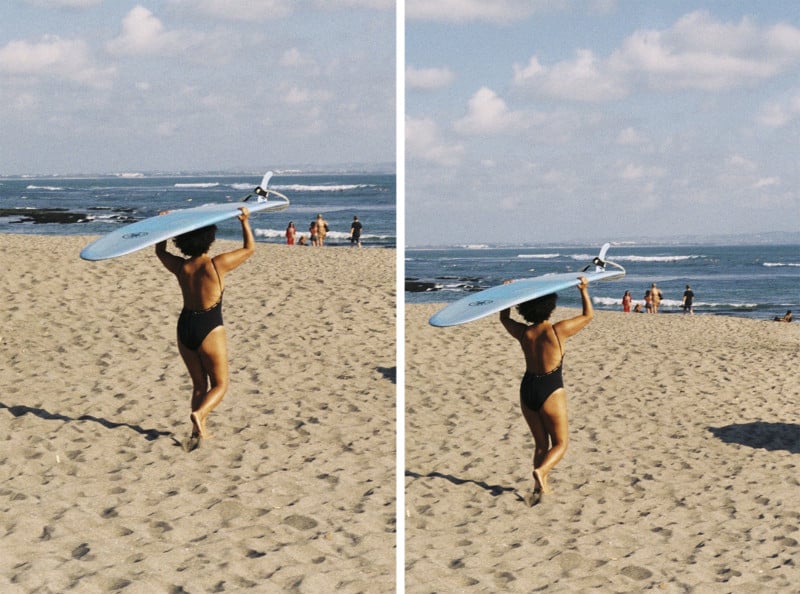
A composition in which the subject is placed in the center can feel boring (left), while placing the subject on a rule of thirds point can create a more open and interesting composition (right). Photo by Ozy Dozzy.
A subject placed on one of the rule of thirds points or lines will draw the viewer’s gaze, pulling the viewer’s attention into and through the image. Of course, the rule of thirds isn’t the only way to draw a viewer’s eye. The brightness, color, contrast, and size of an object in an image can also make an element stand out, but the rule of thirds gives it a special place of honor. Read More...