Russia’s Gaming Consoles Can’t Compete with Xbox and PlayStation
-
 Loading...
 - Jorge Mendez
- 20 Jan 2025
- 28 Views
- 0 Like
- 0 Comment
In a bid to establish a competitive presence in the gaming console market, Russian President Vladimir Putin has directed local tech manufacturers to develop "homegrown" gaming consoles. However, recent updates indicate that the initiative is facing significant challenges, particularly in terms of technology and hardware capabilities.
According to a report from Habr.com, the Skolkovo Foundation, which is responsible for developing the core technology for these consoles, is encountering technical difficulties. Anton Gorelkin, the Deputy Chairman of the State Duma Committee on Information Policy, acknowledged the shortcomings of the Elbrus processors, which are central to the project. He stated, “Elbrus processors are not yet at the stage of development that would ensure equal competition with PS5 and Xbox, which means the solution must be non-standard.” This admission highlights the gap between Russian technology and the advanced hardware produced by industry leaders like Intel and AMD.
Gorelkin emphasized the need for a sovereign platform that promotes and popularizes domestic video game products, aiming to expand their audience beyond traditional PC and mobile gaming. However, the current state of the Elbrus processor suggests that achieving this goal will be a formidable challenge.
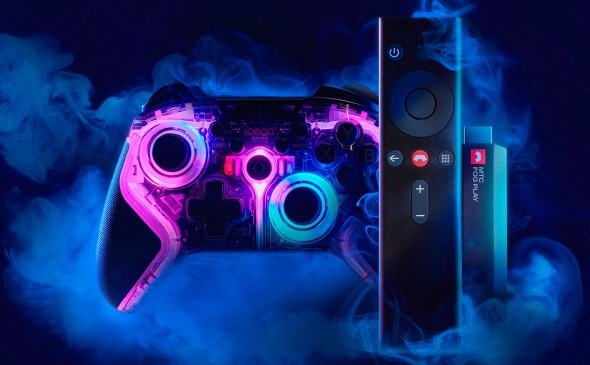
Reports indicate that Russian developers are working on two types of consoles: one that is described as "not very powerful" and another that focuses on cloud-based streaming. The latter is expected to be priced at an accessible $45. Recent images of this budget console reveal an Xbox-styled controller, a small remote, and a USB dongle, indicating a design that borrows from established competitors.
The MTS console, which operates on the MTS Fog Play system, aims to provide cloud gaming capabilities, allowing users with lower-spec computers to play games that typically require more powerful hardware. This approach reflects a strategy to cater to a broader audience, particularly in a market where high-end gaming consoles may be out of reach for many consumers.
Despite these efforts, the question remains whether Russia can realistically compete with established gaming giants like Xbox and PlayStation. The technological gap, particularly in processing power and gaming infrastructure, poses a significant hurdle. Additionally, the global gaming market is dominated by well-established brands with extensive libraries of games, robust online services, and strong community support.
While the initiative to create homegrown consoles may foster local innovation and potentially stimulate the Russian gaming industry, the current technological limitations and the competitive landscape suggest that achieving parity with Xbox and PlayStation will be a long and challenging journey.
In summary, while Russia's ambition to develop competitive gaming consoles reflects a desire for technological sovereignty and innovation, the reality of competing with industry leaders like Xbox and PlayStation is fraught with challenges. The success of these efforts will depend on overcoming significant technical hurdles and building a compelling gaming ecosystem that can attract and retain players. As it stands, the road ahead appears steep, and the hope of competing on equal footing with established platforms remains uncertain.