S. Korean researchers suggest a new plan to fight mosquitoes
-
 Loading...
 - Bojing Liu
- 20 Jul 2022
- 96 Views
- 0 Like
- 0 Comment
There are plenty of them in the city too, since they find lots of water to breed in.
A research institute says it's come up with a way to reduce their numbers, and it's environmentally friendly. Kim Jung-sil has this report.
One of the least-welcomed guests in the summer months that bothers people day and night!
The mosquitoes!
If only there was a simple way to curb their numbers. We went out to hear what people had to say about this tiny summer party crasher.
"When I go to a mountain, black mosquitoes bite me unless I move around constantly. They bite so much it hurts. When I come home I feel so itchy I have to wash the bite marks off with water."
"I get bitten all the time so I prepare repellant and stuff like that more than other people. I have it in my house and I also use a mosquito net."
But there may be a solution on the horizon as one research institute in Seoul says they have found a way to control the number of mosquitoes that's better than using chemicals.
The institute says it paid particular attention to the fact that mosquitoes can pass through spaces as small as 2mm.
"Since Seoul is a large city, we paid attention to damp, humid places around residential areas. And sewer manholes and ventilation pipes for septic tanks came up as prime suspects."
Manholes or septic tank ventilation pipes provide the perfect warm and damp conditions for female mosquitoes to lay their eggs.
These places are also filled with germs that are potentially dangerous to humans.
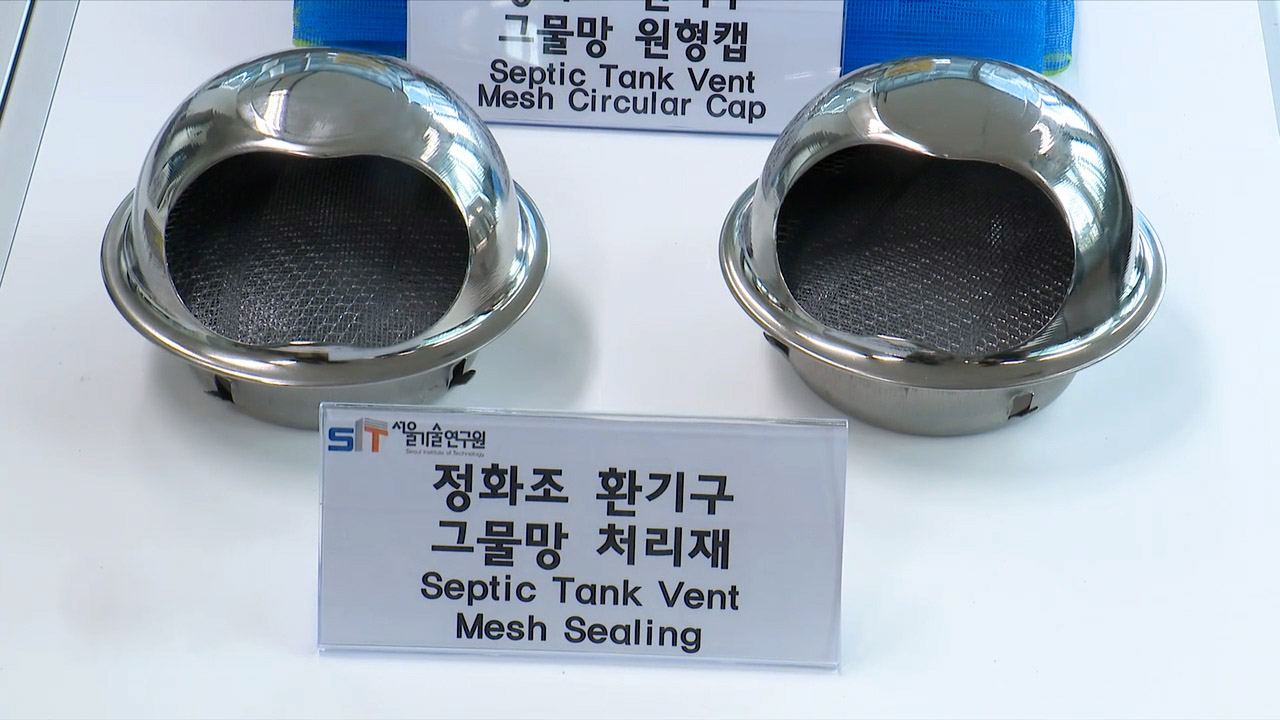
"The research institute says using rubber like this or nets like these, can fill gaps so that fewer mosquitoes can escape from sewers. Another advantage - they are cheaper than using chemicals."
The rubber seal and the nets cost somewhere between 3,000 to 10,000 Korean won which is roughly two to eight US dollars.
The chemical that each district office in Seoul uses can cost up to 150 million Korean won or roughly 110,000 dollars per year. Read More…