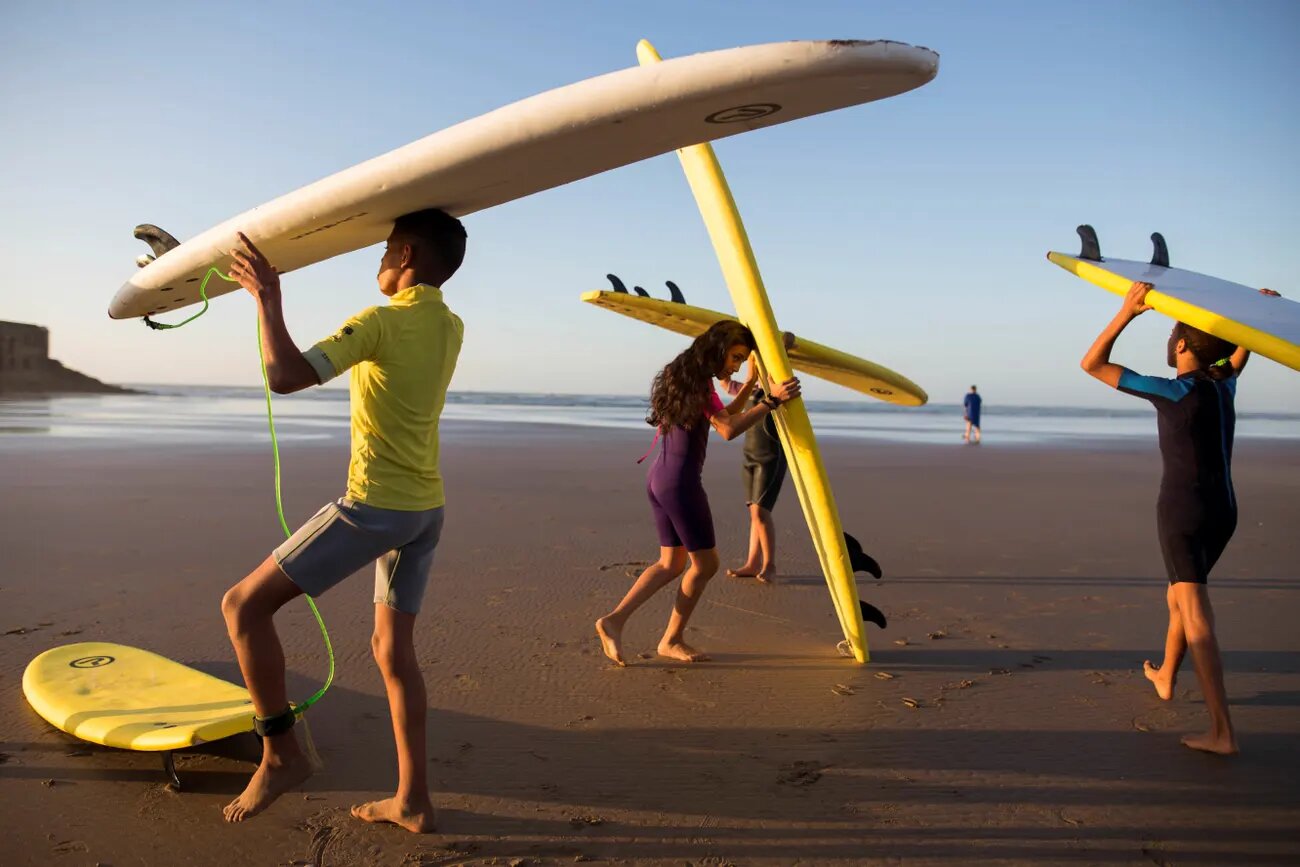
Sand, sea and a shipwreck: can this tiny Moroccan town become a sustainable surfers’ paradise?
-
 Loading...
 - Cherkaoui Ilyas
- 05 Apr 2023
- 71 Views
- 0 Like
- 0 Comment
The Canary Islands are so close that, on a clear night, surfing instructor Salim Maatoug can see the lights across the water. Fourteen million tourists a year flock to the Spanish archipelago, while in the Moroccan fishing port where Maatoug lives, sand from the Sahara drifts in the streets.
“In the Canaries you can hardly surf because it’s so crowded,” he says. “Here in Tarfaya we have 300km [200 miles] of waves.”
Maatoug learned to surf in 2004, from foreigners who drive down the African coast. He eventually started running free classes for local children. Now he is working to set up a regional surf club in Tarfaya, which he hopes will attract visitors and employ 30 former pupils.
“This will help the young people not to emigrate to Spain in pateras,” he says, referring to fishing boats co-opted to transport undocumented migrants. “Tourists will migrate to Tarfaya.”
But the 80-mile strait between Tarfaya and the Canary Islands is treacherous. Wrecks have included not only countless pateras but one commercial ferry operated by the Spanish company Naviera Armas, which ran aground in 2008 after just five months in operation. The rusted wreck still looms off Tarfaya’s coast. The line was never reopened.
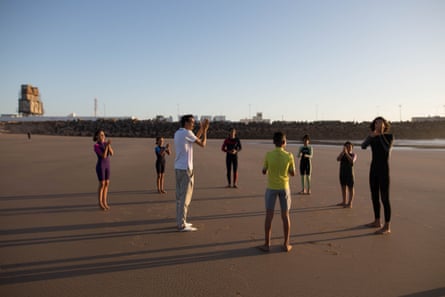
Salim Maatoug and surf coach M’barek el-Fakir with their students. Photograph: Imane Djamil/Reuters
“The economy had just started to grow – and then, nothing,” says Mohamed Salem Behiya, the president of Tarfaya provincial council. “The key for us to progress is the maritime line.” Read More…


