Saying it through satire
-
 Loading...
 - Aamir Avachat
- 29 Jun 2022
- 134 Views
- 0 Like
- 0 Comment
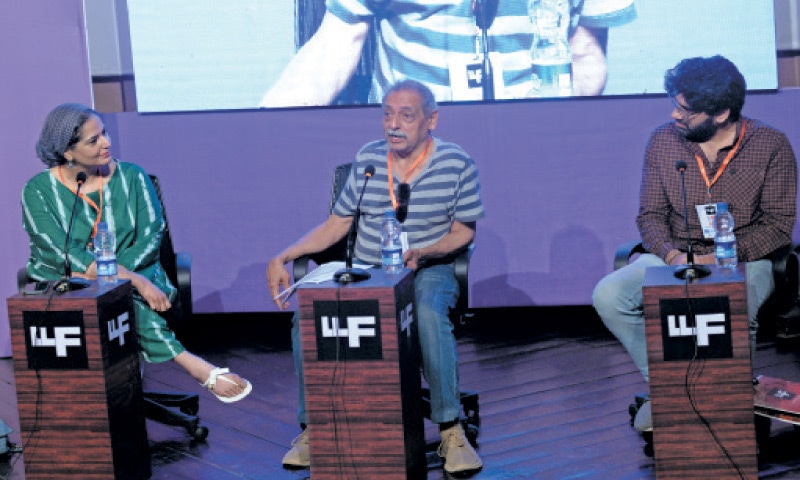
Opening the session, Sarfraz says satire is a light way to say a lot of things which can’t be said in the face of authority, especially in the countries where state censor is harsh and oppressive. She says political satire is everywhere and in the newspapers it is in the form of political cartoon, and on the present-day TV it is rife.
When asked about satire before social media, Salman Shahid mentioned iconic TV show Such Gup that preceded another popular show Fifty Fifty. For Such Gup he mainly gave credit to his mentor Shoaib Hashmi. He also appreciated Kamal Ahmed Rizvi, saying his satire was based on self-criticism.
He also mentioned Khwaja Mohyiddin who was behind one of the earliest TV comedy shows, ‘Taaleem-i-Balighan’.
Shahid says when people say that Fifty Fifty is still relevant, he finds it ‘sad’ because it means that nothing has changed and that we haven’t progressed as a society as we are still mired in the same problems. About the role of satire, Shahid says: “You humourise what you detest”.
To a question by the moderator that has satire changed during its long journey from TV to social media, Aftab says it is debatable that whether satire can become a vehicle of socio-political change, or it just has a cathartic effect. He says social media has at least provided everyone an opportunity to send his or her message across without any hindrance.
Talking about ‘Jugat’ as a popular form of satire, Salman Shahid says commercial theatre became hub of Jugat and icons like Amanullah in Lahore and Umer Sharif in Karachi took this form of satire to new heights. However, he says that the satire in programmes like Such Gup used to be subtle. He specially mentioned Navid Shahzad for her inclination towards political satire in the show.
Shahid says we should not look down upon certain type of satire as crude, because you never know what clicks internationally. In this connection he mentions that the Pakistani Truck Art that nobody here took seriously clicked internationally and became face of our popular art. He says that political satire doesn’t have longevity as it is about a particular political situation that is bound to change. However, he adds, that lacking longevity doesn’t reduces the value of the art employed in political satire and it is always admired.
Art at an alternate space
Shunning the usual spaces where artists mostly create art and display it -- studios and galleries, a group of young artists used industrial space for inspiration and to inspire those working there.
Conceived by artist Ayaz Jokhio, who is known for the novelty of his perspective and presentation, the idea of taking art to a space not meant for it, provided the artists an opportunity to approach their subject differently and at the same time re-explore themselves. Read More...