Seascape Photography: 7 Tips for Stunning Images
-
 Loading...
 - Kimberly Morris
- 03 Jun 2022
- 270 Views
- 0 Like
- 0 Comment
Seascape photography is an exciting genre that can be extremely rewarding when you know what you’re doing. Come unprepared, however, and you risk damaging yourself, your camera equipment, or the images.
There are more elements involved when photographing seascapes. This is as far from a static landscape as you can get. You’re now dealing with multiple factors and it’s crucial that you’re aware of them all.
Get these things right, and you might walk away with world-class images. Get them wrong, and things can get ugly.
I’m not going too much into the safety aspect of seascape photography in this article but please make sure to always pay attention to your surroundings and don’t take unnecessary risks. The last thing we want is for anything bad to happen.
That being said, let’s take a closer look at how you can capture better seascapes:
#1 Know the Tides
The most important part of seascape photography is knowing the tide. Don’t start photographing before you what the current and coming tide is.
There are two main reasons for this:
1. Stay safe
2. Know the creative possibilities
While there might be other advantages of knowing the tide, these are the two most important. But what exactly do they mean? Let’s take a quick look before moving on.

Know the Tides and Stay Safe
Many photographers push their limits to get a great image. This can sometimes involve a certain amount of risk. We don’t do this because we’re adrenaline junkies but because we know that there’s potential for a great image. Still, we don’t do this without being aware of the consequences and/or dangers.
Photographing seascapes without knowing the tide is like summiting a mountain without any preparation. The risk of getting hurt is significantly higher.
The ocean is no joke. Every year, we hear stories about people who are taken away by sneaker waves. How many of these cases are photographers who wanted to go a little closer to the action?
Knowing the tide doesn’t eliminate all risks but it certainly makes you more prepared. You know what to expect and it’s less likely you’ll be surprised by a quickly rising tide.
Know the Tides = Knowing What to Photograph
The second reason why it’s important to know the tide is purely creative. It’s a part of planning your photograph.
Let’s take Skagsanden Beach in the Lofoten Islands as an example. This has become an extremely popular destination for photographers during the past years.
It’s a beautiful beach but it’s during low tide that it becomes truly magical. First, when the tide is low, will you see all the incredible textures and patterns hidden in the sand. During high tide, these are underwater and the beach isn’t nearly as photogenic.
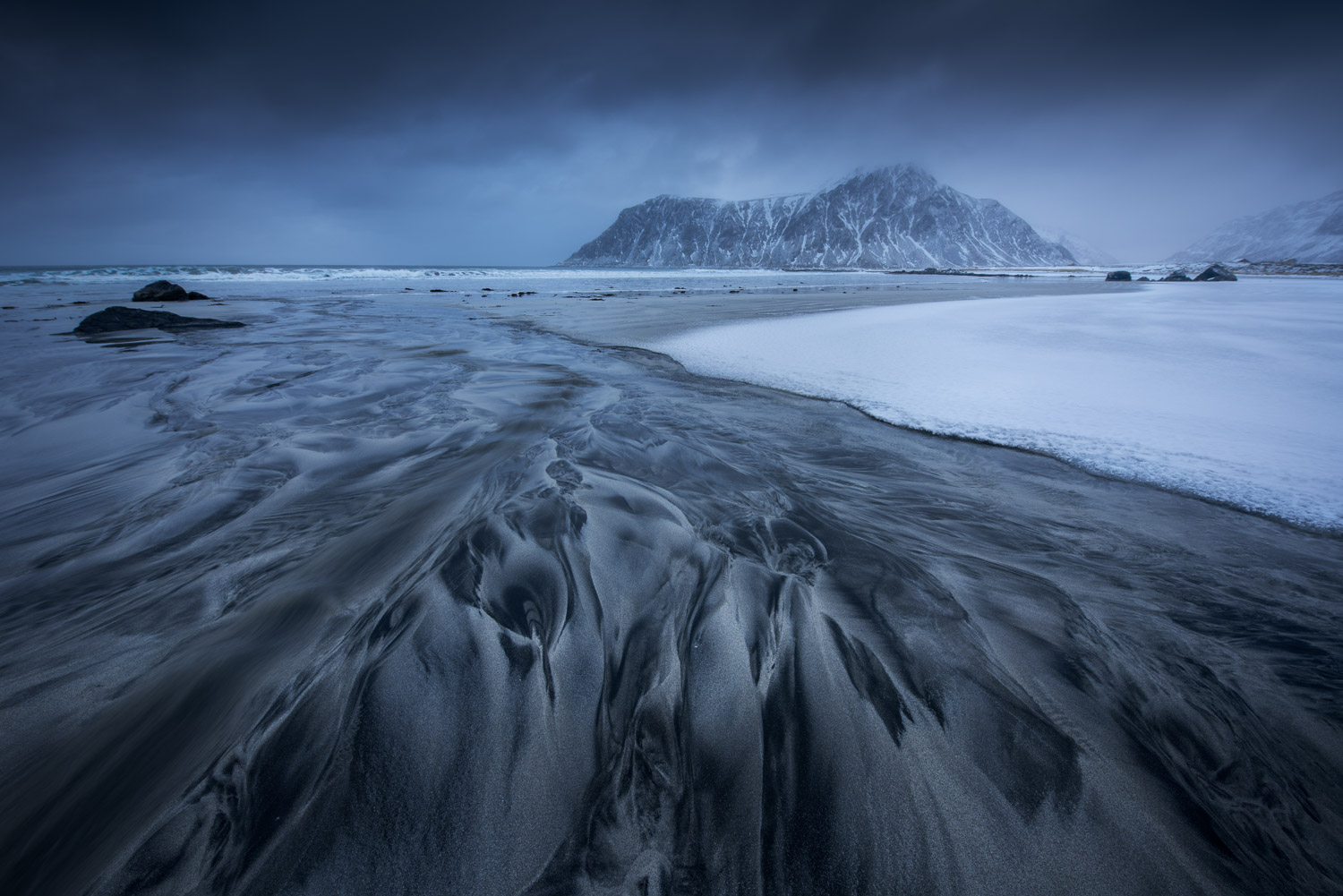
Now, let’s say you want to photograph this beach for sunrise. Specifically, because you’ve seen images of those amazing textures. Wouldn’t it then feel like a waste if you arrived just to realize that they weren’t visible?
I’m sure it would. I see this happen more often than you’d think.
Doing a quick search on the tide should be a part of the planning when you’re doing seascape photography. Avoid it and you’re simply going to a location blindly.
#2 Get Close to the Action
Those who have been photographing for a while know the importance of composition in landscape photography. This is arguably the most important factor in leading the viewer through a visual story.
Seascape photography is no different.
Using a wide-angle lens and getting close to the foreground can greatly improve the composition of your image. Having water motion stretching all the way to your immediate foreground is a great way of adding depth and leading the viewer towards the main subject.
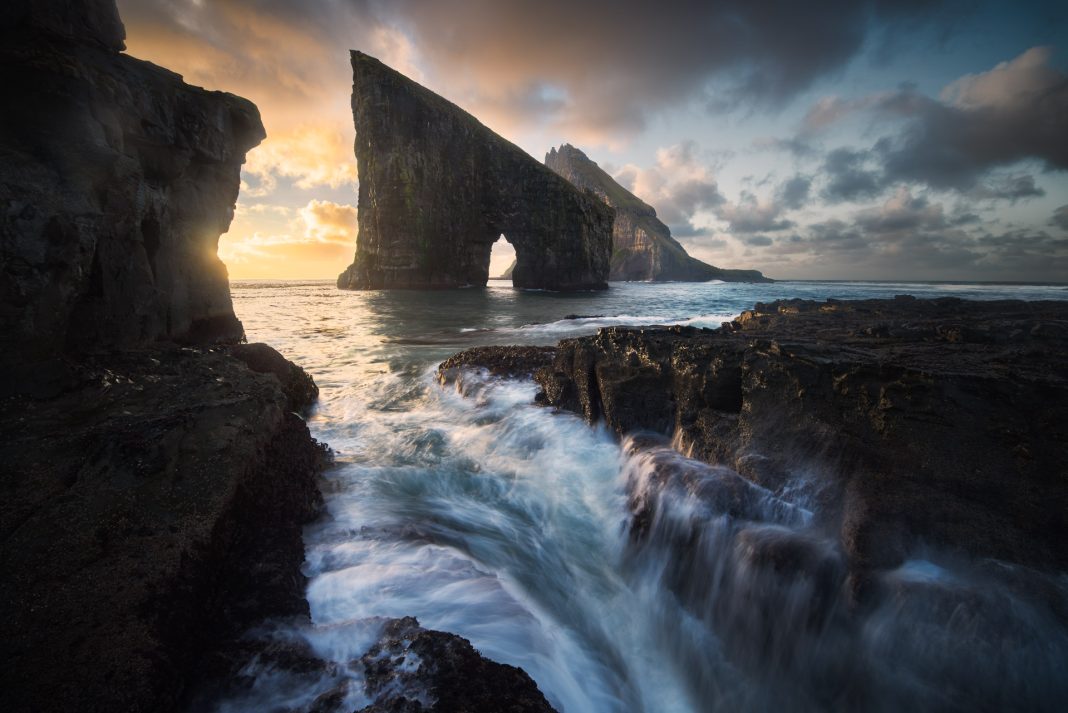
Take a look at this image:

Being so close to the action gives an entirely different feel to the photo. It shows the raw power of the ocean that would’ve been difficult to convey if I stood further back and with the camera at a higher perspective.
Getting close to the action is one of the most important tips I can give you. Don’t be afraid to get your feet wet. It can make an average photo world-class.
This is of course dependent on the scene you’re photographing. The most important part of finding your composition is to analyze your surroundings. There’s no correct solution.
Note: Always take the time to watch the waves before getting too close. Learn how far up the waves go, how much power they have, how deep it is, how the ground reacts… Don’t be too brave!