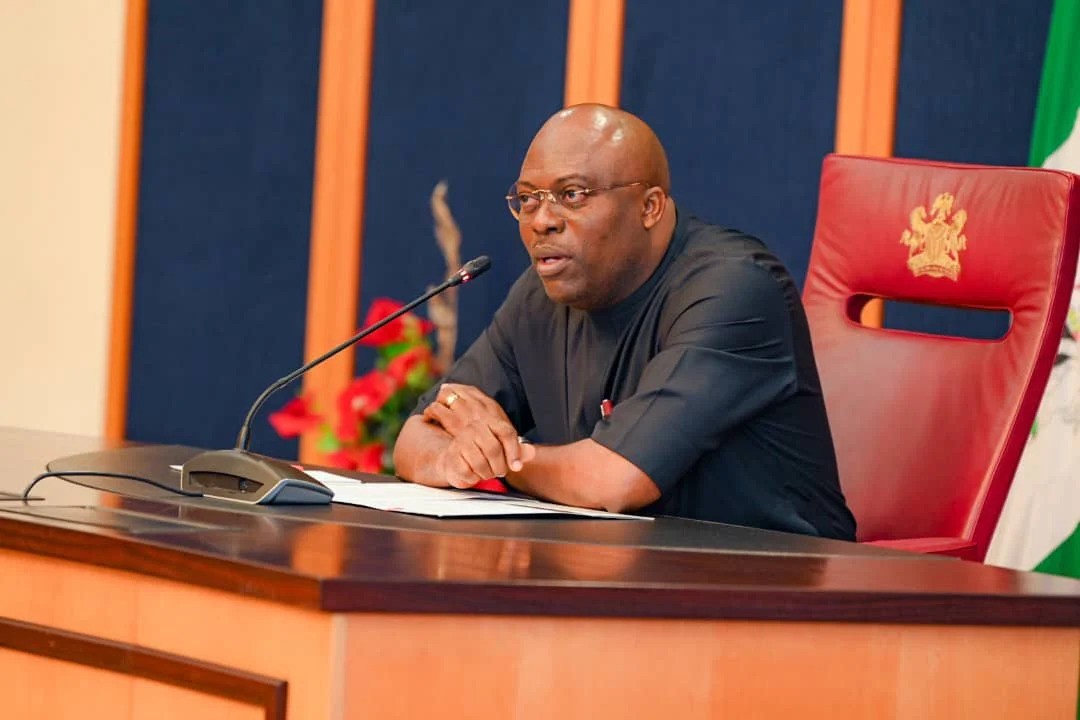
Showdown in Rivers as Assembly Overrides Gov. Fubara on Three Key Bills
-
 Loading...
 - Kemi Alade
- 10 Jan 2025
- 130 Views
- 0 Like
- 0 Comment
Tensions between Governor Siminialayi Fubara and the Rivers State House of Assembly reached a boiling point on Thursday as lawmakers, led by Speaker Martin Amaewhule, took the unprecedented step of overriding the governor’s refusal to assent to three critical bills. This dramatic move underscores the deepening rift between the governor and legislators loyal to former Governor Nyesom Wike, now the Minister of the Federal Capital Territory.
The three contentious bills at the center of this political showdown are:
i. Rivers State Education (Return of Schools) (Amendment) Bill
ii. Rivers Electricity Market Bill
iii. Rivers State Commissions of Inquiry Bill, 2024
These bills were transmitted to Governor Fubara over a month ago but were met with silence, prompting the Assembly to act. Citing Section 100(5) of the 1999 Constitution, which empowers the legislature to override the governor’s assent, the Assembly voted unanimously to pass the bills into law.
Speaker Amaewhule did not hold back in his criticism of the governor, accusing him of obstructing progress through inaction. “Governor Fubara cannot hold back the state due to his indolence and ineptitude,” he declared, emphasizing that the laws are now in force in Rivers State.
In a fiery statement issued by his media aide, Martins Wachukwu, Amaewhule described Fubara as acting above the Constitution and existing laws. The statement reinforced the Assembly’s commitment to upholding democratic principles and ensuring governance continues, regardless of the governor’s cooperation.
This override marks a significant escalation in the ongoing political power struggle in Rivers State, pitting Governor Fubara against a legislature heavily influenced by his predecessor, Wike. The Majority Leader, Major Jack, who presented the bills for debate, framed the decision as a necessary step to avoid stagnation in governance.
However, the governor’s camp was quick to respond. Jerry Omatsogunwa, Fubara’s Special Assistant on Electronic Media, dismissed the lawmakers’ actions as mere theatrics. “This is not the first time they’re overruling, but who will implement those overrulings?” he questioned, suggesting that the Assembly’s actions lacked practical weight.
Omatsogunwa further labeled the legislators as a “committee of friends” and accused them of acting against the interests of Rivers State. He drew a parallel to the National Assembly’s response during the Muhammadu Buhari administration, stating, “During the Buhari administration, when he rejected the electoral bill twice, the National Assembly didn’t overrule him—they went and did the right thing. These lawmakers should learn from that example.”
The political standoff raises critical questions about the balance of power in Rivers State. The Assembly, emboldened by its constitutional authority, appears determined to chart its own course, while Governor Fubara’s team argues that legislative overrides are meaningless without executive enforcement.
As the situation unfolds, the implications for governance in Rivers State remain uncertain. The Assembly’s assertiveness may signal a shift in the political landscape, challenging the authority of the governor and potentially reshaping the dynamics of power in the state. The coming days will be crucial in determining how this conflict will impact the administration and the people of Rivers State.