Star Light Simulator illuminates the search for life around the Milky Way's most common stars
-
 Loading...
 - Marc Blaise
- 22 Sep 2022
- 69 Views
- 0 Like
- 0 Comment
Italian researchers have demonstrated experimentally for the first time that microorganisms can photosynthesise using the infrared-dominated light emitted by the most common type of star in the Milky Way. The results from the Star Light Simulator, presented at the Europlanet Science Congress (EPSC) 2022, suggest that life could develop around stars different from our Sun and produce oxygen-rich worlds that are habitable by more complex organisms.
Most stars in our Milky Way are the smallest type of hydrogen-burning star, known as red M-dwarfs. They are cooler and less luminous than our Sun and primarily emit light in the infrared and far-infrared, with very low emissions at visible wavelengths. Due to their abundance, many exoplanets have been found around M-dwarfs. However, whether or not these planets could support life has been the subject of much debate in recent years.
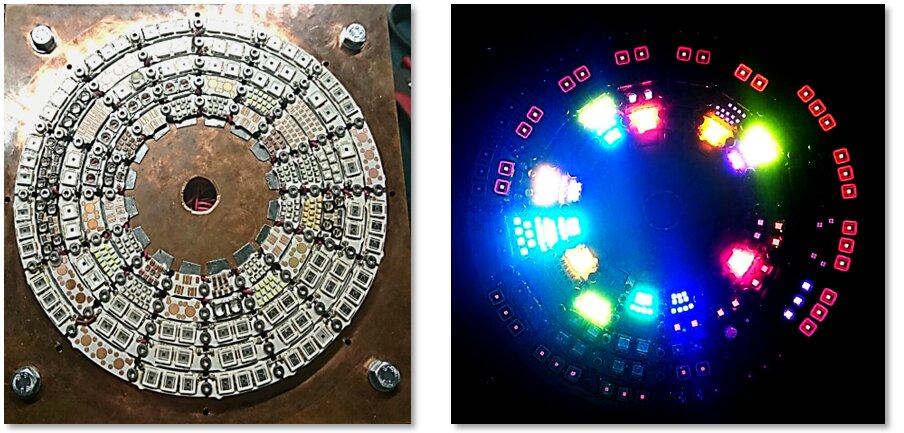
The Star Light Simulator, built by a collaboration of teams from the National Institute for Astrophysics (INAF), the Institute of Photonics and Nanotechnology (IFN-CNR) and the Department of Biology in Padua, can generate light intensities and spectra at different ranges to reproduce the light for any star. For this experimental setup, the team recreated the emitted light from an M-dwarf along with an atmospheric simulator chamber that replicated an artificial planetary environment. Read More...