Summer Sleeping Bags: Our Top 8 Picks For Warm Weather Camping
-
 Loading...
 - Jeanne Abadie
- 11 Jul 2022
- 118 Views
- 0 Like
- 0 Comment
One of the best parts of heading out on a summer backpacking trip or snagging a rare July night at your favorite campground is how comfortable sleeping outside can be during the warmer months. Even in the Northeast. Hot days capped with cool evening and early morning temps makes for perfect sleeping weather—so long as you’re not trying to catch some Zs in your usual cold weather sleeping bag. For summer camping, you need a seperate sleeping bag specifically rated for warm weather.
To help point you in the right direction, we’ve put together the following guide of tried and true, test and approved summer sleeping bags (no cut rate Amazon specials here). Read on for some helpful info, or just scroll past the nitty gritty to get to our top 8 picks for the best summer weight sleeping bags.
Why do you need a summer sleeping bag?
Having a lightweight sleeping bag that’s less insulated is key to sleeping well without overheating. Not only will using a bag that’s too warm make it difficult to sleep, you’ll also generate a lot more perspiration—and if the temperature does drop just before dawn, that perspiration will make you unusually cold. Plus, a damp sleeping bag will need to be naturally dried before being packed away in a compression sack. Now, some winter weight bags can work for summer camping, especially if you expect low nightime temps and your bag can be fully unzipped and used as a blanket—though a proper outdoor blanket will do the job even better.
What temperature rating do I want?
It depends on the climate where you live, but you don’t want anything rated any colder than 30 degrees. Often 40 or so is a good benchmark. Remember that sleeping bag ratings are based on the minimum temperature the insulation can keep you warm—but not necessarily comfortable. In fact, many sleeping bags have multiple ratings: a base rating (the primary rating), a comfort rating, and a warm rating. So a sleeping bag rated to 30 degrees may actually be more comfortable in 38 or 40-degree weather unless you’re wearing long underwear underneath.
Also remember that sleeping bag temperature ratings are generally based on men’s temperatures, and men tend to run cooler. So women buying a men’s bag may want to add five to 10 degrees to the degree rating to accurately gauge how warm they’ll be.
Anything else to look for in a summer bag?
A good perk reduced insulation (be it goose down or equivalent synthetic insulation) of summer bags is that they’re lighter and smaller, which means they usually take up less space in your bag, but are still plenty roomy inside. This even goes for cheaper bags. Nearly all the sleeping bags on the list weigh in at below two pounds and pack up much smaller than typical three-season bags, which should help you dip your toes into ultralight backpacking (or at least save some space in the trunk of your car).
The 8 Best Summer Sleeping Bags
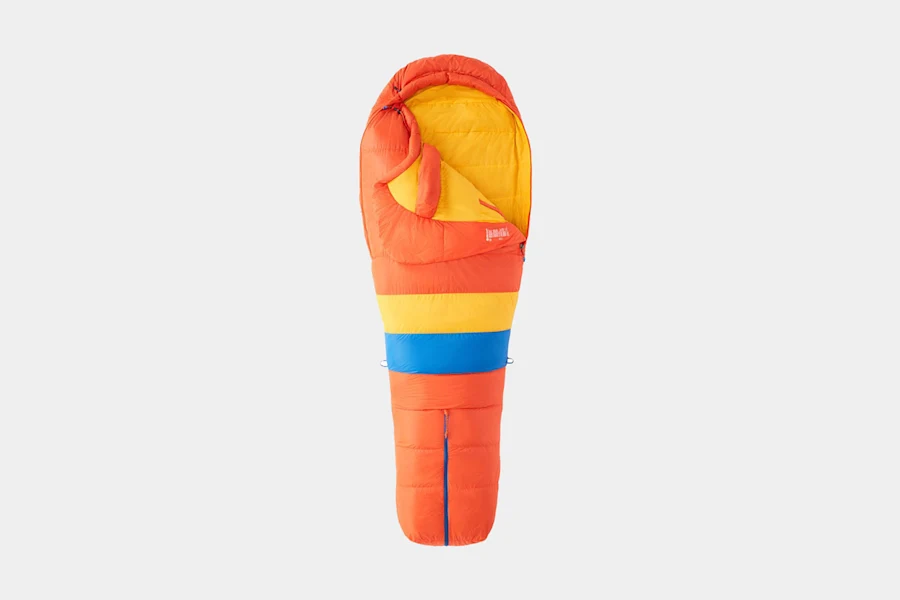
Best for Super-Hot Weather: Marmot Always Summer 45
What we like: Large front panel folds down, footbox fully unzips, under two pounds
Choosing the right sleeping bag for extremely warm weather can be tricky. Sure, you can probably skip the sleeping bag all together if the nighttime low is going to be 80 degrees. But if you’re looking at a forecast closer to 60 or 70 degrees, it can be hard to know what to bring, since most people do tend to get chillier when you’re not moving (i.e. sleeping). Rated to 45 degrees with a vague mummy sleeping bag shape, it featurings a massive footbox zipper and top half that can be folded down, this clever, versatile design will keep you cozy, or cool, in a range of environments.
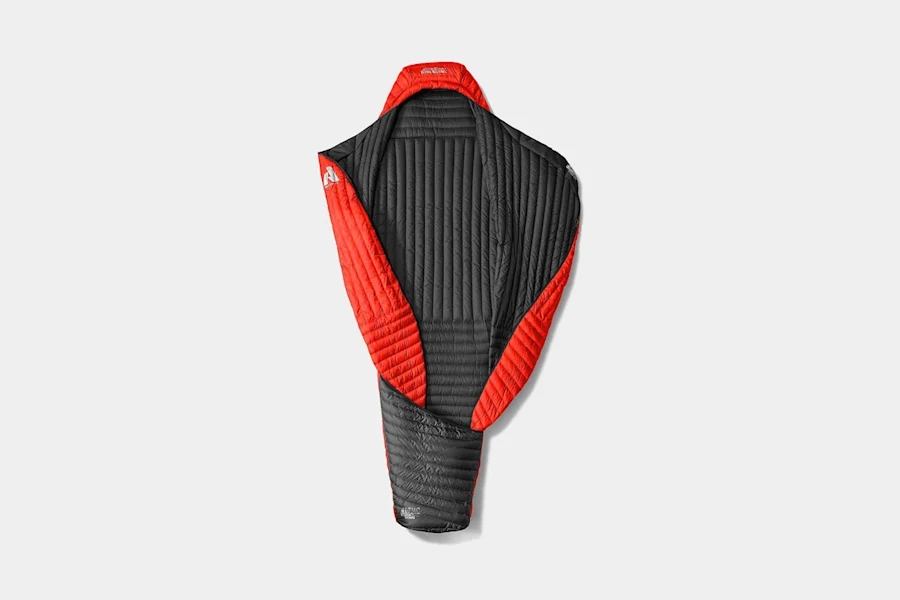
Best Lightweight Option: Eddie Bauer Flying Squirrel 40
What we like: Extremely lightweight, built-in stuff sack, internal “handles” for cocooning
A true ultralight backpacking sleeping bag will actually be a quilt. But if you’re looking for something similar light but traditionally shaped, try the Eddie Bauer Flying Squirrel 40. It’s one of the lightest bags on the market thanks to the total lack of zippers or snaps. The large flaps overlap and wrap cocoon-style—pure versatility. The lack of hardware brings this bag down to just one pound and a half, and it folds down into its own footbox so you don’t need an extra stuff sack. Read More...